E-Paper



Rare avians enthral bird watchers at Sultanpur
The Baikal teal has been sighted after more than a decade in the region—the last sighting came in 2013 at Sultanpur.

 Prefer HTon Google


Birders in Delhi-NCR made several rare sightings on Sunday, continuing a trend of vagrant species being spotted in the region. Among the rarest visitors spotted were the Baikal teal (Sibirionetta formosa) and the falcated duck (Mareca falcata), both spotted at Sultanpur on Sunday.
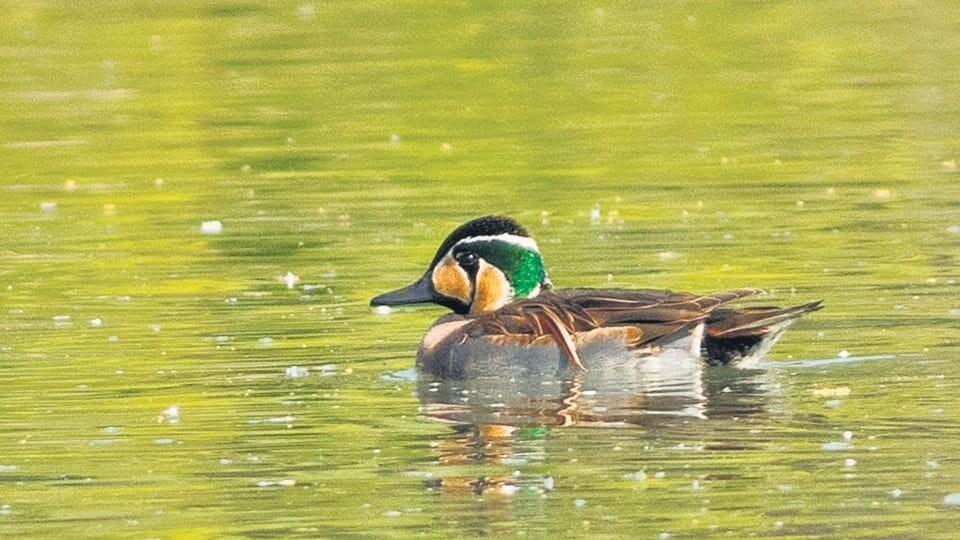
The Baikal teal has been sighted after more than a decade in the region—the last sighting came in 2013 at Sultanpur.
Also Read: Bone of contention: BJP cries ‘fowl’ after protected bird served at dinner for Sukhu
The falcated duck was sighted last year in Surajpur, but birders say there have only been a handful of sightings over the past decade.
“The Baikal teal has a record from 2013 at Sultanpur and before that, around 2011 at Okhla. It is extremely rare. We had reports of the falcated duck being sighted on December 12 too and before that, a record exists from Surajpur last year. There have only been a handful of sightings of both these birds in the last decade across NCR,” said birder Pankaj Gupta.
Also Read: 254 species recorded in Delhi winter bird survey
Other rare sightings, made multiple times this week, including on Sunday, were the common-ringed plover (Charadrius hiaticula) and the little gull (Hydrocoloeus minutus), which were both spotted at Chandu Budhera.
Also Read: Birders, forest dept officials working on Delhi ‘Bird Atlas’
Gupta said young birder Ashray Kamath first spotted the Baikal teal, at around 1.30pm and the falcated duck by another young birder, Spandan Yadav, within an hour, around 2.30pm. “These are both birds that breed towards Mongolia, China, Japan and South Korea, coming in the post-breeding or winter season towards eastern India. Thus, them venturing to northwest India, particularly Delhi-NCR is fairly rare,” Gupta said.
The Baikal teal stands out due to its green nape and yellow and black auricular regions, neck, and throat. It has a dark crown, and its breast is light brown with dark spots. The falcated duck is, meanwhile, distinguished by a white throat, and a dark green collar and bronzed crown.
The little gull, the smallest gull species, has been sighted multiple times since being sighted on December 6 at Chandu Budhera. However, before this year, it was previously spotted at the Okhla bird sanctuary in 2014, and 1992 before that. It is a shore bird that tends to migrate along the coasts of the Mediterranean Sea, Black Sea and Caspian Sea, making its foray into NCR rare.