
 E-Paper



Garbage piles and waterlogging in Sector 46 highlight deepening sanitation woes
The combination of filth, foul smell, and crumbling infrastructure has not only disrupted daily life but also raised serious concerns about public health and safety.

 Prefer HTon Google


Residents of Gurugram’s Sector 46 are increasingly frustrated with the crumbling state of civic infrastructure in their locality. Once considered a sought-after residential area, the sector, residents said, has now turned into an urban nightmare marked by broken roads, overflowing garbage, and waterlogging that has become a recurring menace.
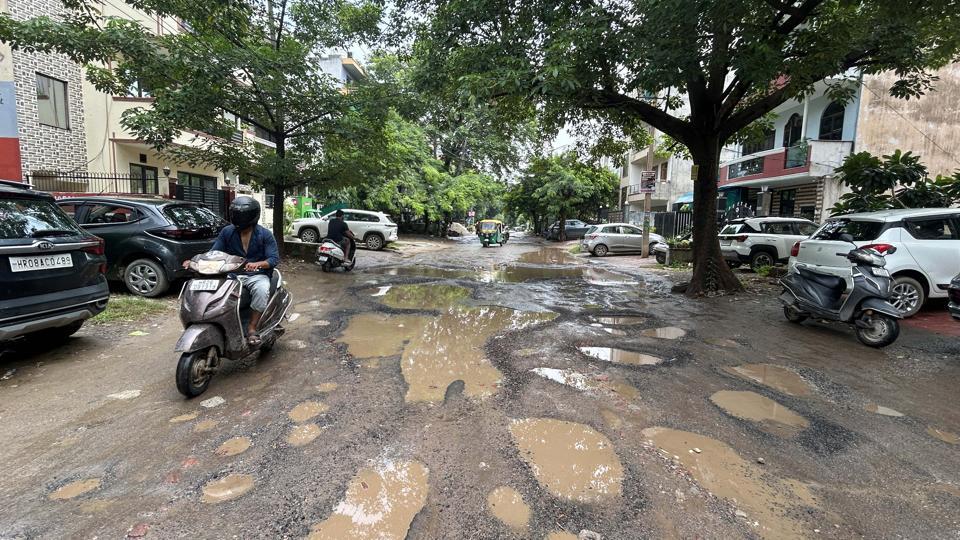
The problems, residents stressed, have reached a tipping point. Piles of untreated garbage litter vacant plots and roadside stretches, while choked drains trigger flooding after even moderate rain. The combination of filth, foul smell, and crumbling infrastructure has not only disrupted daily life but also raised serious concerns about public health and safety.
One of the most pressing issues is the unchecked dumping of garbage across the sector. Despite repeated complaints, residents allege that the Municipal Corporation of Gurugram (MCG) has failed to put in place a sustainable waste management system.
“Every time it rains, the same situation occurs. Roads get flooded, garbage piles up, and it becomes impossible to even open our shops,” said Rajkumar Yadav, president of the Residents’ Welfare Association (RWA). “We have filed multiple complaints, but nothing changes. The authorities simply ignore us.”
With waste lying unattended for days, the area has become a breeding ground for rodents, stray animals, and insects. “Sector 46 is one of the oldest and most prominent sectors of Gurugram, surrounded by top schools and multispecialty hospitals. Yet the condition here is worse than in villages. Garbage is everywhere, potholes are more common than smooth roads – it’s a nightmare to live here,” said resident Deepika Naryana Bhardwaj.
Several residents echoed her concerns, saying that despite posting images of the deplorable conditions on social media, civic agencies remain unmoved. Many now fear an outbreak of vector-borne diseases like dengue, malaria, and chikungunya due to unhygienic surroundings.
Waterlogging woes, and poor roads
The garbage problem is compounded by severe waterlogging during the monsoon months. Poorly constructed drains, clogged with debris and construction waste, fail to channel rainwater, leaving streets submerged. Vehicles get stranded, roads turn slippery, and pedestrians are forced to wade through knee-deep water.
“The roads are full of potholes, and stagnant rainwater remains for days. Since no one cleans it, mosquito breeding increases, and infections spread easily,” said Vivek Aggarwal, another resident.
Experts noted that the absence of proper stormwater management is a recurring issue in Gurugram’s urban planning. Sector 46, despite being a major residential hub, remains particularly vulnerable due to years of neglect and clogged drains.
Adding to the misery is the dilapidated condition of roads. Residents said potholes and uneven surfaces have made driving unsafe and uncomfortable. Even arterial roads linking the sector to neighboring areas are riddled with craters, leading to frequent accidents and damaging vehicles.
“The roads here are in terrible shape. There’s hardly a smooth stretch. It’s a nightmare for commuters, and even more difficult for families with children and the elderly,” said Amit Yadav, a resident. “I can’t understand how such a busy sector has been left in this state.”
The lack of timely repair and maintenance has only worsened the problem. Residents say potholes remain unaddressed for months, while temporary patchwork solutions rarely survive a single spell of rain.
Traffic congestion is another persistent issue.
During peak hours, Sector 46 often becomes a traffic bottleneck, with narrow lanes, lack of signage, and indiscriminate parking adding to the chaos. The situation is particularly dire near schools and markets, where absence of a traffic management plan leads to long snarls and frayed tempers.
Residents say the growing number of vehicles combined with insufficient infrastructure reflects the city’s larger planning crisis. What was once marketed as part of Gurugram’s “Millennium City” vision now seems like an unplanned sprawl, struggling to handle its own population growth.
Residents’ anger
Frustrated by years of inaction, residents say their pleas are consistently ignored.
The neglect, they argue, shows the stark contrast between the city’s corporate hubs—often clean and well-maintained—and its residential neighbourhoods, which are left grappling with crumbling infrastructure.
When contacted, MCG officials said efforts are underway. “We have already launched an 11-week cleanliness drive across the city,” said Pradeep Kumar, executive engineer at MCG. “Work has been allotted, and results will be visible soon. We will also inspect Sector 46 and involve the RWA in the process.”
For residents, however, the assurances ring hollow. With garbage piling up, roads deteriorating, and waterlogging worsening each year, Sector 46 stands as a grim example of Gurugram’s civic neglect.
“We are not asking for anything extraordinary, just the basics -- clean roads, proper drainage, waste collection. If Gurugram wants to call itself a Millennium City, it must first fix basic issues,” said Subhash Sachdeva, another RWA member.


Stay updated with all the Breaking News and Latest News from Mumbai. Click here for comprehensive coverage of top Cities including Bengaluru, Delhi, Hyderabad, and more across India along with Stay informed on the latest happenings in World News.


