
 E-Paper



Foreign minister Wang to push for normalisation of ties with India
Chinese foreign minister Wang’s visit comes after Prime Minister Narendra Modi offered his condolences to Chinese people after flight MU 5735 crashed in Guangxi province with all 132 passengers losing their lives.

 Prefer HTon Google


Chinese foreign minister and state councilor Wang Yi is arriving on a two-day visit to India on March 24-25 as part of an effort to put bilateral ties back on rails after the PLA aggression in East Ladakh in May 2020.
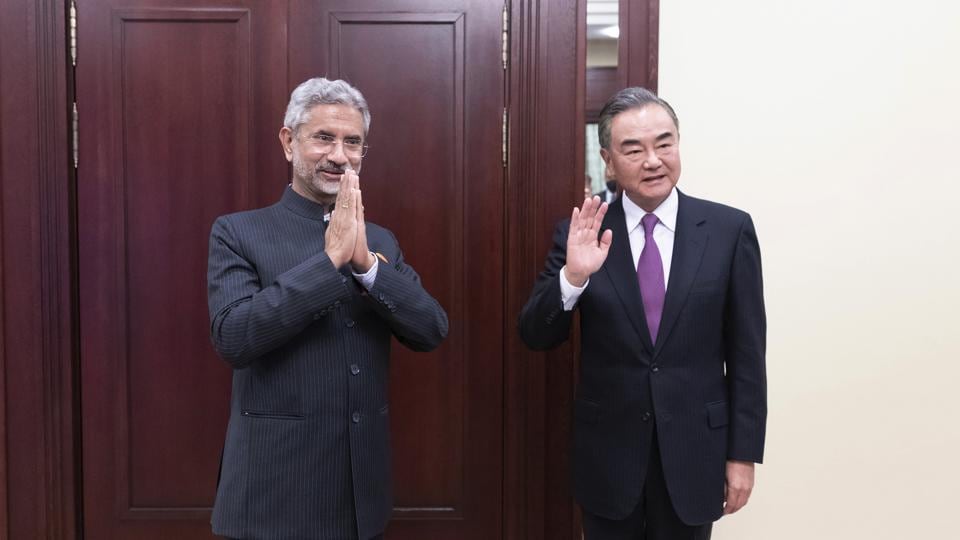
It is understood that State Councilor Wang will meet the Indian leadership with a delegation-level meeting with the external affairs minister (EAM) S Jaishankar and a possible call on the top leadership. The two foreign ministers have met in Moscow in September 2020 and Dushanbe in September 2021 after the PLA belligerence in East Ladakh.
Also Read| With change in Wang Yi’s Nepal itinerary, speculation rife about his India visit
While New Delhi and Beijing are discussing the disengagement and de-escalation across the East Ladakh Line of Actual Control (LAC) at the military commander’s level, there is forward movement expected on around 12,000 Indian students stranded in China after Covid-19 struck Wuhan in December 2019. It is understood that many Indian families are also facing artificial separation with people stuck in China.
Although India is categorical that normalization of bilateral ties with China is dependent on peace and tranquillity all along the LAC with April 2020 status quo ante restored in East Ladakh, the other Indian worry is the burgeoning trade deficit with Beijing with the figure climbing upwards of USD 80 billion.
Foreign minister Wang’s visit comes after Prime Minister Narendra Modi offered his condolences to Chinese people after flight MU 5735 crashed in Guangxi province with all 132 passengers losing their lives. Diplomatic sources based in China and New Delhi feel that PM Modi’s message was purely humanitarian and not much should be read into it. Wang Yi comes to New Delhi after attending the OIC Foreign Minister’s meeting as a special invitee in Islamabad and proceeds to Kathmandu from India.
Also Read| Recent setbacks should not affect relations with India: China
In Pakistan, foreign minister Wang has proposed a four-point formula to enhance strategic cooperation and pragmatic cooperation between two countries. The four-point formula was spelt out by Minister Wang in a joint press conference with his Pakistani counterpart. However, in Chinese superstition, four is a word representative of death with high rise buildings omitting the fourth or the fourteenth floors like the 13th floor in the west. The Chinese people avoid mobile numbers ending with four to avoid getting hit by bad luck.
The basic purpose of foreign minister Wang’s visit, which was accepted at this request, is to sus out the mood of the Indian leadership towards Beijing and the war in Ukraine. While Minister Wang moves to Kathmandu for pushing the belt road initiative, the meeting of QUAD leaders in Tokyo is expected to take place after the Australian general election next month.


