
 E-Paper



What is Oreshnik? Russia deploys rare hypersonic missile in one of war's largest attacks on Kyiv
During the attacks, Moscow used a rare nuclear-capable ballistic missile – dubbed Oreshnik – which it has said cannot be intercepted.


Russia launched one of the largest barrages of drones and missiles on Kyiv, authorities said Sunday, killing four people in the hours-long strikes.
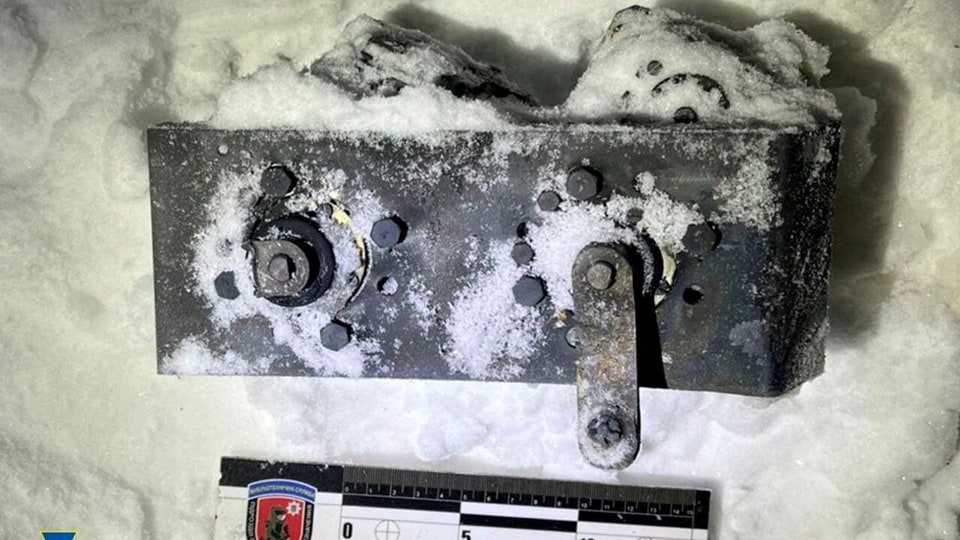
During the attacks, Moscow used a rare nuclear-capable ballistic missile – dubbed Oreshnik – which it has said cannot be intercepted. Russia has in the past deployed this weapon, described by Moscow as “state-of-the-art”, three times.
On Sunday, Oreshnik, an intermediate-range projectile, struck Bila Tserkva, a town in greater Kyiv, at an undisclosed location, AFP cited the Ukrainian army as saying.
Ukrainian President Volodymyr Zelensky and the US embassy in Kyiv had issued warnings Saturday about the risk of a major Russian airstrike. This came after Russian President Vladimir Putin promised a military response to the Ukrainian drone strike on Starobilsk in the Russian-occupied Lugansk region, launched overnight Thursday to Friday earlier this week.
What do we know about the Oreshnik?
An intermediate-range missile, the Oreshnik can reach targets which are between 3,000 and 5,500 kilometres (1,860-3,400 miles) away. It can hit targets “throughout Europe”, Sergei Karakayev, the commander of Russia's strategic rocket forces, said, according to AFP.
Russian President Putin has claimed that it is “impossible” for modern air defence systems to intercept the missile, owing to its speed of Mach 10, or 2.5-3 kilometres per second. According to experts, while the weapon can ravel at hypersonic speeds, it cannot be manoeuvred in a manner similar to typical hypersonic missiles.
The missile when deployed can reach a temperature close to that of the surface of the sun, Putin had said earlier.
Putin said ‘no nuclear warhead’, experts disagree
In 2024, Putin had said that the missile had “dozens of warheads, homing warheads.” Putin had also said that the missile in itself does not cause mass destruction because “there is no nuclear warhead, and that means there is no nuclear contamination after its use.” However, military experts have claimed to the contrary, saying the Oreshnik could be equipped to carry nuclear warheads, AFP reported. The missile was used without a nuclear warhead on Sunday.
The Russian President said after the missile strikes, “everything in the epicentre of the explosion breaks up into fractions, into elementary particles, essentially into dust.” He said that the missile can hit targets “that are highly protected and located at a great depth.”
‘Complete chaos’, ‘frightening night’
Multiple rounds of explosions were heard in Kyiv throughout the early hours of Sunday morning, AFP journalists reported. One of the residents, 21-year-old Sofia Melnychenko, was in the metro when she said “there were three loud explosions, and after the fourth one the ceiling in the metro started crumbling”.
“There was complete chaos. Children started screaming, people were panicking,” she told AFP, adding that it was “a very frightening night.” As the day began, debris of heavily damaged buildings – including houses, shopping centres, museums, theatres, schools and universities – could be seen.
The overnight raid on Kyiv involved 600 drones and 90 missiles, of which 549 drones and 55 missiles were intercepted, AFP cited the Ukrainian military as saying.


