
 E-Paper


94% applications under Delhi government’s Lakshmi Yojana await scrutiny
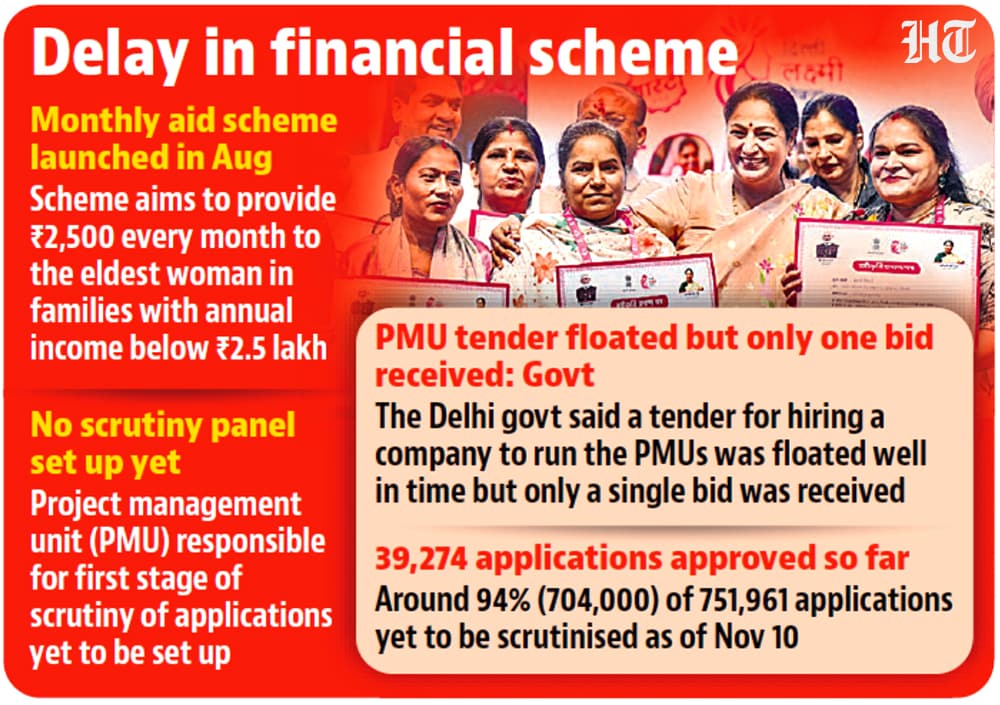
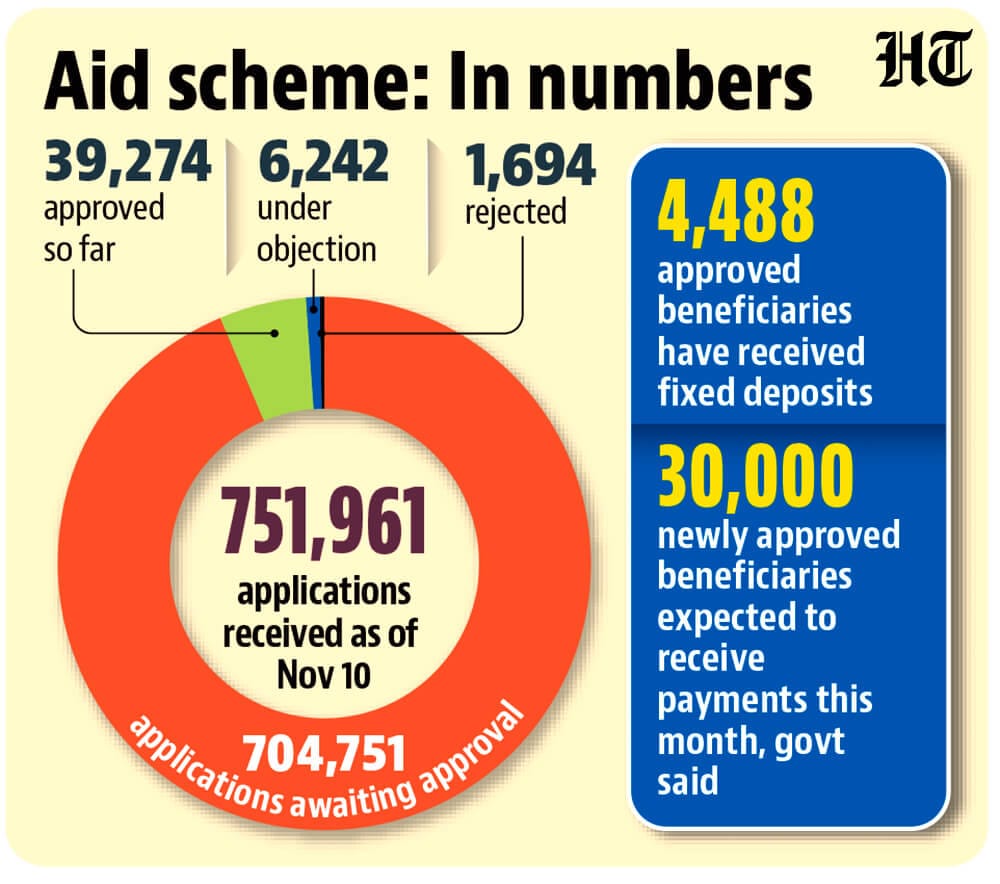
The government received 751,961 applications for availing ₹2,500 monthly payments after the launch on August 1.

 Prefer HTon Google


Around 94% of applications for the Delhi government’s three-month-old flagship financial assistance scheme for women are yet to undergo an initial level of scrutiny, data accessed by HT shows.
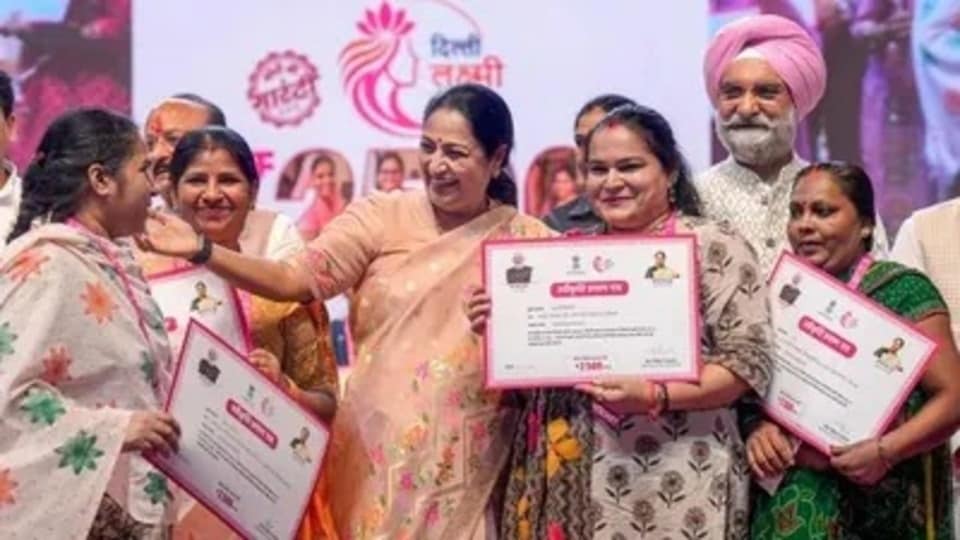
The government received 751,961 applications for availing ₹2,500 monthly payments after the launch on August 1. But 704,000 applications are pending with proposed project management units (PMUs) that were to carry out the first stage of scrutiny yet to be set up, officials aware of the matter said.
Women who had applied for the Lakshmi Yojana scheme in August said they are hoping that they will get a response soon.
Scheme applicants await
A 40-year-old woman from Sangam Vihar, who works as a cook in Greater Kailash, said she sought help from a neighbourhood cyber cafe to fill out the application. “I have not heard anything since, and no information has come on my phone either. I thought I would use this money to send to my mother back home in Bengal,” she said.
“I thought we would at least get it by Diwali, but I have not heard anything since I submitted the application in the first week of August. I had planned to use the money for my daughter’s tuition,” said another applicant, a 35-year-old woman who works as a house help and lives in west Delhi’s Raghubir Nagar.
Responding to a query from HT, the Delhi government said a tender for hiring a company to run the PMUs was floated well in time but only a single bid was received. “Retendering has been advised by the finance department,” it said.
Meanwhile, some applications are being scrutinised, the government said in its response, “with the help of other staff at the disposal of district-level committees, anaganwadi workers and helpers, and ASHA workers, and civil defence volunteers.” The data accessed by HT shows that an initial 39,274 applications have been approved so far, while 6,242 are facing objections and 1,694 have been rejected.
To be sure, the approval process has two more tiers: the district woman and child development officer and a district-level panel that will also monitor the scheme and address grievances.
Payments model and methods
Under the original payment model, ₹1,500 was to be deposited in a recurring or fixed deposit, while ₹1,000 would be credited to a Central Bank Digital Currency (CBDC) wallet, which has restrictions on certain purchases, including on tobacco, intoxicants and online gaming or gambling.
But payments to the initially approved beneficiaries have faced teething problems, an official aware of the matter said. Funds were deposited in the digital wallets of a handful of beneficiaries, but the money could not be accessed, this official said.
The government said the CBDC-based payment mechanism was a new digital arrangement that required further strengthening of technical and operational processes, including beneficiary onboarding and wallet activation, in coordination with banks, the Reserve Bank of India and the National Payments Corporation of India (NPCI).
“To ensure that beneficiaries do not lose out during this period, the government has decided to provide the entire ₹2,500 monthly assistance through fixed deposits until January 2027,” the government said in its response. On maturity, the FD funds would be credited to the digital wallet. Fixed deposits have been created in the names of 4,488 approved beneficiaries so far, it added.
Also Read I As Delhi gasps for clean air, pollution in NCR dropped from Parliament panel meeting agenda
Launched in August as one of the BJP government’s key electoral promises, the scheme aims to provide ₹2,500 every month to the eldest woman in an eligible household. The government had initially estimated that around 1.7 million women would benefit from the scheme and had earmarked ₹5,110 crore for it in the 2026-27 Budget.
Women between 21 and 60 years of age, belonging to families with an annual income below ₹2.5 lakh, are eligible, subject to other conditions. These include a minimum 10-year Delhi residency requirement for the woman, her husband or her parents. Income-tax payers, GST return filers, government employees and women from households with government employees are among those excluded. Families owning a four-wheeler or consuming more than 2,400 units of electricity annually are also ineligible.
Applicants are required to submit Aadhaar, voter ID, photographs, signatures and proof of age and residence. They must also obtain a recommendation letter from their local MLA or MP, a requirement that has raised concerns over accessibility.
Frequently Asked Questions




Stay updated with all top Cities including, Bengaluru, Delhi, Mumbai and more across India. Stay informed on the latest happenings in World News along with Delhi Election 2025 and Delhi Election Result 2025 Live, New Delhi Election Result Live, Kalkaji Election Result Live at Hindustan Times.


