
Sign in

ED issues 5th summon to CM Arvind Kejriwal in Delhi excise policy case

Kejriwal skipped the earlier summons on November 2, December 22, and on January 3 and January 18, calling the probe “illegal and politically motivated”

Published on: Jan 31, 2024, 15:21:18 IST
Share
Share via
  • facebook
  • twitter
  • linkedin
Copy link
  • copy link

The Enforcement Directorate (ED) has issued a fresh, and the fifth, summon to Delhi chief minister Arvind Kejriwal to appear this week in connection with the federal agency’s money laundering probe linked to irregularities in the Delhi excise policy 2021-22, people familiar with the development said on Wednesday.
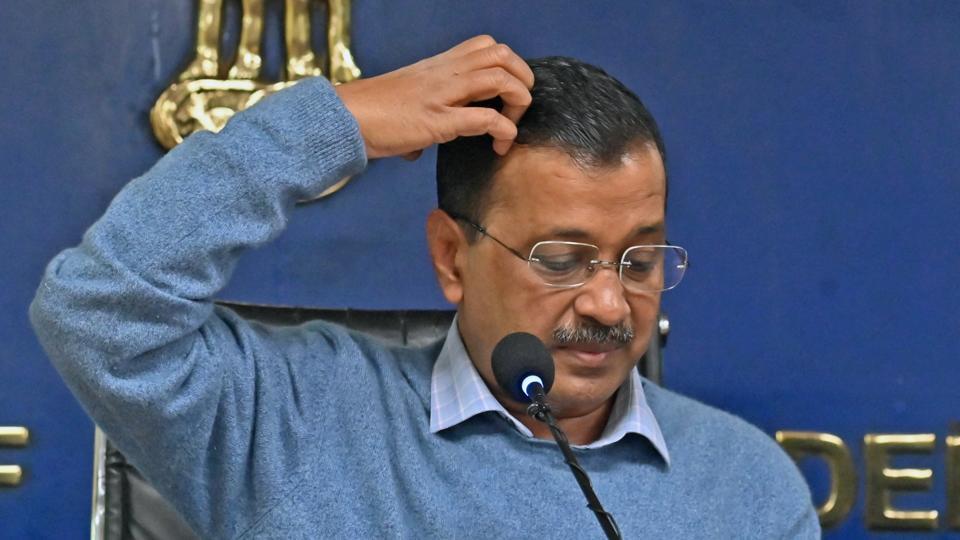
Delhi chief minister Arvind Kejriwal. (ANI Photo)

The Aam Aadmi Party (AAP) national convener skipped the previous four summons — on November 2, December 22, and on January 3 and January 18 — calling the probe “illegal and politically motivated”.

In his response to ED’s third summon, Kejriwal said he was ready to cooperate but alleged that the agency intented to arrest and prevent him from campaigning for this year’s Lok Sabha elections.

The agency, however, said it wants to question Kejriwal on the formulation of the excise policy, meetings held before it was finalised, and the allegations of bribery.

In its sixth charge sheet filed in the case on 2 December 2023 naming AAP Rajya Sabha MP Sanjay Singh and his aide Sarvesh Mishra, ED claimed that AAP used kickbacks worth ₹45 crore, generated through the policy, for its assembly elections campaign in Goa in 2022.

While ED has in the past alleged that bribes generated in the excise policy were used to fund the poll campaign, this is the first time the agency has mentioned the amount of the purported kickbacks, and called AAP a direct beneficiary. These findings are expected to be used by ED when it names the party in its next charge sheet.

ED has claimed that total bribes worth ₹100 crore were paid to AAP leaders in connection with the excise policy.

In one of its five charge sheets, ED claimed that the excise policy was Kejriwal’s “brainchild”. Kejriwal has also been mentioned in remand papers with references to alleged meetings, commissions for private players, and the entry of political players and businesspeople from the south into Delhi’s liquor business.

The financial crimes probe agency has so far filed six charge sheets in this probe against 31 individuals and entities, including former deputy chief minister Manish Sisodia and Singh. Both AAP leaders are currently lodged in Tihar jail.

The excise policy was aimed to revitalise the city’s flagging liquor business and replace a sales volume-based regime with a license fee for traders. It promised swankier stores and a better buying experience. The policy introduced discounts and offers on the purchase of liquor for the first time in Delhi.

Lieutenant Governor Vinai Kumar Saxena’s move to order a probe into the alleged irregularities in the regime prompted the scrapping of the policy. The AAP accused Saxena’s predecessor Anil Baijal of sabotaging the move with a few last-minute changes that resulted in lower-than-expected revenues.

  • Neeraj Chauhan
    ABOUT THE AUTHOR
    Neeraj Chauhan

    Neeraj Chauhan is a senior journalist with Hindustan Times and an investigative reporter specialising in national security, terrorism, organised crime, narcotics, corruption, financial crime and complex investigations. With over 21 years of experience across Hindustan Times, The Times of India, The Indian Express and The Pioneer, he has built deep expertise in India’s internal security and law-enforcement landscape. Neeraj has extensively covered India’s principal investigative, intelligence and security agencies, including the NIA, CBI, ED, IB, R&AW, MHA and other central security forces. His work has included deeply reported investigations into terrorism, terror financing, cross-border crime, narcotics trafficking, cybercrime, financial fraud and political and corporate corruption. He has reported on some of the most significant terror attacks and security developments in India over the past two decades, including the Delhi serial blasts, the 26/11 Mumbai attacks, the 2019 Pulwama terror attack and the recent Pahalgam attack. His reporting has also chronicled the rise and decline of the Indian Mujahideen, the activities and subsequent crackdown on the Popular Front of India (PFI), Islamist extremist networks, the conflict in Jammu and Kashmir, insurgencies in the Northeast and Maoist violence. Some of Neeraj’s major breaking stories are in Aryan Khan drug case, Sushant Singh Rajput suicide, interception of a 3,000-kg Afghan heroin consignment worth about ₹21,000 crore at Mundra port, Sri Lanka easter bombings, Aarushi-Hemraj murders in Noida, 2G scam, coal block allocation scam, AgustWestland VVIP chopper deal and major bank frauds and extradition cases involving Mehul Choksi, Nirav Modi and Vijay Mallya. His reporting is marked by an ability to cultivate sources, analyse confidential and complex documents, and follow investigations over several years—from the initial breakthrough to chargesheets, trials and international legal proceedings. He specialises in making complicated security and investigative developments accessible while examining their wider implications for governance and public policy. A Chevening South Asia Journalism Programme Fellow at the University of Westminster, Neeraj also spent time at the Financial Times as part of the fellowship. He was also a Robert Bosch Media Ambassadors India-Germany Fellow, studying at the University of Tübingen and working with Der Tagesspiegel in Berlin. He has previously taught investigative journalism and crime reporting as a guest faculty member at the Times School of Journalism. Over more than two decades, Neeraj has established himself as an authoritative voice on India’s national security and investigative landscape, with his reporting closely followed by officials, investigators, lawyers, policymakers and readers seeking insight into some of the country’s most complex and consequential developments.Read More