
 E-Paper



Good evening, Mr Bond. We’ve been expecting you
A new James Bond has finally been cast. Is Robert Pattinson right for the role?


 Prefer HTon Google


The name of his spy was what mattered. In 1952 an undistinguished journalist (and birding enthusiast) called Ian Fleming sat down at his desk to write “the spy story to end all spy stories”. Fleming knew some things about his book: he knew he wanted his hero to be manly, his heroines to be comely—and his income to be vast. But what he did not know was the name of his spy. Then he caught sight of a book on the shelf above his desk.
Its title—“Field Guide to the Birds of the West Indies”—was dull. Its pages, which contained a lot about the Pied-billed grebe, were duller still. Its author’s name was dullest of all. Fleming thought it was “brief, unromantic, Anglo-Saxon and yet very masculine”. The name, as Fleming would write on page 56 of his new book, was “Bond—James Bond”.
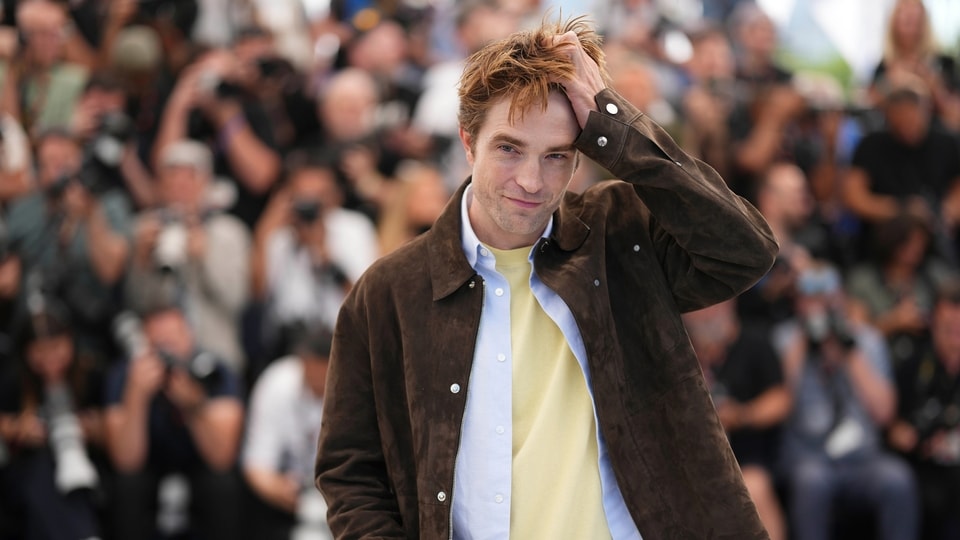
Names, for Bond, matter. On November 16th, one more name was announced: that of the actor who will play the British secret agent in the 26th official Bond film. This new name is, like the original, unromantic and masculine: it is Robert Pattinson.
Deep Dive

Mr Pattinson is in some ways a surprising choice. The actors chosen to play Bond are usually fairly unknown. Mr Pattinson, meanwhile, has been a box-office draw since 2008, when he starred as a sultry vampire in the “Twilight” franchise; this year alone he has roles in four major movies. Purists may fear that he will suck the life out of the franchise, and perhaps even switch from martinis to bloody Marys.
Yet he perfectly fits the physical description: he is tall, dark and square-jawed. Like Bond, he has a dash of both the hero (in “Harry Potter” he played a gallant prefect) and villain (as he showed in this year’s “Odyssey” adaptation) alike, which is good for Bond, who is both. Though he is, at his best, more subtle than Bond, who is a bit of a lunk: Fleming called his character a “cardboard booby”.
Mr Pattinson matters because Bond does. The Bond franchise is huge: it is made up of 14 original books, dozens of continuation books and 25 films which have grossed more than $23bn (after adjusting for inflation). It is thought that half the world has seen at least one Bond film.
For Britain he matters psychologically, too. Now, just as when the books were written, Britain feels like an international has-been. Bond offers succour in spy form. Britain’s army may be puny; its economy shaky—but it still has a man who knows how to get the bad guys (and mix a drink). His casting is treated as something of national import, as if one were casting not Bond but Britannia. The choice feels particularly loaded now that Amazon MGM, an American studio, has taken creative control of the franchise.
Every literary character brought to the screen belongs to two eras: the one that produced the book and the one that produces the film. The art is to serve both while betraying neither. Adaptations that succeed—think of Andrew Davies’s version of “Pride and Prejudice” in 1995—do. Mr Davies left Austen’s dialogue all but unchanged, but added some 20th-century smoulder. The stage directions for the lake scene read “Darcy has an erection.” Not an original Austen line.
Bond is harder still to remake, for he belongs to three eras. The third is the wartime age that produced Fleming himself. Fleming based his characters on the “tough commando types” he met in British naval intelligence: men who had an excess of charm, derring-do and hyphens. Bond is said to have been inspired by men like Conrad O’Brien-ffrench (a spy who skied beautifully and wore a moustache dashingly) and an officer named Patrick Dalzel-Job (who parachuted skilfully and accepted the surrender of Bremen personally).
It was a beguiling age of heroes and eccentrics. “M”, the fictional head of MI6, Britain’s foreign intelligence service, is thought to have been inspired by Maxwell Knight. As Ben Macintyre notes in “For Your Eyes Only”, a history of Fleming and Bond, the spymaster kept snakes in his bath and wrote a book called “How to Keep a Gorilla” (presumably not in the bath with the snakes). One of the founding heads of Britain’s Secret Service Bureau, the precursor to MI6, was a man who said his male hires should be able to “make notes on their shirt cuff while riding on horseback”. Female ones, meanwhile, should have “good legs”.
Bond is a little of all of these figures—and of Fleming himself, who was a notorious womaniser, and a perfunctory one. As one former girlfriend put it, women were like “fishcakes” for him: he was “very fond of fishcakes, but he never pretended there was any mystique about eating them”. Bond duly consumes a lot of women, often in a tasteless fashion. Fleming described his books as “the pillow fantasies of an adolescent mind”. The films were often little better. One featured a character called Christmas Jones, setting up a smutty double entendre about how often Christmas “comes”.
Fleming felt Bond looked a little like him too, though “more handsome”. For Bond is tall and dark—in every sense of the word: he is six feet tall, with “rather long black eyebrows”, a “straight but firm” jaw, a “cruel” smile, “cruel” eyes and “cruel” good looks. Partly this repeated cruelty is mere literary laziness: Fleming aimed at a style that was “workmanlike” rather than “Literature with a capital L”. He wrote 2,000 words a day and did not mind if a fair few of those thousands were repetitions.
But there is more to it than that. Cruelty—to men and women—is a feature of Fleming’s writing. In “Casino Royale”, Bond savours the “sweet tang of rape”. A little later, there is an unforgettable scene with a cane chair and a carpet beater. In it, Bond is stripped naked, tied by his hands and feet into the chair while Le Chiffre, the villain, does some very nasty things to him. Repeatedly. The reader, despite themselves, is rapt.
The world, however, has changed. Today the real-life head of MI6 is a woman. She appears to have issued no instructions on the horsemanship, or legs, of her underlings; she looks unlikely to be amused by adolescent pillow fantasies. Bond, as Judi Dench’s “M” tells him in “GoldenEye”, can seem like “a sexist, misogynist dinosaur”.
Still, despite its flaws, the Bond franchise is much-loved. Reinvention is thus desirable and impossible: almost everyone has an opinion. Mr Pattinson may be a dependable choice, but many will complain—just as they did when Sean Connery and Daniel Craig were cast. Change Bond too little and you will offend modern mores; change Bond too much and you will offend the traditionalists. As with Bond himself, the scriptwriters’ hands are tied. As with Bond, everyone will watch anyway.
For more on the latest books, films, TV shows, albums and controversies, sign up to Plot Twist, our weekly subscriber-only newsletter


