
 E-Paper



When PM Modi's reel briefly vanished: What is — and isn't — known about how Meta moderates VVIP accounts
Meta's mechanism is 'cross-check”, which routes content from VIP accounts for human review. At one point, it had 5.8 million high-profile accounts globally.


A Facebook Reel posted by Prime Minister Narendra Modi on July 23, amid nationwide protests over the leaked NEET-UG examination paper, briefly disappeared from his official page and was restored later the same day. Meta apologised, describing the takedown as an error.
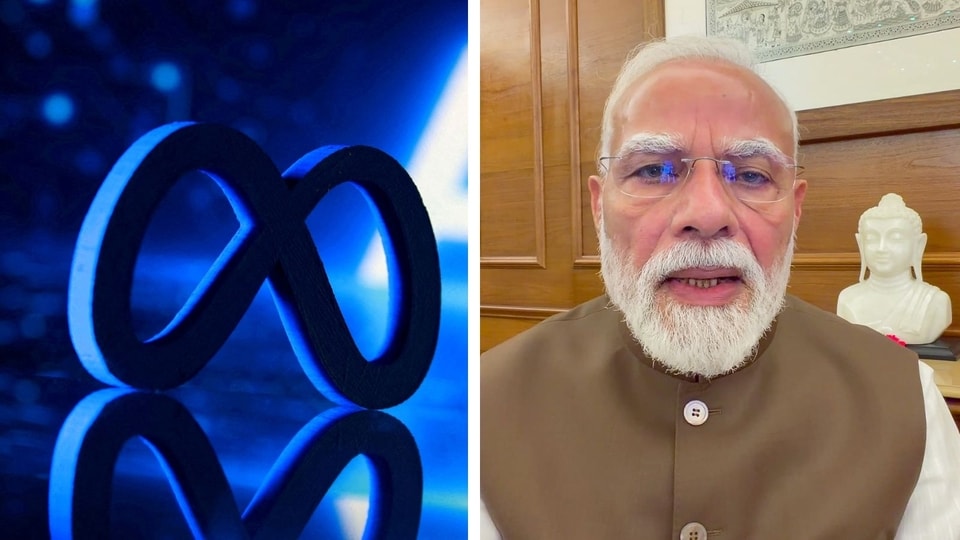
Ministry of electronics and information technology (MeitY) secretary S Krishnan said on Thursday that Meta had agreed to send its senior leadership to New Delhi within 7 to 10 days to explain what happened.
"Meta, we have asked them to come in at the highest level and explain what is happening. They have agreed to come and explain what the situation is. We want to have both a policy-level understanding and a technical understanding of the issues," Krishnan told reporters on the sidelines of a Confederation of Indian Industry event in Delhi.
Krishnan also said Meta had "indicated" to the government that, as of July 28, it had established "new protocols relating to accounts of prominent persons to avoid such a situation from recurring". Meta has not publicly confirmed the existence or details of any such protocols, and has not responded to HT.
What Meta does
What is on the public record about how Meta moderates heads of state and other political VVIPs comes from three primary sources: the company's own transparency centre, the rulings and policy advisory opinions of its Oversight Board, and disclosures made by former Facebook product manager Frances Haugen to the US Securities and Exchange Commission in 2021.
Meta's central mechanism is a programme called "cross-check". It routes content from certain high-profile accounts — including politicians, government officials, ministries and what the company terms "civic influencers" — into a human review queue rather than the automated pipeline that governs ordinary users.
On its transparency centre, Meta says the criterion aims for parity within a country: if a national cabinet ministry is included in the review queue, all ministries in that government are included. The programme was renamed Sensitive Entity Secondary Review in April 2024, from its earlier name Early Response Secondary Review.
According to the Haugen disclosures, the list at one point covered 5.8 million high-profile accounts globally; Meta has not published an updated figure.
“Specialised review processes for high-impact accounts are not unusual, and enabling them for the PM's account is understandable and expected. The policy question is whether these processes operate transparently and consistently. For instance, who qualifies as a ‘prominent person’? Are only government officials covered, or also Opposition leaders, journalists and celebrities? And are these simply extra checks to improve accuracy before content is removed, or can they result in different moderation standards," questioned Rohit Kumar, founding partner at the public policy firm The Quantum Hub (TQH).
Meta's Oversight Board, an independent panel funded by the company, said in a December 2022 policy advisory opinion that cross-check appeared "more directly structured to satisfy business concerns" than to advance the company's stated human rights commitments. The Board found that flagged content from cross-checked accounts could remain visible for extended periods before being reviewed.
A separate provision — the "newsworthiness allowance" — lets Meta keep otherwise-violating content up when it judges the public-interest value to outweigh potential harm. Between June 2022 and June 2023, Meta recorded 69 such allowances globally, of which nine (13%) were issued for posts by politicians.
The most detailed public test of the system was the January 2021 suspension of then-former American president Donald Trump after the US Capitol riot.
In response to an Oversight Board ruling on that case, Meta introduced a "public figures civil-unrest protocol" governing when it may restrict a politician's account.
In 2023, the Board recommended that Meta suspend then-Cambodian prime minister Hun Sen for six months after he posted a video threatening political opponents. Meta declined, citing the same civil-unrest protocol it had built in response to the Trump ruling.
X and YouTube mechanisms
X and YouTube have published equivalent frameworks.
X, formerly Twitter, has since 2019 maintained a "public interest exception" under which verified accounts of government officials, representatives or candidates with more than 100,000 followers can have rule-breaking content left up behind a notice, if it is judged to be in the public interest.
Internal documents released by Elon Musk in December 2022, known as the "Twitter Files", revealed a separate senior-level escalation layer called Site Integrity Policy, Policy Escalation Support, which handled the website's most politically sensitive decisions, including the January 2021 suspension of Trump.
YouTube operates a similar carve-out called the EDSA exception, permitting content that would otherwise violate its guidelines to remain online if it has educational, documentary, scientific or artistic value.
A New York Times investigation in June 2025 reported that YouTube had quietly changed its enforcement threshold in December 2024, letting a video stay online if less than half its content violated the rules — up from a quarter previously.
None of this documentation, however, addresses how the system applies in India.
The Wall Street Journal reported in 2020 that Meta's then India public policy head Ankhi Das had opposed applying hate-speech rules to figures linked to the ruling Bharatiya Janata Party (BJP), citing likely commercial fallout.
What Krishnan says Meta has now "indicated" — a new protocol for prominent persons, dated 28 July — would sit alongside, or on top of, this existing machinery. What Meta actually changed, if anything, is not yet on the record.


