
 E-Paper





Rishabh Suri is an Assistant Editor, film critic, and professional overthinker of plot points. He writes for HT City, keeping pace with an industry where news cycles expire long before the popcorn gets cold. He completed his graduation in English Honours from Kirori Mal College, followed by a Master’s degree in English Literature-effectively training his brain to over-analyse classic texts before applying those exact same skills to 3-hour Bollywood blockbusters. He got into the profession when he had barely graduated from college and has been at HT ever since. At HT, Rishabh reviews films with a simple rule: skip the dense academic jargon and get straight to the point. Beyond reviews, as Assistant Editor, he helps navigate the broader circus of showbiz, tracking everything from OTT shifts to sudden box office panics. In a beat driven by loud PR machinery and carefully scripted answers, Rishabh prefers cutting through the noise to focus on how stories get made and why trends shift. When he isn’t writing against a deadline, he is usually sitting in a dark theater, compulsively memorising dialogues. For Rishabh, analysing movies isn't just a day job- it’s a habit he couldn't turn off even if he tried.
Godzilla Minus Zero| Made on a budget way less than Ramayana's, this monster flick is a massive entertainer
Set two years after Godzilla Minus One, the sequel follows a family trying to rebuild their lives as dragon Ghidorah threatens Japan.


Bigger, louder, Godzilla Minus Zero is a monster of a spectacle, quite literally. But beneath the roaring creatures and buildings reduced to matchsticks, Takashi Yamazaki finds something far more human: a family trying desperately to hold on to the life they have rebuilt, while the world once again threatens to pull it apart.
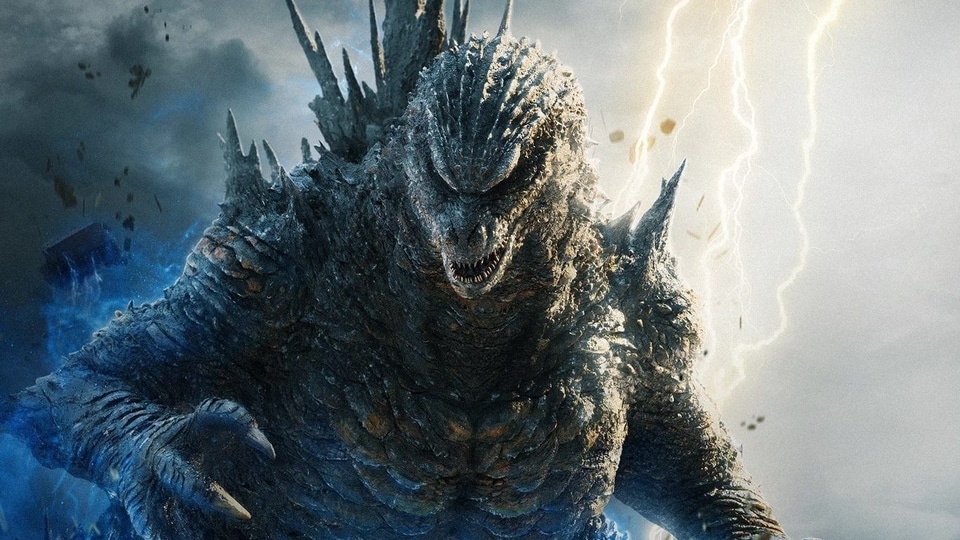
Set two years after the events of Godzilla Minus One, Japan is still recovering from the devastation when a new nightmare arrives in the form of a dragon Ghidorah. Former kamikaze pilot Koichi Shikishima (Ryunosuke Kamiki), his wife Noriko (Minami Hamabe) and their adopted daughter Akiko have finally found something resembling a home and happiness. Naturally, Godzilla and his new adversary have other plans. As Shikishima is drawn into another battle to save Japan, Akiko is left waiting for her parents to return, lending the film's colossal destruction an unexpectedly poignant emotional core.
That is what makes the film more than a glorified monster mash. The spectacle may be larger than life, but the story is deeply personal. A child's anxiety, a family's fear of losing one another and the scars of war give the chaos a human dimension. The film understands that a monster flattening a city is terrifying, but a child wondering whether her parents are coming home is heartbreaking.
Yamazaki's conceptualization is exhilarating. The visual effects are splendid, the scale genuinely staggering, and the action sequences deliver the sort of cinematic thrills that make watching this on the big screen an absolute necessity. (Also, how they managed to pull this off within a budget of 20 million dollars is astounding. Namit Malhotra's Ramayana Part One, for instance, has been made on a budget of 200 million dollars) There is barely a dull moment, with the film constantly finding ways to escalate the mayhem without losing sight of its emotional center.
The biggest applause, however, belongs to the sound design. Every roar, rumble, crash and moment of silence is meticulously crafted, making the destruction feel almost tangible. Godzilla doesn't merely appear on screen; he practically shakes the audience into submission.
Overall, a spectacular, emotionally grounded sequel, Godzilla Minus Zero proves that when it comes to monsters, bigger is certainly better. But it is the little humans waiting for them to go away who leave the biggest impression.


