
 E-Paper



BJP asks Suvendu to set up chemical park under new central scheme in Bengal
West Bengal BJP president Samik Bhattacharya has asked chief minister Suvendu Adhikari to seek a ₹1,500 crore central grant under the BHAVYA Rasayan Scheme for a chemical park in the state


West Bengal BJP president Samik Bhattacharya has urged chief minister Suvendu Adhikari to bid for a ₹1,500 crore grant under the Centre’s newly launched BHAVYA Rasayan Scheme to set up a national-scale chemical park in the state.
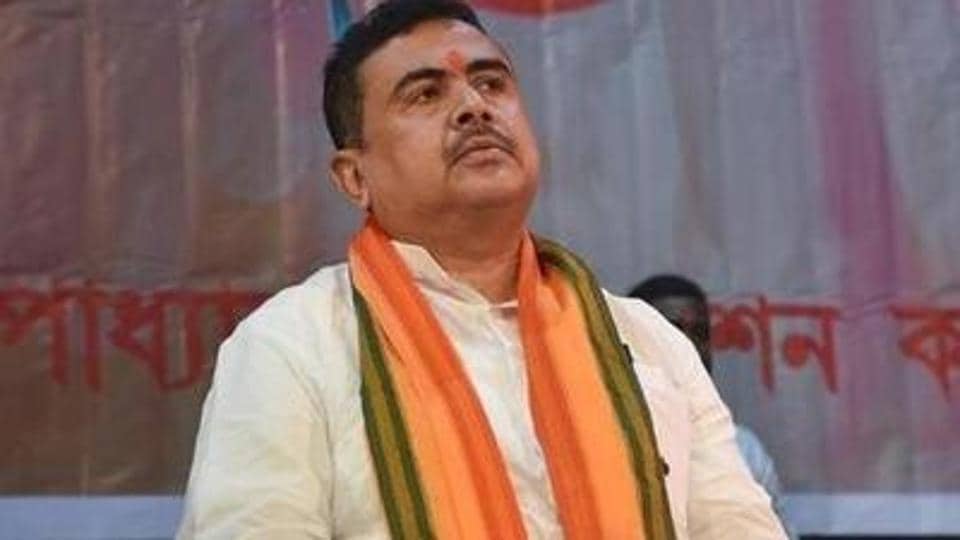
“I write to draw your urgent attention to a significant opportunity for West Bengal following the Union Cabinet’s approval on July 24 of the BHAVYA Rasayan Scheme, a ₹3,030 crore central initiative to establish three dedicated chemical parks across the country. States will compete for these three parks, with a central grant of up to ₹1,000 crore per park against a minimum state contribution of ₹500 crore on a minimum of 2,000 acres of contiguous, encumbrance-free land,” Bhattacharya wrote in a two-page letter to Adhikari on Tuesday.
Last week, the Union cabinet approved the Bharat Audyogik Vikas Yojana Rasayan (BHAVYA–Rasayan) Scheme to set up three dedicated chemical parks in the country. The scheme was announced in the 2026–27 Union Budget.
“Some sites that merit consideration, owing to their historical and logistical compatibility with the project, are Singur, Haldia, Raghunathpur, and Durgapur. Other than the aforementioned areas, I urge the government to assess and select any other site which the government deems fit for this project,” he wrote.
“Given that only three parks will be sanctioned nationally, timing and site selection will be decisive. I would urge the state government to evaluate its options without delay,” he added.
“Early movers under national schemes typically draw outsized private investment, and this chemical park could realistically pull in billions in downstream private capital over time, as anchor tenants and their supplier ecosystems locate around the park. It would meaningfully expand the footprint of chemicals, specialty chemicals, and battery materials companies in the state, while positioning West Bengal alongside Gujarat and Maharashtra on India’s industrial map,” Bhattacharya further said in his letter.
Singur became the epicentre of intense political unrest during the Left Front government in West Bengal over the acquisition of agricultural land for the Tata Nano car factory.
“West Bengal has already witnessed movements against proposals to set up chemical hubs, including one in Nandigram. The track record of the Centre is not at all good when it comes to setting up hubs and industries with negative environmental impacts. We have seen the fallout of such projects in Uttarakhand and Sikkim. Industrialisation and employment generation are needed, but not at the cost of the environment. A proper environmental impact study has to be undertaken before taking any decision,” Trinamool Congress (TMC) spokesperson Krishanu Mitra said.
Mass movements in Nandigram and Singur against land acquisition during 2006–08 paved the way for Mamata Banerjee’s political resurgence and propelled her to power in 2011. In 2016, the Supreme Court cancelled the Singur land acquisition and ordered the return of the land to farmers.
“Singur is still an agrarian economy, and there are fertile farmlands all around. The government has to ensure that the chemical hub would be environmentally friendly and doesn’t pose any threat to the farmlands in future. Who doesn’t want industry and employment? But at the same time, the government should consider the well-being and future of the farmers so that they don’t need to hit the streets again for their rights,” Mahadeb Das, a farmer who was part of the Singur land acquisition stir in 2006, said.
Out of the 997 acres of land that were returned, around 900 acres were farmland. Locals, however, said that the land never became fully cultivable again. Some farmers grow crops on around 250 acres of land, but the yield is much lower. The remaining land remains infertile.
“If the chemical park is environmentally friendly and doesn’t have any negative impacts on the surroundings, then such a move is always welcome. We had requested Bhattacharya that the government should take some initiative to bring in industries and generate employment. We expect that the government would hold discussions with the farmers and take them into confidence before taking any decision,” Dudh Kumar Dhara, a prominent face of the 2006 land acquisition movement, said.


