
 E-Paper



Cabinet secretary demands good governance: Will babus listen to their boss?
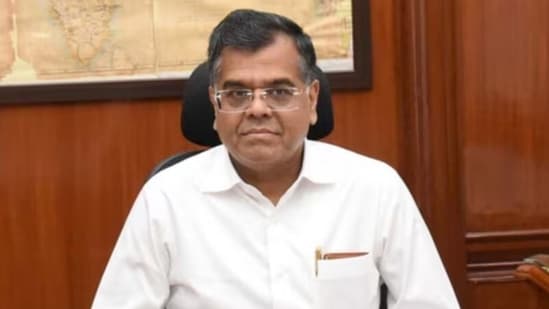
TV Somanathan has been writing letters laying out guidelines for better governance, expeditious decision-making, and more efficient administration.


From the need to delegate work to issuing guidelines on how to conduct effective meetings, cabinet secretary TV Somanathan has been writing a series of letters aimed at helping the Indian bureaucracy become "better administrators and managers".
HT has accessed two such letters. The first, sent on June 12, says the "Cabinet Secretariat will, in consultation with the National Centre for Good Governance (NCGG), be issuing simple guidelines... from time to time, regarding various practical steps".
The second, dated July 21, lays out the importance of delegating work while empowering and trusting subordinates. Last year, Somanathan wrote to bureaucrats urging greater engagement with the private sector, stressing that such collaboration was necessary to realise the dream of a self-reliant India, HT has learnt.
The cabinet secretary, the government's senior-most bureaucrat who works directly under the Prime Minister, said in the June 12 letter: "I have the pleasure of meeting many officers of all services, whether posted in the Central Government or the State Government. Several middle-ranking officers have told me that (while they are happy with the subject-matter training, online and in-person), they feel a need for more practical guidance..."
In what he described as a "long preamble", Somanathan called upon bureaucrats to reflect on whether they were improving with each passing year or merely following "the beaten track of our own past habits of working without making any efforts at self-reflection".
In the same letter, the 1987-batch IAS officer of the Tamil Nadu cadre included guidelines on "precautions and suggestions for conducting and chairing an official meeting", explaining that the subject was chosen first because "meetings consume a lot of our time on a daily basis".
From determining whether a meeting is essential to deciding its timing and setting its agenda, the guide identified the nuts and bolts of conducting result-oriented meetings that conclude with clear takeaways.
"You are requested to circulate this Guide to all the civil servants working under your jurisdiction asking them to imbibe the contents in the right spirit," the communication said. It was addressed to all chief secretaries and advisers of states and Union Territories, as well as all directors general of State Administrative Training Institutes, which train civil servants.
In the July 21 letter, Somanathan urged senior bureaucrats to move beyond the "playing safe" approach and delegate greater authority to junior civil servants, arguing that excessive centralisation can slow government functioning, overwhelm senior officers and deprive subordinates of opportunities to develop as decision-makers.
As with the earlier communication, he enclosed a guide "to help you decide what to delegate, what not to delegate, whom to delegate to, and how much to delegate". This letter was addressed to all secretaries to the Government of India.
"Essentially, the argument against delegation is that it could be risky as it might unleash inefficiencies or corruption in the system and hence, it is better to remain with the familiar surroundings and be safe. To counter such an argument, I must perforce point to the famous quotation by John A. Shedd that: 'A ship is safest at the harbour but that is not what ships are built for'," the letter said.
Somanathan's letters, containing practical guides on various facets of a civil servant's work, are being seen as an attempt to promote smoother, more efficient governance by encouraging behavioural and managerial changes within the bureaucracy. It remains to be seen how much of the bureaucracy adopts these practices and how quickly they translate into changes on the ground.


