
 E-Paper



CBSE moves Supreme Court to recall Class 6 exemption from three-language policy
The CBSE has sought recall of the Supreme Court order exempting Class 6 students from the three-language policy, saying it affects academic arrangements.

 Prefer HTon Google


The Central Board of Secondary Education (CBSE) has approached the Supreme Court seeking recall of the September 28 order exempting Class VI students from the three-language policy for the current academic year claiming that the order will apply to less than 1% of the students studying in Standard VI across the CBSE schools in the country.
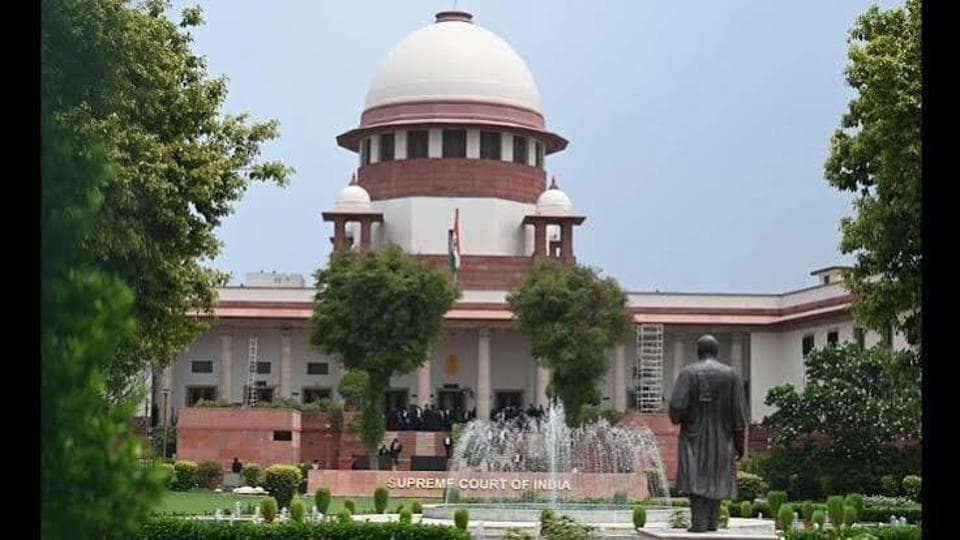
The application filed on Wednesday states that out of a total of over 2.344 million students studying in Standard VI of CBSE schools, 99.82% of the students (over 2.340 million) are already studying two native languages. The exemption, according to the Board, will benefit 4,186 students throughout the country (about 0.18%) studying two foreign languages.
Additional solicitor general (ASG) Aishwarya Bhati appearing for Centre told a bench headed by Chief Justice of India (CJI) Surya Kant on Thursday that the matter requires some “ironing out” and requested for an early hearing on the application. The court agreed to hear the matter next week.
While issuing the September 28 order, the court had said that since the exemption from the policy is already available to students of Classes VII, VIII and IX, the same “comfort” should be extended to Class VI students as well.
The order was passed despite the court being told by the Centre that 98-99% of the schools have been provided adequate facilities for implementation of the third language policy and only 1.2% schools are yet to provide such facilities. The order said, “We direct that the students, who are in 6th standard, may be granted the same exemption as has been granted to the students of the 7th standard.”
Long before the three-language policy of CBSE was introduced under the National Education Policy (NEP) 2020 for Class VI in April 2026, the Board said that CBSE affiliated schools have been offering two native languages in Classes VI to VIII for the past several decades. These schools have adequate facilities to teach two native languages, it stated, adding that the third language concept was introduced only in Standard IX for the first time this year.
The data provided by the Board indicates a total of 1,466,682 schools (CBSE and non-CBSE) in the country having a total enrolment of 247,219,766 students. Of these, 33,017 schools in the country are affiliated with CBSE, collectively to over 27.5 million students from Standard I to XII. Since the present case before the court concerns only CBSE schools, the Board said the schools offering two foreign languages in Standard VI are 99 catering to 4,186 students. In these schools, 19,892 students are pursuing two native languages.
Relying on this data, the CBSE said, “The perception being created that the schools teaching foreign languages do not have facilities to teach native languages is wrong... There is no shortfall in terms of requisite arrangements for teaching of two native languages in all CBSE schools in Class VI.” In other words, all schools affiliated to CBSE do teach two or more native languages, it added.
To make out a strong case, the CBSE gathered data of students currently in Class VII pursuing two foreign languages. Evidently, they had pursued this choice in Class VI as well. Now, the strength of such students had reduced to 4,186 with the rest of the approximately 45,000 students having opted for two native languages in Class VI in the current year.
The Board said, “Any relaxation given to Class VI students to protect the interest of only 4,186 students would be unfair to those approximately 45,000 students who have availed of the existing facility in their schools and have opted for two native languages.”
Such relaxation has also created an uncertainty in the academic arrangements already made by all CBSE schools, it added.
The petitions challenging the three-language policy were filed by students and parents of CBSE schools claiming that the introduction of policy mid-stream raised uncertainty among students and posed questions of preparedness with regard to curriculum, books, and availability of teachers.
The Board had earlier told the court that Class VI textbooks for the third language in all 22 scheduled Indian languages were available on the NCERT website, covering the choices of over 98% of schools. For the remaining languages, SCERT textbooks and resources would be used.
On teacher availability, the CBSE said about 93% of the 20,777 schools already had teachers for at least two distinct indigenous languages. Of these, 3,523 schools had teachers for three or more such languages.
The Centre had formed a five-member committee on September 16 to facilitate and monitor implementation of the three-language framework in Classes VI to X. The committee headed by education ministry director Bhagwati Prasad Kalal also has NCERT secretary Rajeev Kumar, CBSE director (academics) Praggya M Singh, KVS additional commissioner Chandana Mandal and NVS deputy commissioner Somvir Poonia.


