
 E-Paper



‘Collegium system well-suited for India': South Korea SC judge Justice Daeyup Chun | HT Interview
In an interview with HT, he spoke on judicial independence, India’s collegium system and strengthening judicial cooperation between India and South Korea.


Justice Daeyup Chun, a judge of the Supreme Court of South Korea and head of the country’s National Court Administration, was in Delhi for the Singapore International Arbitration Centre (SIAC) conference. In an interview with HT, he spoke to Utkarsh Anand on judicial independence, India’s collegium system, technology in courts, arbitration and strengthening judicial cooperation between India and South Korea.
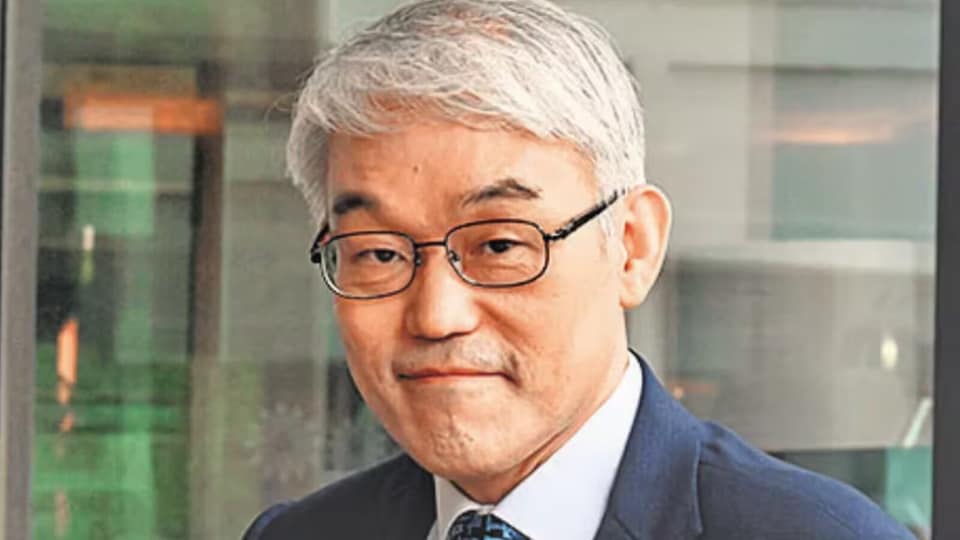
Edited excerpts:
India’s higher judiciary is appointed through a judge-led collegium, while South Korea requires parliamentary confirmation. Which model, in your view, strikes a better balance between judicial independence and democratic accountability?
I believe that each country’s appointment system reflects its constitutional traditions and the history of its judicial and political relations. For that reason, no single system can be said to be absolutely superior.
The collegium system has the distinct advantage of strongly guaranteeing judicial independence, the most crucial value of the judiciary, by allowing the judiciary to independently lead the appointment process without the involvement of external political organs. I think it is an excellent system well suited for a country like India, which is backed by a long judicial tradition and strong public trust in the judiciary.
In Korea, we have adopted a different model that seeks to balance judicial independence with democratic accountability. Supreme Court justices are appointed by the President upon the recommendation of the Chief Justice and with the consent of the National Assembly. Judges of the subordinate courts are appointed by the Chief Justice after deliberation by a committee comprising judges, the Ministry of Justice, the Korean Bar Association, legal academics and non-legal citizens. By bringing together the judiciary, legislature, executive branch, academia and citizens, our framework seeks to secure democratic legitimacy in how the judiciary is constituted while ensuring it remains accountable to the public.
While both systems pursue the same ideal of balancing judicial independence and democratic accountability, where that balance should lie is ultimately a matter of each nation’s constitutional reality and sovereign choice.
Regardless of the system, the most important priority is to secure an environment where judges can render decisions solely according to law and conscience without worrying about external political pressure. Continuous efforts are needed to harmonise judicial independence, procedural transparency and accountability in a manner that enhances public trust in the judiciary.
South Korea has built one of the world’s most efficient and digitised court systems. What lessons could India realistically adapt?
In the World Bank’s assessment of 190 civil litigation systems, South Korea ranked first in 2017 and 2018 and remained second in 2019 and 2020 before the assessment was suspended. Since the assessment focused on litigation costs, the duration of proceedings and the quality of judicial processes, it reflected the efficiency of the Korean court system. Ultimately, this means justice is highly accessible to everyone. Because of this, the courts are often the first place Koreans turn to when they need to resolve disputes.
Our efficiency began with the dedication of Korean judges to protecting citizens’ rights and building an affordable, highly efficient judicial system.
The second pillar has been our comprehensive electronic litigation system. Since its introduction in 2010, it handles virtually all patent cases and most civil cases, supports virtual hearings through video conferencing, and is now expanding into criminal cases. We are also embedding our own AI trial support system into this platform.
Third, we have developed highly specialised courts for family, administrative, intellectual property and bankruptcy matters, and are establishing a specialised maritime and international commercial court.
We also operate a Judicial Assistant system under which trained court officials handle routine judicial work, allowing judges to focus on adjudication. We have also introduced sentencing guidelines through an independent Sentencing Commission, which has strengthened consistency in sentencing and enhanced public confidence in the criminal justice system.
Comparisons usually focus on what India can learn from South Korea. What can Korea learn from India?
I believe the Indian judiciary and its judges are highly exceptional, and there is certainly a great deal the Korean judiciary can learn from them.
First, India’s Commercial Court system has been highly effective in resolving commercial disputes through mandatory pre-litigation mediation and strict timelines. Since Korea plans to establish its own International Commercial Court in 2028, we are studying your system with great interest.
Second, I was deeply impressed by the Delhi International Arbitration Centre. During my visit, I had the opportunity to tour the Centre and receive a detailed briefing. In Korea, arbitration has often been associated with high costs and long timelines, particularly in major investor-state disputes. Against this backdrop, DIAC’s court-annexed model involving both sitting and retired judges offers valuable insights for the Korean judiciary.
Third, I was truly inspired by the dedication of Indian judges. On my first day, I had the privilege of sitting alongside the Justices of the Supreme Court during court proceedings. On my final day, I also observed proceedings at the Delhi High Court. I was deeply moved by the professionalism and commitment of Chief Justice of India Surya Kant, Justice Joymalya Bagchi, Justice V Mohana and Justice Jyoti Singh during their hearings.
My greatest takeaway from this visit is the conviction that closer judicial exchanges and stronger institutional ties will tremendously advance the legal systems and judicial cultures of both countries.
What is the biggest challenge international arbitration faces today?
Time and cost remain the biggest concerns. Although arbitration was designed to provide speedy dispute resolution, proceedings in many jurisdictions now take well over a year.
Questions are also being raised about whether arbitrators possess sufficient expertise for emerging disputes involving digital assets, intellectual property and investor-state arbitration.
These challenges explain why mediation is gaining prominence because it is quicker, less expensive and more flexible. Korea is responding by strengthening its mediation framework and preparing to open a Maritime and International Commercial Court in 2028. In that regard, the success of Delhi’s court-annexed arbitration and mediation model offers important lessons.
Artificial intelligence is rapidly entering court administration. Where should courts draw the constitutional line?
AI has become a necessity rather than a choice, but its use must never undermine the essence of the judiciary.
The principal concerns are AI hallucinations, bias in training data and protection of personal information.
Korea has already built the institutional foundation through an advanced electronic litigation system and is developing AI tools for record management, legal research, drafting assistance, sentencing support and public judicial services. We have also established guidelines governing the use of AI by judges and are developing our own judicial AI platform to address privacy concerns.
However, the selection and evaluation of evidence, findings of fact, legal judgments involving value choices, and the ultimate determination of guilt or innocence must always remain the responsibility of judges. This is the constitutional essence of judicial power and cannot be replaced by technology.
The real challenge is to harmonise the efficiency offered by AI with the human values that courts are meant to protect. AI should remain an assistant that enables judges to make deeper and more thoughtful decisions, never a substitute for judicial responsibility.
Finally, after spending time with India’s judges and judicial institutions during this visit, how do you see the future of judicial cooperation between India and South Korea?
Although India and Korea differ in their social realities and legal traditions, they share a firm belief in the rule of law and a common mission to build a judiciary that earns the trust of the public.
Through this visit, I have confirmed that India’s judges and judiciary, equipped with a high level of competence and passion, offer much for the Korean judiciary to learn from. At the same time, I recognise that Korea can contribute to the Indian judiciary based on our experiences such as our advanced electronic litigation system and specialised courts.
If we strengthen exchanges and cooperation between the courts of Korea and India for the advancement of the judiciary -- the ultimate guardian of human rights and peaceful dispute resolution, it will greatly benefit the judiciaries and judges of both countries. I sincerely hope this exchange serves as a stepping stone to taking our relationship one step further.


