E-Paper



'Don't drag Supreme Court into politics': CJI Surya Kant amid Delhi protests row
Surya Kant on Monday said the Supreme Court cannot be allowed to become a “site of disruption”.

 Prefer HTon Google


Chief Justice of India (CJI) Surya Kant on Monday said the Supreme Court should not be “dragged into any politics” amid the ongoing protests against the alleged crackdown on demonstrators in Delhi, urging lawyers to ensure that the functioning of the top court and the movement of lawyers, court staff and litigants remains unhindered.
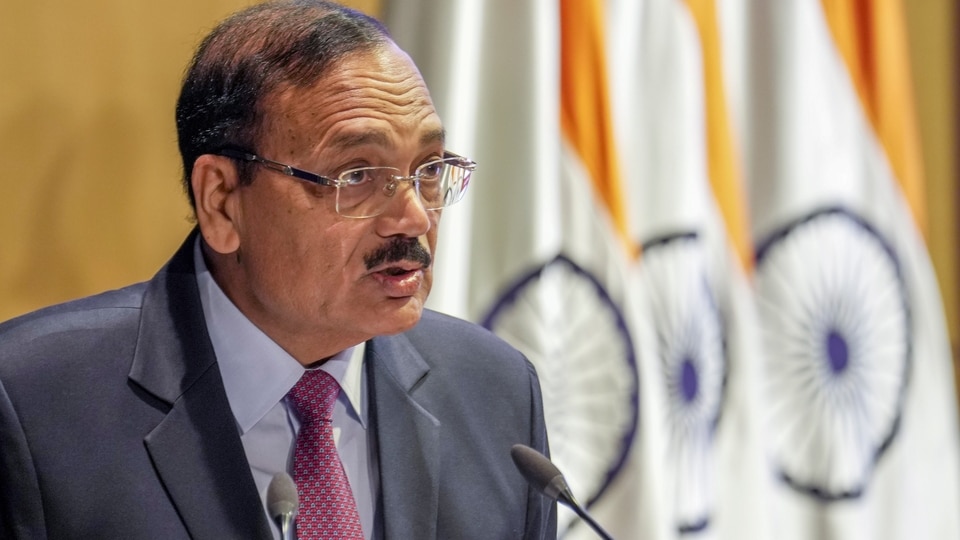
“There should not be any obstruction in the functioning of the court. There should not be any impediment in the movement of the lawyers, their clerks, court staff or litigants,” the CJI told Supreme Court Bar Association (SCBA) president and senior advocate Pradeep Rai, who mentioned a fresh petition concerning the detention of lawyers and the suspension of internet services.
Making it clear that the court had no objection to democratic activities, CJI Kant said lawyers were free to protest but should do so at designated places.
“Every member of the Bar can also protest. Wherever there is a designated place to protest, you can protest,” he told senior advocate Gopal Sankaranarayanan, who also mentioned a separate petition for listing. CJI Kant added that he had already appealed to the protesters.
The observations came a day after a special bench of justices Joymalya Bagchi and V Mohana issued a series of directions to protect the right to peaceful protest, restore freedom of movement and ensure that no person was detained except in accordance with the procedure established by law. The bench also directed that metro and railway services operate normally, internet connectivity remain undisturbed and restrictions around court complexes be removed to ensure access to justice.
Rai sought the listing of the SCBA’s fresh petition on Tuesday, when the court is scheduled to hear the other batch of matters arising from the protests. The CJI agreed to list the plea but asked the Bar to ensure that the court’s functioning was not affected.
“Alright, we will list it. But you must also see that democratic activities take place smoothly. There is no difficulty with that. But just see to it that at least the Supreme Court functioning is not affected,” said the CJI.
When Rai pointed out that the lawyers were protesting peacefully, the CJI reiterated his concern about the institution being drawn into the political contest surrounding the demonstrations.
“I have appealed to the protesters as well but court should not be dragged into any politics,” he said.
Sankaranarayanan, who also mentioned a fresh petition relating to the police action, alleged that no order imposing prohibitory restrictions under Section 163 of the Bharatiya Nagarik Suraksha Sanhita (BNSS) was available in the public domain. He also raised concerns over the alleged detention and manhandling of senior lawyers, including Dinesh Dwivedi and Shadan Farasat.
“At some point the Supreme Court will also intervene and send a strong message to the police that they cannot get away with everything,” said Sankaranarayanan, alleging that children had been hit on the head and that police personnel had taken pride in the action.
The CJI, however, declined to comment further on the allegations at this stage.
“I don’t want to say anything as of now,” he said, before reiterating his appeal that protests should not interfere with the court’s functioning.
Senior advocate ANS Nadkarni also mentioned a fresh petition filed by a lawyer who was allegedly detained during the protests.
The developments follow the Opposition’s decision to march towards the Supreme Court on Monday after the CJI declined a request by Congress president Mallikarjun Kharge and Leader of Opposition Rahul Gandhi to meet him. The Opposition leaders had sought to apprise the CJI of their concerns over the police action against protesters, alleged irregularities in electoral processes and the functioning of constitutional institutions.
The proposed meeting was declined, among other reasons, because related issues were already pending before the Supreme Court in its judicial capacity and the CJI himself had an adjudicatory role in matters concerning some of the issues raised by the Opposition.
Gandhi had announced that Opposition parties, young people and civil society groups would march to the Supreme Court and seek to submit a memorandum to the CJI. The proposed march was part of a wider campaign against alleged electoral irregularities and the police crackdown on protesters demanding the resignation of chief election commissioner Gyanesh Kumar.
The protests have also triggered a series of proceedings before the Supreme Court over alleged restrictions on movement, mass detentions and the curtailment of public transport ahead of Saturday’s demonstrations.
On Friday, a bench led by Kant directed authorities to reconsider proposed restrictions on metro and railway services, emphasising that regulating transport was different from shutting it down. On Sunday, the special bench of justices Bagchi and Mohana issued further directions, including that peaceful, unarmed protesters could not be detained except in accordance with law.
The Sunday bench also asked the authorities to explain the circumstances and manner of the alleged detentions and the legal justification for them, while issuing notices in contempt proceedings alleging non-compliance with the court’s directions against sweeping restrictions on public transport ahead of the protest called by the Cockroach Janata Party (CJP) and other political groups demanding Kumar’s resignation over alleged irregularities in the Special Intensive Revision of electoral rolls.
The court is scheduled to take up the matter again on Tuesday.
Deep Dive