
 E-Paper





Chetan Chauhan is the National Affairs Editor looking into all aspects of news and features from across India. A Chevening scholar with over three decades of experience in reporting and news management, Chetan has extensively covered all important aspects of the social sector, political economy, environment and climate change nationally and internationally. He did a journalism course at the Reuters Institute of Journalism in Oxford and Digital Media training at Nanyang Technological University in Singapore. He started as a reporter with The Statesman in 1996 and joined the Hindustan Times in 2000 in the metro bureau covering environment, crime and Delhi politics. He covered hot local news, from the Jessica Lal murder case to the rebellion of Delhi Congress MLAs against then Chief Minister Sheila Dikshit, to the replacement of toxic vehicle fuel with cleaner compressed natural gas (CNG) in the national capital. Some of his stories on air pollution became part of the Supreme Court’s landmark MC Mehta versus Government of India case in the National Capital Region (NCR), forcing the government to take corrective measures. As part of the national political bureau since 2004, he covered important central sectors such as environment, education, social justice, labour, rural development, water resources, renewable energy, agriculture, broadcasting and the Planning Commission for more than a decade producing several exclusive and investigative breaking stories. His specialisation is the environment, having covered at least a dozen United Nations global conferences on climate change, biodiversity and wildlife including climate summits in Paris, Copenhagen and Bali. He also covered India’s two five-year plans ---11th and 12th and reported on drafting and execution of right based laws such as Right to Education, Right to Information and rural job guarantee law, MG-NREGA, now being introduced in new format as VG-RAM-G Act. He has in-depth knowledge of social sector issues. He was one of the first to report on tigers vanishing from Sariska and Panna wildlife reserves in 2004 and 2008, respectively, leading to the setting up of the National Tiger Conservation Authority (NTCA) and the introduction of stringent penal provisions for poaching. He has written extensively on the rising human-animal conflict in India and the degradation of India’s biodiversity hotspots because of mining and other activities. Since 2004, Chetan has covered Parliament comprehensively and participated in training on the nuanced coverage of Parliament proceedings. He has travelled extensively across India to cover national and provincial elections since 1998, especially in the Hindi heartland states, considered India’s road to power. He writes a regular column for Hindustan Times, Ecostani, on important national politics, economy, Himalayan ecology and environmental issues. His other responsibilities include providing inputs for edits and edit page articles for the publication, apart from managing news flow from across India.
Ecostani: No climate deal at Antalya will not derail renewable transition
Failure to reach a climate agreement at COP31 in Antalya highlights global divisions, but rising renewable energy capacity continues to drive green transition


It is not the first time that the Conference of the Parties (COP) has failed to reach an agreement over a climate change action plan. In 2009, the COP at Copenhagen failed to reach an agreement. Yet six years later, the historic Paris Agreement was approved, having something for every nation.
COP31, held in Antalya and jointly hosted by Türkiye and Australia, both major fossil fuel consumers, failed to reach an agreement even after three drafts were circulated on Sunday afternoon. The issues of contention were the timeframe for phasing out fossil fuels and the provision of adequate climate finance for developing and emerging economies to deal with the impact of the transition — issues that are not new in climate negotiations.
Unlike in the past, the island nations, backed by the European Union and the UK, were not willing to accept any nuance on phasing out of fossil fuels, whereas a small group of oil-producing countries led by Saudi Arabia did not agree to a specific timeframe. Hence, the stalemate.
Deep Dive

India and China, the world’s two largest fossil fuel consumers, were also not willing to accept the European proposal and were seeking a firm commitment on climate finance, which developed countries were hesitant to provide. India, on behalf of the Like-Minded Developing Countries (LMDC), spoke about the need to continue using fossil fuels, citing its social security and development needs. COP agreements are reached by consensus, not by majority vote.
Although Antalya was a repeat of 2009, there are many differences between the two.
In 2009, the renewable energy journey was just starting to have an impact on economies, with a major push from the European Union and then US president Barack Obama. According to the International Energy Agency (IEA), renewable energy accounted for just 18.29% of the total global energy mix in 2009, with Europe dominating the space.
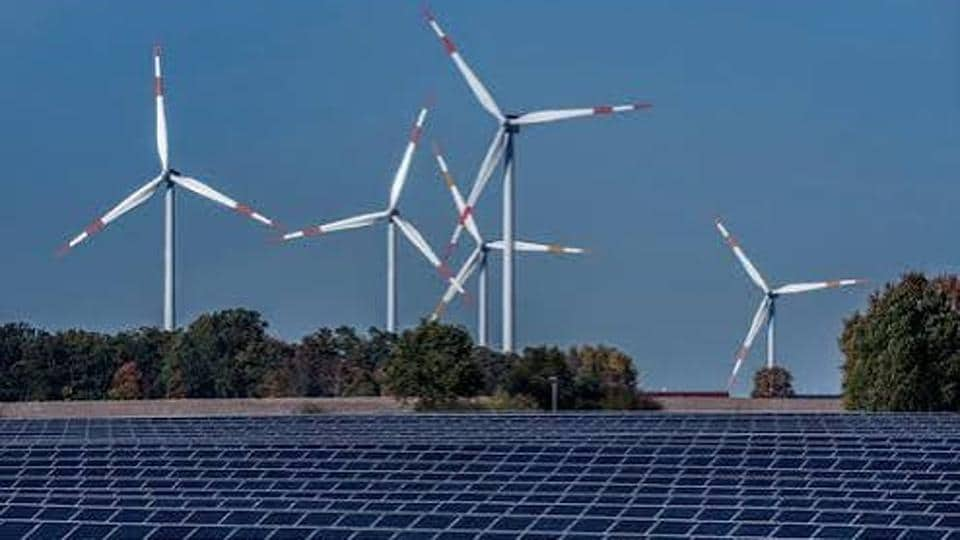
By 2025, the contribution of renewables had reached almost 34% and is projected to touch 45% by 2031. While around 130 countries had invested in renewables in 2009, nearly 200 countries now have renewable energy capacity.
In 2009, the penetration of electric vehicles (EVs) in the global vehicle market was just 0.1%, with around 6,000 EVs sold that year. In 2025, around 26-28% of the vehicles sold across the world were EVs, a huge leap for the technology, which was considered nascent in 2009.
According to the IEA, the growth of EVs has slowed the growth in demand for fossil fuels by eight percentage points. Similarly, the installation of solar power capacity has significantly displaced demand for natural gas, another fossil fuel.
The IEA has projected that global renewable capacity will grow by almost 4,800 gigawatts (GW) between 2026 and 2031, 57% more than in the previous six years. During this period, India would become the world’s second-largest growth market after China, the IEA said in its outlook released in November.
The IEA also pointed out that higher oil prices and energy security concerns amid the Middle East crisis have led to a higher forecast for growth in liquid biofuel production, up by 40% compared with last year’s report. Many countries — especially in Southeast Asia and Latin America — are accelerating the implementation of new and previously announced liquid biofuel mandates to reduce their reliance on imported fossil fuels.
The data clearly shows that the world, pushed by the 2015 Paris climate agreement, has been steadily moving towards a green economy, even though China’s slowdown in solar capacity additions has impacted the transition in the last two years.
From the beginning, it appeared that Antalya would not deliver a major climate statement. Not a single head of state from a major economy participated. Environment ministers of the host countries, Türkiye and Australia, were not seen making efforts to build global consensus on an agreement at the conference, and there was no media brouhaha over the conference. To me, it was the dullest COP since the 2015 Paris summit.
Not having a deal in Antalya, Türkiye, will not derail the transition but will send a political message about the deepening global divide. In the past, COPs have delivered weak agreements or statements aimed at conveying a message of face-saving global unity in the effort to tackle climate change.
To me, global climate negotiators are waiting for the United States elections in November 2028, a few days before that year’s COP, to push the climate agenda. No climate deal can succeed without the world’s biggest polluter, the United States, being on board.


