E-Paper



‘Fight with us instead of making allegations’, Chandra Shekhar Azad asks SP, BSP to join his bloc
Chandra Shekhar Azad has been named as the chief ministerial candidate of the Samajik Parivartan Morcha

 Prefer HTon Google


Azad Samaj Party (Kanshiram) chief Chandra Shekhar Azad has invited the Samajwadi Party (SP) and the Bahujan Samaj Party (BSP) to join his party’s newly formed Samajik Parivartan Morcha alliance with Asaduddin Owaisi’s All India Majlis-e-Ittehadul Muslimeen (AIMIM) for the 2027 Uttar Pradesh assembly elections.
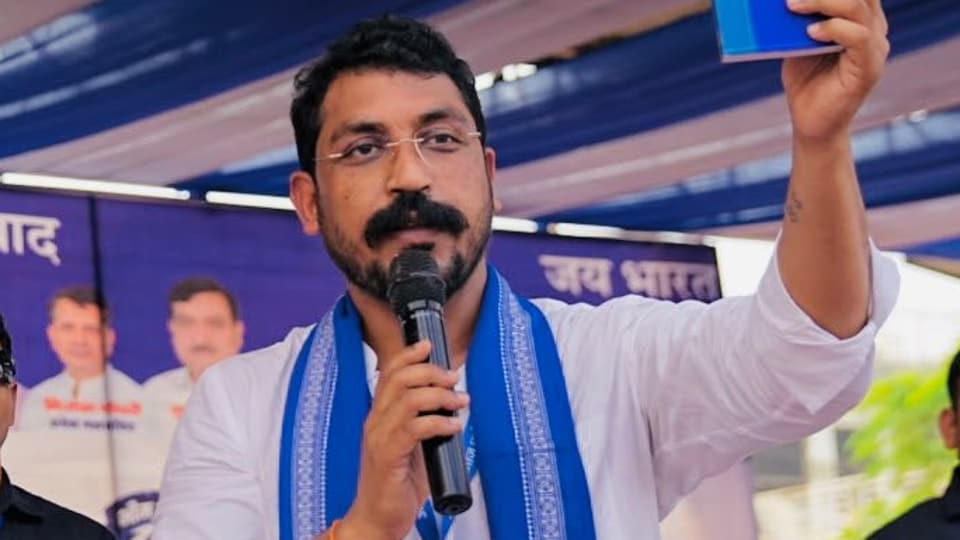
He said more parties will be given space in the bloc, and the priority is to prevent the Bharatiya Janata Party (BJP) from returning to power for a third consecutive term. Azad, who rejected the charge that their alliance would divide opposition votes, questioned the SP’s claim to represent marginalised communities. He said their alliance had reached an understanding on seat-sharing.
Azad said several parties were in talks with their bloc and that the SP and BSP were welcome to join. He added that their bloc would accommodate more partners. “Come and fight with us instead of making allegations. We will give them respectable seats in our alliance to contest the 2027 assembly election,” Azad said in an interview with HT on the day he was named as the alliance’s chief ministerial candidate.
He said the alliance would welcome the BSP and that seat-sharing with prospective partners would take into account their respective political strength.
Azad’s party and the AIMIM contested the 2022 Uttar Pradesh assembly elections separately and failed to win a seat. AIMIM contested 95 seats and secured 0.49% of the votes. The Azad Samaj Party (Kanshiram) contested over 100 seats and polled around 0.13% of the votes.
The SP contested the 2022 assembly elections in an alliance with the Rashtriya Lok Dal, the Suheldev Bharatiya Samaj Party, Apna Dal (Kamerawadi), Mahan Dal and the Janvadi Socialist Party. It won 111 seats while the alliance’s tally was 125 in the 403-member assembly. The BJP returned to power with 255 seats.
Azad questioned the SP’s claim to represent backward classes, Dalits and minorities through its PDA (backward classes, Dalits and minorities) outreach. He said voters tested the party’s pitch in the 2024 Lok Sabha elections and alleged that it had not adequately raised issues concerning marginalised communities after seeking their support.
He referred to his victory from Nagina in the 2024 Lok Sabha polls, where he defeated the BJP candidate by 151,473 votes. Azad said he faced opposition from both the BJP and the SP-led bloc. He questioned why parties that claimed to defend the Constitution and represent marginalised groups were unwilling to support him.
Azad said Opposition parties failed to stop the BJP in the 2014, 2017, 2019, 2022 and 2024 elections. He accused them of claiming they could defeat the ruling party on their own instead of coming together on public issues. “Stopping the BJP is the priority,” he said. He added that the SP should join the new alliance before the elections rather than criticise its formation.
Asked whether he would consider an understanding with the SP after the elections if the numbers required it, Azad said that would depend on the results. He maintained that he wanted the SP to join the front now.
Azad said there was no disagreement with the AIMIM and they had reached an understanding on seat-sharing. He did not specify how many seats each party would contest.
Azad said his selection as the chief ministerial candidate was linked to the work his party had undertaken in Uttar Pradesh since 2017, including interventions on issues concerning students, farmers, wrestlers and protesters.
Azad said the alliance would focus on unemployment, farmers’ demand for a legal guarantee for minimum support price, sugarcane prices, school closures and access to public services. He said these are the issues that political parties should be mobilising people on.
Azad Samaj Party (Kanshiram) and AIMIM are preparing for a joint public meeting on November 26 in Lucknow’s Ramabai Ambedkar Maidan. Azad said workers from both parties would attend the meeting to show their numbers and strength on the ground. The meeting venue has been associated with major BSP gatherings.