E-Paper



Former Madras HC judge CS Karnan, first sitting judge jailed for contempt, dies at 71
Justice Karnan, who had been recently admitted to hospital, died after failing to respond to treatment, the hospital authorities said.

 Prefer HTon Google


Former Madras High Court judge CS Karnan, the first sitting high court judge to be sentenced to imprisonment for contempt of court, died on Friday morning at a private hospital here following age-related health complications. He was 71.
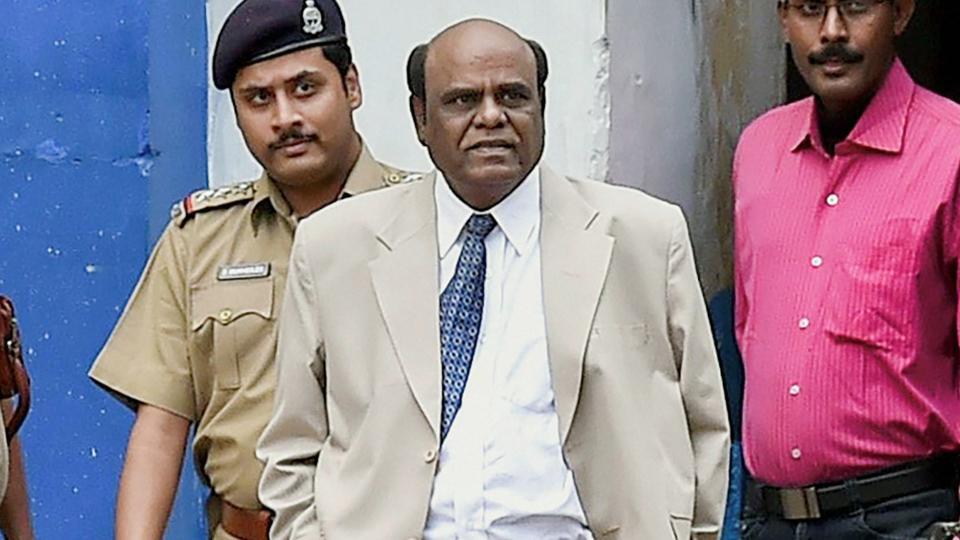
Justice Karnan, who had been recently admitted to hospital, died after failing to respond to treatment, the hospital authorities said.
Karnan practised as a lawyer before being appointed additional judge of the Madras High Court in March 2009, and was elevated to permanent judge in March 2011. Within months, Karnan’s tenure in the judiciary became mired in bitter public clashes with fellow judges and the judicial leadership. In November 2011, he accused fellow judges of harassing him because he belonged to the Dalit community. He subsequently levelled similar allegations against then Madras High Court chief justice Sanjay Kishan Kaul.
In 2014, justice Karnan sparked shock across legal circles when he barged into a courtroom during ongoing proceedings to publicly object to names recommended for elevation as high court judges. As friction with his colleagues mounted, the Supreme Court collegium recommended his transfer to the Calcutta High Court in February 2016. Justice Karnan responded by issuing a judicial order purporting to stay his own transfer before eventually taking charge in Kolkata.
The confrontation with the Supreme Court escalated in January 2017, when justice Karnan wrote to Prime Minister Narendra Modi, accusing 20 sitting and retired judges of corruption and seeking action against them.
A seven-judge bench of the Supreme Court headed by then Chief Justice of India JS Khehar initiated suo motu contempt proceedings in February 2017 and stripped him of all judicial and administrative powers.
Defying the top court, justice Karnan held parallel hearings from his Kolkata residence and issued a series of purported orders against the seven Supreme Court judges—including directing them to appear before him, imposing fines, and even purporting to sentence them to rigorous imprisonment.
On May 9, 2017, the top court found him guilty of contempt of court and sentenced him to six months’ imprisonment. This was the first time that a sitting high court judge had been sentenced to court. Justice Karnan remained untraceable until June, when authorities eventually took him into custody in Coimbatore. The Supreme Court rejected his plea for bail and he was only released in December 2017 after serving his jail term.
In May 2018, he announced the launch of a political party, ‘Anti-Corruption Dynamic Party’.
In December 2020, Chennai Police arrested him over videos containing derogatory remarks against judges and women judicial officers. The Madras High Court initially rejected his bail applications in February 2021, observing that he had prima facie made the statements consciously and was aware of their consequences. It later granted him conditional bail in March 2021.
Born in 1955 in Karnatham village in Tamil Nadu’s Cuddalore district, justice Karnan was the second of eight children born to Swaminathan and Kamalam. He was born Karunanidhi, but he changed his name to Karnan in 1991 at his wife Saraswathi’s request. He is survived by his wife and two sons.
On X, Nitin Meshram said Karnan fought against case discrimination and corruption in the judiciary. “I had a long association with Justice Karnan. He was a man of sterling character and mighty spirit. He considered himself as an adopted son of Ambedkar and continued his fight against caste oppression and corruption in the judiciary,” Meshram said.