E-Paper



‘Govt looking at AI to improve grid management, enable predictive maintenance’
India’s power grid must integrate artificial intelligence (AI) to improve grid management, enable predictive maintenance and forecast outages ahead of time, Union ministers

 Prefer HTon Google


India’s power grid must integrate artificial intelligence (AI) to improve grid management, enable predictive maintenance and forecast outages ahead of time, Union ministers Manohar Lal Khattar and Pralhad Joshi said on Wednesday.
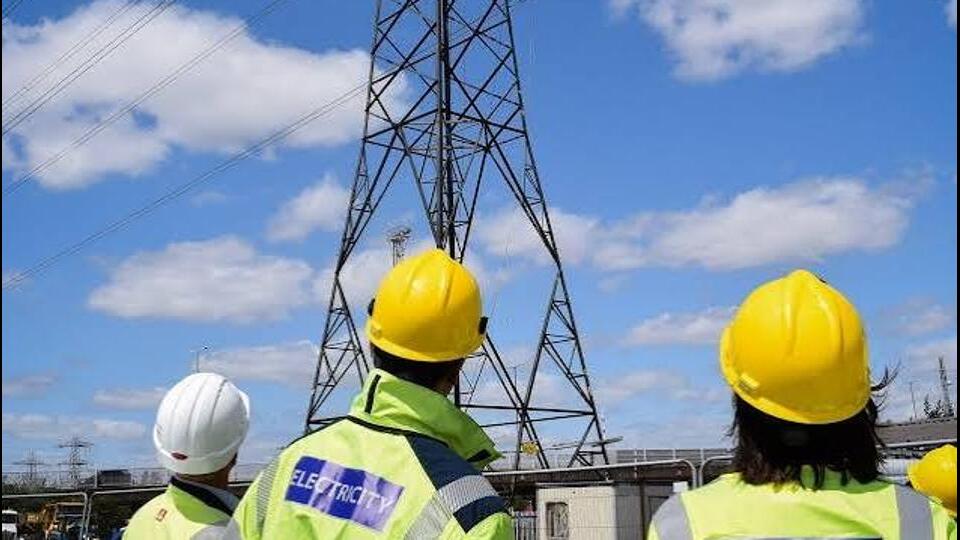
Speaking at a brainstorming conclave organised by the Central Electricity Authority (CEA) on ’Making the Indian Power Sector AI enabled’, Union power minister Manohar Lal Khattar said India’s installed power generation capacity had already touched 555 GW, with a record addition of 70 GW planned in 2026-27. However, there was a need to introduce AI and optimise these assets, which the government was exploring, he said.
“Our goal is to quadruple the generation capacity by 2047…the future of such a vast and complex power system lies not only in generating more electricity, but in its intelligent management. This is where the role of AI becomes decisive,” Khattar said in a virtual address to the conference.
“With AI, we can accurately forecast electricity demand and renewable generation, improve grid management, undertake predictive maintenance and identify power outages in advance,” Khattar said.
The government’s vision is of an AI-enabled power grid that understands demand in advance, integrates renewable energy and storage better, and provides consumers with uninterrupted and affordable electricity, Khattar said, adding, “We have to move beyond a reactive system and build a predictive, proactive and intelligent power system. For this, we will also have to focus on skilled manpower, data security and responsible AI. AI is both a resource and a solution. And when we AI-enable the power sector, we will also empower the country’s energy sector.”
Expressing similar views, Union minister for new and renewable energy Pralhad Joshi said, “Today, India has over 305 GW of non-fossil capacity accounting for almost 55% of our total installed electricity capacity. AI can improve renewable energy forecasting, support with real-time grid balancing, enable predictive maintenance, optimize storage, detect transmission and distribution anomalies, while also reducing renewable energy curtailment.”
Joshi, addressing the conclave virtually, said advanced analytics could also help the ministry and the government identify congestion, optimise network capacity and extract greater value from existing infrastructure.
“Let me also add that responsible adoption of AI will be critical. Strong data governance, cybersecurity, skilled human resources, and rigorous testing will be essential. Human oversight and accountability must remain central to the critical grid operations,” Joshi added.
The two-day conclave, organised by the CEA in collaboration with the Central Board of Irrigation and Power (CBIP) and the Federation of Indian Chambers of Commerce and Industry (FICCI), is bringing together dignitaries, policymakers and industry experts to deliberate on the use of AI in the sector.