
 E-Paper





Rezaul Hasan Laskar is Foreign Editor with the Hindustan Times, which he joined in 2015. He began as a journalist in his hometown of Shillong in northeast India and has worked in newspapers and wire services over the years. He moved to New Delhi in 1997 and initially focused on defence, national security, Jammu and Kashmir and the northeast, while also working of foreign policy and international relations. He has been part of the media delegation accompanying PMs on foreign visits and has reported from destinations ranging from Tibet to Ukraine. Between 2007 and 2013, he was the Press Trust of India correspondent in Pakistan, one of only two Indian journalists allowed to report from the country. He extensively covered Pakistan’s domestic politics and the life of the common people, as well as the fallout of the 2008 Mumbai attacks on India-Pakistan relations and the subsequent trial in Pakistan of the suspects involved in the attack. As part of his reportage in Pakistan, he travelled the breadth of the country, from the Swat Valley to Balochistan. Reza’s first gig in journalism was writing a weekly music column, and music – especially classic rock – remains a keen interest. He is also a movie buff and a keen photographer.
India, Nepal adopt joint vision for ‘Viksit Bharat and Samunnat Nepal’
The two countries have yet to decide how the proposed review will be conducted, with Misri saying both sides must first assess their priorities.

A new joint vision document unveiled on Monday by India and Nepal as an updated framework for bilateral ties envisages a review of the Treaty of Peace and Friendship of 1950, with foreign secretary Vikram Misri saying that the work done by an Eminent Persons Group (EPG) will no longer be relevant to this process.
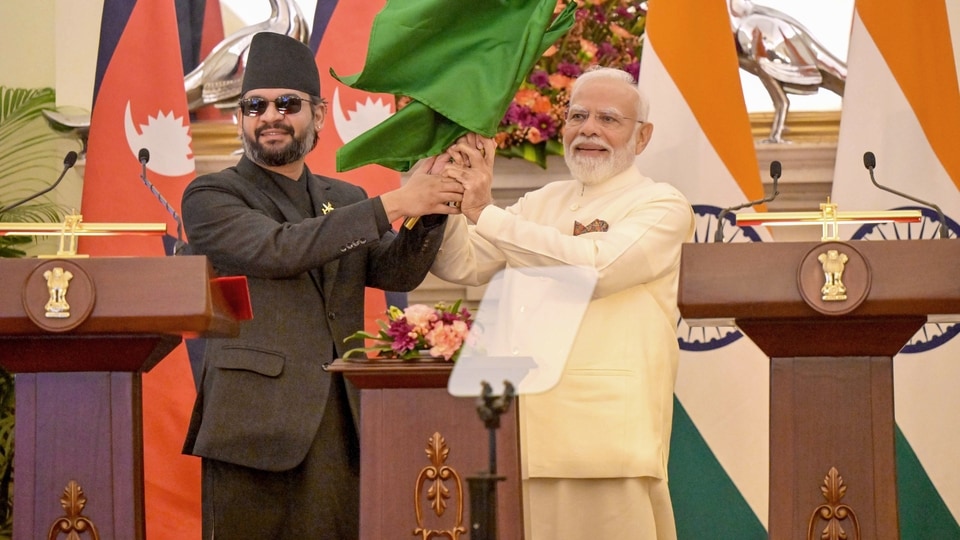
The joint vision with the theme of “Viksit Bharat and Samunnat Nepal” states that Prime Minister Narendra Modi and his Nepalese counterpart Balendra Shah agreed that the bilateral partnership should reflect contemporary political, economic and technological realities and be based on an “updated and forward-looking legal framework”.
As part of this framework, existing bilateral agreements, including the Treaty of Peace and Friendship of 1950, “could be reviewed on the basis of mutual consent”. All outstanding matters, including those related to water resources, energy, trade and the boundary, “are to be resolved through mutual discussion and dialogue”, according to the joint vision, one of the main outcomes of Shah’s visit.
Also read: A welcome thaw in India-Nepal ties as Modi, Balen Shah pave way for greater cooperation
EPG Report and Treaty Review
Misri told a media briefing that the EPG report is “in the past” and no longer relevant to the process of updating India-Nepal relations. “We are looking at a forward-looking approach to this particular issue. We are not looking backward and to me, therefore, the [EPG] report…is not relevant,” he said.
“It pertains to the past – we need to look ahead, we need to look forward in keeping with the forward-looking vision of the joint vision document that’s been announced by the leaders today.”
The EPG was formed in 2016 with four members each from India and Nepal, and it held nine meetings during 2016-2018 before reportedly finalising its report. However, the report has never been made public. Among the key issues examined by the EPG were the Treaty of Peace and Friendship, trade and transit, water resources, development cooperation, and border management.
Also read: India, Nepal sign 8 MoUs from space to security as Modi hosts Balen Shah
Mechanisms for Updating Bilateral Agreements
Misri responded to a question on how the updated framework for bilateral relations, including the review of existing agreements, would be done by saying that the two sides had not yet decided on the mechanics for this process. However, he said existing mechanisms such as the foreign office consultations led by the two foreign secretaries and the joint ministerial commission headed by the foreign ministers can be used for this purpose.
Misri made it clear that the proposal to review the Treaty of Peace and Friendship was not entirely new. “Just to flag the fact that this is not something unprecedented that has been talked about. Issues or references to re-looking at the Treaty of Peace and Friendship of 1950 have been there earlier. They have figured in bilateral documents…Discussions haven’t moved forward for various reasons,” he said.
“But we do see the point that with the new government in place [in Nepal], with the desire to have a more contemporary, relevant and forward-looking framework for the relationship between the two countries, that this document, which is now already more than 75 years old, can perhaps be re-looked at,” Misri said.
Both countries have their own priorities and a certain amount of homework will have to be done by both sides before they “mutually agree on which is the best mechanism” for the process, Misri said.
Also read: India announces $1.6-billion package for Nepal as Modi, Balen Shah unveil joint vision to reset ties
Border Management
In the context of issues related to the boundary, Misri said Nepal’s claims to areas such as Lipulekh had not figured in Monday’s discussions. There is a multi-layered architecture between the two countries to look at border management, ranging from field survey teams to the boundary working group.
Considerable work has been done at a technical level in recent years to “tend to the tasks along the vast majority of the boundary which is settled”, such as maintenance of pillars and investigation of reports of encroachment, and there has been “very good and smooth progress”, Misri said.
Modi and Shah have given direction for the two foreign secretaries to take the task of border management forward, and the two sides will “meet in a forward-looking manner in line with the joint vision”, Misri said.
Frequently Asked Questions


