
 E-Paper



India's infra push cuts travel time across key routes: From Delhi-Mumbai to Katra-Srinagar
The introduction of Vande Bharat trains further enhances rail travel efficiency, showcasing significant advancements in connectivity nationwide.

 Prefer HTon Google


India's expanding network of bridges, tunnels, expressways and faster trains is significantly reducing travel time across several major routes. In a detailed factsheet, PIB highlighted how infrastructure projects are cutting travel times by replacing longer routes, difficult terrain and river crossings with direct connections.
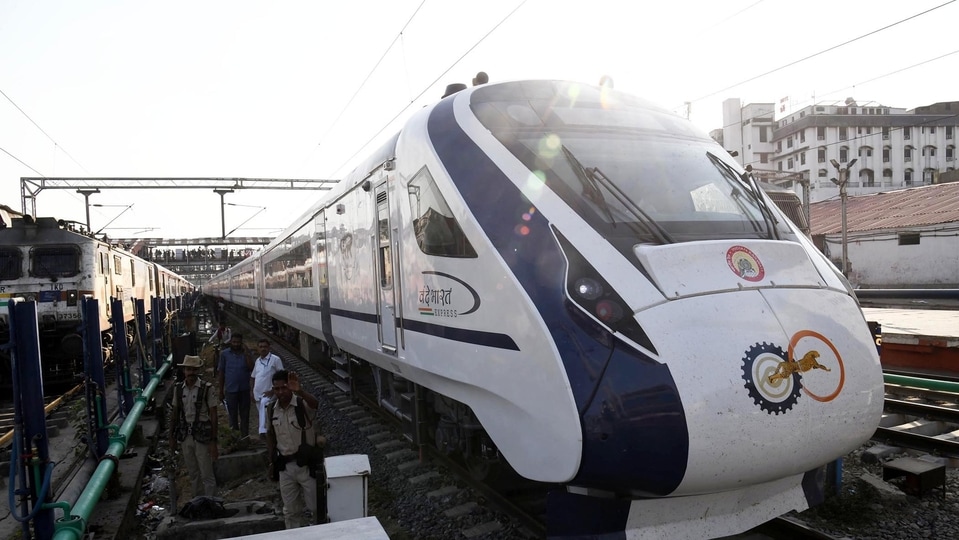
The factsheet cites examples from across the country, including the Delhi-Mumbai and Delhi-Dehradun corridors, the Atal Tunnel in Himachal Pradesh, bridges in the Northeast and new-generation Vande Bharat trains.
Delhi-Mumbai travel time to fall to about 12 hours
The Delhi-Mumbai Expressway is being developed to bring the road journey between the two cities down to about 12 hours from roughly 33 hours, according to the factsheet.
Other major expressways have already delivered substantial reductions.
The 82-km Delhi-Meerut Expressway has brought travel time between Delhi and Meerut down from around 2.5 hours to about 50 minutes. The 118-km Bengaluru-Mysuru Expressway has reduced the journey from nearly three hours to about 75 minutes.
Also Read | Rise of the travel ecosystem economy in India
The recently developed Delhi-Dehradun Economic Corridor has reduced the journey from more than six hours to around 2.5 hours. The 213-km access-controlled corridor became operational in 2026.
The Mumbai-Nagpur Samruddhi Mahamarg has also substantially reduced travel time between the two cities, from about 16 hours to around eight hours.
The Ahmedabad-Dholera Expressway has reduced the Ahmedabad-Dholera journey from 100 km and 2 hours 15 minutes to 83 km and 45 minutes, while the Ahmedabad-Bhavnagar journey has fallen from 169 km and 3 hours 15 minutes to 141 km and 1 hour 45 minutes.
The Delhi-Amritsar-Katra Expressway has also shortened key journeys. The first phase has reduced Delhi-Amritsar travel from eight hours to four hours and Delhi-Katra travel from 14 hours to six hours, according to the factsheet.
Bridges cut hours from journeys in Northeast, Bihar
Several bridge projects have transformed connectivity in regions where rivers and difficult terrain previously added hours to journeys.
The Bhupen Hazarika Setu, also known as the Dhola-Sadiya Bridge, reduced travel time between Rupai in Assam and Meka/Roing in Arunachal Pradesh from six hours to one hour, saving about five hours.
The Bogibeel Bridge over the Brahmaputra transformed connectivity between Dhemaji and Dibrugarh. Journeys that previously took almost an entire day now take about one to two hours.
In Bihar, the Kosi Rail Mahasetu reduced the rail journey between Nirmali and Saraigarh from about eight hours to 30 minutes. The rail distance was also reduced from around 300 km to 22 km.
The 200-metre Sisseri River Bridge in Arunachal Pradesh has cut travel time between Pasighat and Roing by about five hours, strengthening connectivity between the Dibang Valley and Siang regions.
Tunnels bypass difficult terrain
The factsheet also highlights tunnels that have shortened routes through mountainous regions.
The 9.02-km Atal Tunnel bypasses the Rohtang Pass, cuts the Manali-Sarchu distance by 46 km and saves four to five hours of travel. It also provides all-weather connectivity to Lahaul-Spiti.
The Dr Syama Prasad Mookerjee Tunnel in Jammu and Kashmir cuts the road distance by about 30 km and saves nearly two hours on the Jammu-Srinagar route. The 8.45-km Banihal-Qazigund twin-tube tunnel saves around 1.5 hours.
The Sela Tunnel in Arunachal Pradesh, built at an altitude of about 13,000 feet, has cut travel time on the Tezpur-Tawang route by more than an hour while providing all-weather connectivity.
Vande Bharat trains bring down rail travel time
The infrastructure push extends to railways, with newer trains and high-speed rail corridors aimed at reducing journey times.
The 2026 railway timetable saw 549 trains being speeded up. Of these, 20 trains gained 60 minutes or more, while 48 gained 31-59 minutes, 105 gained 16-30 minutes and 376 gained five to 15 minutes.
The New Delhi-Varanasi Vande Bharat Express, launched in February 2019, takes approximately eight hours on the route and is described in the factsheet as around 40-50% faster than earlier services.
More recent Vande Bharat services have produced further time savings. The Katra-Srinagar service has cut the journey to about three hours, while the extended Jammu-Srinagar service covers the journey in 4 hours 50 minutes. The Banaras-Khajuraho service saves about 2 hours 40 minutes, while the Ernakulam-Bengaluru service saves more than two hours.
The first Vande Bharat Sleeper service between Howrah and Guwahati has reduced the journey from about 17 hours to around 14 hours, saving nearly three hours compared with the Saraighat Express.
Also Read | India’s travel boom is creating a lost-luggage problem nobody talks about
Mumbai-Ahmedabad bullet train targeted for 2027
The Mumbai-Ahmedabad High-Speed Rail Corridor is expected to bring another major reduction in travel time. The 508-km corridor is designed for an operational speed of 320 kmph and is expected to bring the journey down to about 1 hour 58 minutes, compared with eight to nine hours by road.
The corridor will have 12 stations and includes a roughly 7-km undersea rail tunnel beneath Thane Creek. The first service is targeted for August 2027.
Seven additional high-speed rail corridors announced in the Union Budget 2026-27 are expected to span nearly 4,000 km, with an estimated investment of ₹16 lakh crore. The indicative travel times include around 3 hours 50 minutes between Delhi and Varanasi, 2 hours between Bengaluru and Hyderabad, 48 minutes between Mumbai and Pune and 1 hour 55 minutes between Pune and Hyderabad.
The factsheet presents the infrastructure expansion through the time saved on everyday journeys, arguing that bridges, tunnels, expressways and modern rail services are reducing the constraints imposed by distance and improving connectivity between regions.
Separately, the government has said the national highway network reached 1,46,572 km by March 2026, up from 91,287 km in FY2014, while four-lane and wider national highways increased to 45,516 km from 18,371 km in 2014.


