E-Paper



Jaishankar condemns Black Sea attacks in call with Ukrainian counterpart
Jaishankar said Sybiha briefed him on recent developments in the Ukraine conflict and peace negotiations.


India on Thursday reiterated its condemnation of attacks on merchant vessels and Indian seafarers in the Black Sea as external affairs minister S Jaishankar spoke to his Ukrainian counterpart Andrii Sybiha to discuss the Russia-Ukraine conflict and recent developments in peace negotiations.
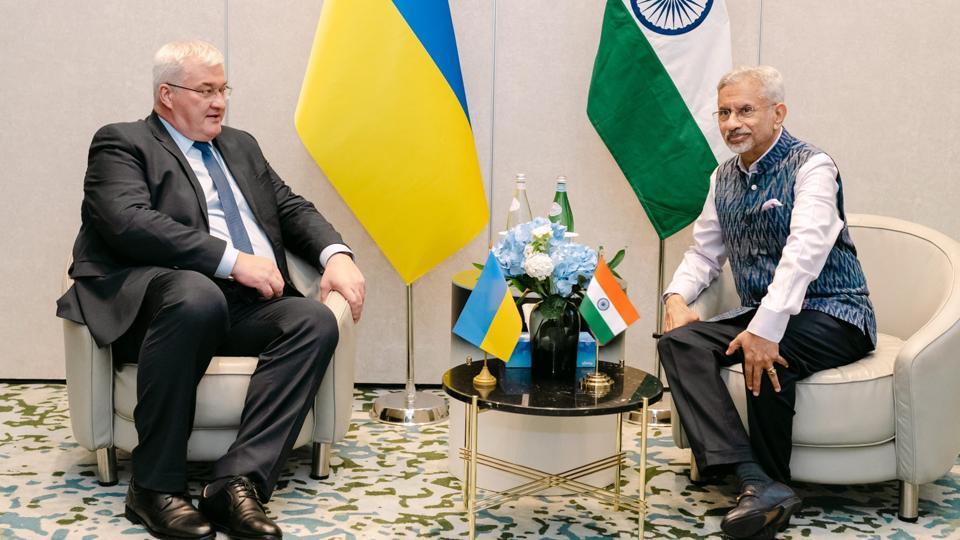
The phone call came days after attacks on foreign-flagged vessels in the Black Sea by both Russia and Ukraine killed five Indian seafarers and left two more missing. Thirteen Indian seafarers are also caught on board a foreign-flagged vessel in the Ukrainian port of Chornomorsk, which has faced Russian drone and missile strikes in recent days.
Jaishankar said on social media that he and Sybiha discussed the attacks on commercial shipping and Indian seafarers in the Black Sea. “Such attacks by any party are absolutely unacceptable and India condemns them unequivocally,” he said.
He emphasised the “fragility of the current international situation, with multiple conflicts in different geographies” that are impacting fuel, fertiliser and food security, especially for the Global South.
Jaishankar, Sybiha's ‘good call’
Jaishankar said Sybiha briefed him on recent developments in the Ukraine conflict and peace negotiations. “India has consistently advocated dialogue and diplomacy between the parties concerned,” he said.
Sybiha said in a social media post that he had a “good call” with Jaishankar, during which he urged India to play an “active role” in peace efforts. He contended that attacks on merchant shipping in the Black Sea amounted to an extension of Russia’s aggression beyond the borders of Ukraine that is impacting global food security.
“I stressed that the consequences of Russian aggression extend far beyond Ukraine’s borders. By attacking civilian vessels in the Black Sea, Russia undermines freedom of navigation and puts global food security at risk. At the same time, its continued war fuels instability in global energy markets, affecting countries far beyond our region,” Sybiha said.
“I reaffirmed Ukraine’s commitment to achieving a comprehensive and lasting peace and encouraged India to play an active role in peace efforts. We agreed to remain in close contact,” he said.
Sybiha also briefed Jaishankar on the outcomes of Ukrainian President Volodymyr Zelensky’s visit to the US this week.
The phone call also came a day after the Ukrainian embassy in India said Kyiv had alerted New Delhi about the deteriorating security situation in the Black Sea. The embassy also said it had not received a response from the Indian side for a phone conversation between the two foreign ministers to discuss the situation.
India, which has not publicly censured Russia for the invasion of Ukraine, has urged both sides to return to dialogue and diplomacy as the conflict has impacted food, fuel and fertiliser security, particularly for the Global South. Ukraine’s leadership has called on India to use its special relationship with Russia to give a nudge to the peace process.
Russia has stepped up missile and drone strikes on Ukrainian cities and Black Sea ports in recent days, affecting the shipment of grains and fertilisers.