E-Paper



Jantar Mantar played host to varying degrees of discontent
The neem-lined stretch outside the observatory is better known – not only in Delhi, but across India – as a place where people come to make themselves heard.

 Prefer HTon Google


Until the early 1990s, Jantar Mantar was more likely to feature in a school excursion itinerary than on a protest banner. The 18th-century astronomical observatory, built by Jaipur’s Maharaja Sawai Jai Singh II, was a Delhi sightseeing stop, its Misra Yantra even inspiring the logo of the 1982 Asian Games in the Capital.
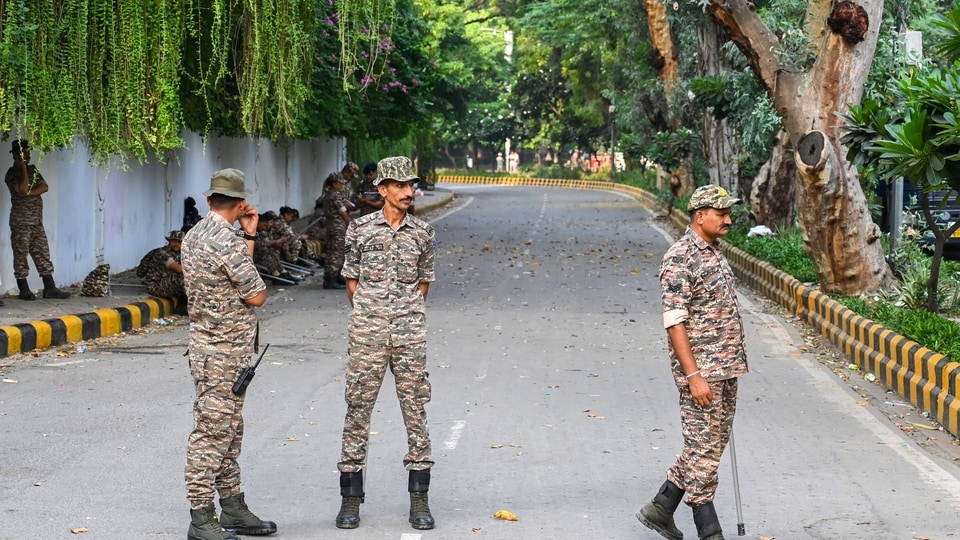
Today, the neem-lined stretch outside the observatory is better known – not only in Delhi, but across India – as a place where people come to make themselves heard.
Also Read | Ramlila Maidan, Jantar Mantar’s alternative, saw just 4 protest bookings in 3 years
From astronomical observatory to protest landmark
Farmers, workers, veterans, students, activists and ordinary citizens have gathered here over three decades to challenge decisions they believe have ignored their grievances. On Monday, however, Delhi Police de-notified Jantar Mantar as a designated protest venue, redirecting demonstrators to three other sites across the city.
The decision marks another turn in the history of a space that became central to Delhi’s protest culture after demonstrations were banned at the Boat Club lawns near India Gate in the early 1990s. In 1988, farmer leader Mahendra Singh Tikait had led a week-long agitation at the Boat Club. But the scale of the gathering and the unease it caused eventually led to restrictions on protests there. Jantar Mantar Road was then notified as a designated protest site.
Also Read | Jantar Mantar in Lutyens’ Delhi de-notified as protest site; 3 new venues named
How Jantar Mantar became Delhi’s protest hub
Historian Ramachandra Guha, in India After Gandhi, describes how Rajpath in the early 1990s became a village of tents, each representing a different cause. Hill peasants gave way to industrial workers, Maharashtra farmers to Tibetan refugees, and Konkani speakers to Hindu monks demanding a ban on cow slaughter. Worried about the impression such demonstrations made on foreign visitors, the government dismantled the tents and cleared the lawns.
The protesters regrouped near Jantar Mantar, Guha writes, moving away from the immediate gaze of the state but into view of citizens passing through the busy Connaught Place shopping district.
For the next 33 years, the half-kilometre stretch became a public ledger of discontent from across India. According to Delhi Police estimates, the Parliament Street police station receives more than 24,000 requests annually for permission to hold protests.
The causes have been as varied as the people raising them.
In 2017, Tamil Nadu farmers held mice in their hands and mouths to draw attention to the agrarian crisis. A man from Madhya Pradesh spent years protesting after government records declared him dead. Ex-servicemen staged a relay hunger strike lasting more than 700 days over the implementation of One Rank One Pension (OROP), while followers of jailed self-styled godmen camped at the site seeking the release of their leaders.
Jantar Mantar was also among the early epicentres of the Anna Hazare-led anti-corruption movement in April 2011. Parents and relatives of murdered Noida teenager Aarushi Talwar gathered there in 2011 and 2013 demanding justice. Retired military and paramilitary personnel returned over several years to press their OROP demands. The annual Delhi Queer Pride movement, too, has found space in the area.
Its history also includes campaigns that are not as conventional: protests by animal lovers against the use of cow’s milk, demonstrations by those opposed to street dogs, the Akhil Bharatiya Joota Maaro Andolan, and a lone protester from Chandauli who believed satellites were hacking into people’s brains in his hometown.
More recently, the site hosted the January 2023 protest by women wrestlers seeking an investigation into allegations of sexual harassment by then Wrestling Federation of India (WFI) president Brij Bhushan Sharan Singh. Later, in 2026, demonstrations and a hunger strike involving Sonam Wangchuk and the Cockroach Janta Party (CJP), between June 6 and July 25, spilled on to Tolstoy Marg and Sansad Marg. The agitation culminated in the resignation of then Union education minister Dharmendra Pradhan.
But the protest site has been contested territory. Residents of nearby houses have complained of noise, blocked entrances, garbage and sanitation problems. In Varun Seth & Others vs Police Commissioner, residents of Jantar Mantar Road approached the National Green Tribunal (NGT) over the effects of continuous demonstrations. In 2017, the tribunal directed authorities to stop protests in the area, citing residents’ right to a clean and noise-free environment under Article 21 of the Constitution. The Supreme Court observed in July 2018 that a blanket ban on protests at Jantar Mantar was not viable, leaving authorities to balance peaceful assembly with residents’ concerns.
Varun Seth, who said he was born in the neighbourhood, said the problems had intensified after the Anna Hazare movement in 2011 and had persisted despite the earlier restrictions. “For one year after the NGT order, we lived peacefully, but the locality now faces the same issues all over again… Roads leading to our homes are barricaded, there is noise and garbage, and our daily lives are disrupted. We hope this decision will finally bring us some peace.”
Also Read | Watch | CJP's Saurav Das, Ashutosh Ranka breach locked Jantar Mantar, detained: ‘We reclaimed it'
The ecosystem that grew around demonstrations
Over the years, an ecosystem has grown around the demonstrations. The shade of neem trees offers some respite from Delhi’s summer heat; small eateries, tea vendors and public toilets cater to protesters who may stay for days. Nearby Bangla Sahib Gurdwara has also provided food, toilets and shelter during police crackdowns.
The latest order has reopened a familiar question: where can citizens protest close enough to the seat of power to be heard?
Delhi Police has designated Ramlila Maidan, Burari Ground and CBD Ground in east Delhi as alternative venues. Ramlila Maidan, about four kilometres from Jantar Mantar, is the closest to Lutyens’ Delhi. Burari is around 18km away, while CBD Ground in Shahdara is 12km away. Both Ramlila Maidan and CBD Ground are currently hosting Ramlila events and fairs, while residents’ welfare associations in east Delhi have raised concerns about congestion around the CBD site.
CJP founder Abhijeet Dipke criticised the decision, saying it would not extinguish dissent. “Jantar Mantar is not just a location but a spirit of resistance that nobody can ever take away.”
For historian Prof Narayani Gupta, the site’s appeal lies in its openness and proximity to the seat of power. Speaking to HT, she recalled how political protests in independent India began outside Parliament before moving to the Boat Club and, eventually, Jantar Mantar.
She remembered university students shouting “Portuguese Goa Chhodo” in support of Goa’s liberation, only for the noise to disturb legislators. Later, hundreds would march from ITO to Rajpath waving red flags before heading to the zoo after their meetings. “The next move was to Jantar Mantar, which to my mind has been the perfect site – tranquil, green, an open area in a spacious city,” she said, adding that Bangla Sahib’s hospitality had offered protesters refreshments. “It is sad that protests are not seen as part of democracy but as a ‘law-and-order’ problem.”