
 E-Paper



Rajya Sabha polls: The daunting task of getting nominations scrutinised
There have been several instances of nominations being rejected, some of which reached the Supreme Court, where their fate was then decided.

 Prefer HTon Google


The process of filing nominations for the October 16 biennial election to the Rajya Sabha will conclude on Tuesday. It is the first hurdle that candidates, whether nominated by political parties or contesting as independents, must face.
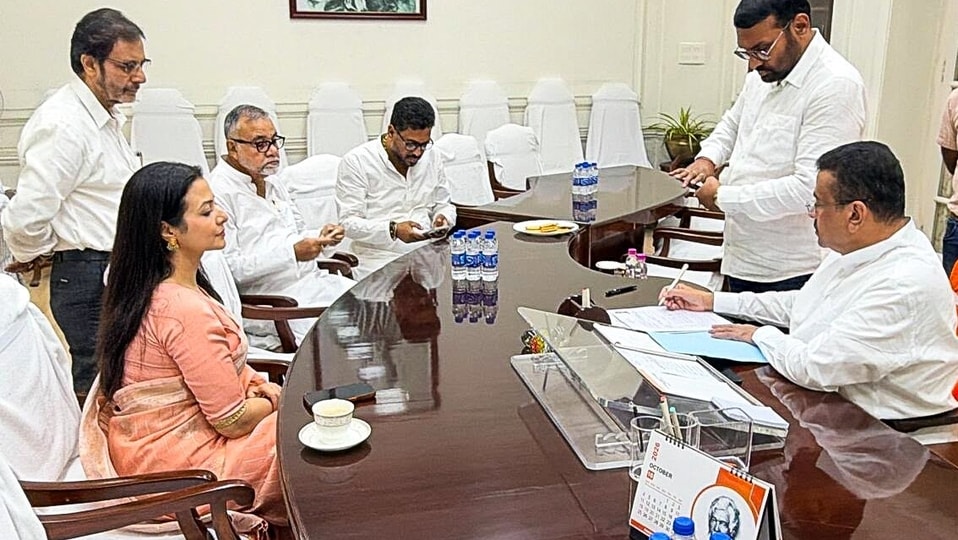
While technical glitches such as spelling errors or incorrect dates can be rectified with little repercussion, withholding information or providing false details about criminal cases or assets can lead to nominations being rejected, pushing the candidate out of the fray.
Eight leaders from the Bharatiya Janata Party nominated from Uttar Pradesh and one from Uttarakhand, Dinesh Arya, will file their nominations on Tuesday. The party’s candidate from West Bengal, Koel Mallick, filed her nomination on Monday.
Deep Dive

Samajwadi Party’s third nominee Ravidas Mehrotra will also file his nomination, while the other two, Ram Gopal Yadav and Dhanraj Parimal Nathwani, have already filed theirs.
The process is both time-consuming and daunting as nominees are required to furnish a bunch of details that the returning officer (RO) minutely scrutinises to decide whether the papers are in order.
There have been several instances of nominations being rejected, some of which reached the Supreme Court, where their fate was then decided. A most recent case of nomination being rejected on grounds of withholding information was that of Congress nominee Meenakshi Natarajan earlier this year.
She was nominated to contest the polls for the Upper House from Madhya Pradesh, but the RO rejected her papers because she did not disclose a court summons issued to her. Her appeal was rejected by the Supreme Court, citing the 1952 NP Ponnuswami verdict. The Court had then ruled that once the election process is underway, no court may intervene or interrupt it. The court laid down that an aggrieved candidate cannot appeal a rejection mid-election and must wait until the election concludes.
The rejection rules
The RO’s role is key, and the law clearly sets out the rules for rejecting nominations.
As per the rules, candidates have to furnish affidavits detailing information related to criminal cases, assets, liabilities, and educational qualifications, and forms endorsing their candidature, within a given time and date.
To ensure nominations are not rejected on flimsy grounds, such as errors in dates, the choice of symbols, or discrepancies in age or name, the rules allow amendments to be made at the time of presenting the nomination paper.
The grounds for rejection can be the candidate not being qualified to be a member of the concerned legislature; failure to give an account of election expenses, clearances, and no-dues certificates; nomination paper not in the prescribed format, and false information, among others.
Wrongful decisions
There have, however, been cases where ROs were indicted for wrongful decisions. One such case is that of BJP’s lawmaker Anil Baluni, whose nomination was rejected on false grounds.
In 2002, Baluni’s nomination for the legislative assembly election in what was then Uttaranchal, was first accepted and then rejected on the grounds that he did not file the required documents within the stipulated time. Baluni challenged the order, citing forensic examination of the nomination papers, but the High Court of Uttaranchal did not accept his plea.
Consequently, Baluni could not contest the polls but instead filed a case in the Supreme Court, which, in 2005, ruled that there was evidence of tampering. The SC also declared the election, which was won by Surinder Singh Negi of the Congress, as void and ordered a re-poll for the Kotdwar constituency.


