
 E-Paper



Sakleshpur’s poet-saint and his jolige of song
July marks the passing of two legendary personalities associated with Karnataka and Kannada


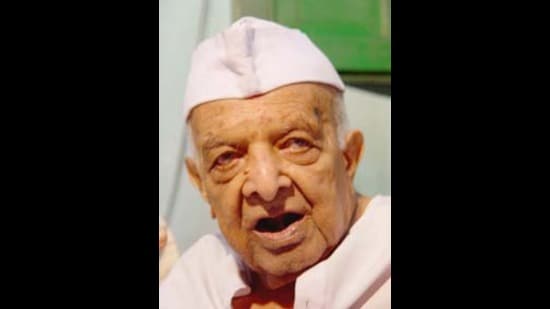
July marks the passing of two legendary personalities associated with Karnataka and Kannada. Neither spoke Kannada as a mother tongue, but both received the Rajyotsava Award to mark an immense contribution to the language and culture. One of them was the silver-voiced playback singer, Gaana Kogile S Janaki, who died at 88 in Mysuru on July 11. The other was towering folklorist and Gandhian, Kannada Santha (the Kannada saint) Dr SK Karim Khan, who died in Bengaluru on July 29, 2006. The arcs of these two remarkable lives met briefly but memorably.
Recording her first song for a Tamil film at 19, Janaki went on to a dazzling musical career spanning six decades, during which she garnered credits on a staggering 48,000 songs in 20 Indian languages, of which the largest number – over 8000! – were in Kannada. Many of them were much-loved duets with greats like PB Srinivas, SP Balasubrahmanyam and Dr Rajkumar. Originally from Andhra Pradesh, she chose to move to Mysore at the age of 80, and lived there happily for the rest of her life.
Unlike Janaki, Dr SK Karim Khan was born in the coffee-growing hills of Sakleshpur in 1912. His father, Abdul Rahman Khan, was a decorated Afghan soldier who had fought against the British in the Second Anglo-Afghan War; his mother, Zainabi, was of Arab descent. Young Karim attended the local Kannada medium school, where he mingled with children from various communities. One of his teachers, the Sanskrit scholar Achangi Narayana Shastri, was a huge influence on the boy. Before long, Karim developed a keen interest in Sanskrit, Kannada literature, and Indian philosophical traditions and texts.
But it was Janapada – the folk traditions – that truly captured Karim’s imagination. As a lad, he was often to be found at the campfires of itinerant traders passing through Hassan and Sakleshpur, listening, enthralled, to their songs. That early love would later lead him on a 30-year-long independent project, mostly on foot, through villages, hills, and forests, documenting the oral lore, songs and stories of both rural communities and the far more remote tribal communities of Karnataka – the Halakkis, Kadukurubas, Siddis, Eravas, Soligas and more. His extraordinary effort impoverished him, but also earned him the reverential title of Janapada Jangama, and saw him appointed to the post of President of the Karnataka Janapada Academy in 1987, at the age of 75. During his three-year tenure, he initiated the first-ever comprehensive video documentation of a variety of folk performing arts and culturally important jaatres (temple fairs) across the state.
When he was only 24, Karim attended Gandhiji’s 1936 speech about Swaraj at the National High School, Bangalore. Mesmerised, he donned the Gandhi cap, embraced khadi for life, and plunged into the freedom struggle, writing poems and stories about Hindu-Muslim unity. Using his beautiful singing voice to advantage, he sang both original and learnt songs to recruit people to the Indian National Congress, and was jailed several times for his pains. Alongside this, he was deeply involved in the movement for the unification of Karnataka.
His extensive knowledge of Kannada dialects and folk traditions also saw filmmakers woo him to write screenplays, dialogues and song lyrics for them. Among his most memorable compositions are Baara Chandramaa, Neene Neere Mandaara and the timeless devotional Jaya Gowri Jagadeeshwari – all of which were sung, as a solo or duet, by – drumroll, please– S Janaki.
Tragically, in his final years, Dr SK Karim Khan was forgotten by the government of his home state. In 2014, following relentless advocacy by his family and fans, the Kannada Santha had a main street in Bangalore’s upscale Indiranagar named after him, a street that both residents and cabbies continue to refer to as 100 Feet Road.
(Roopa Pai is a writer who has carried on a longtime love affair with her hometown Bengaluru)


