
 E-Paper



SC says no impediment to Bankey Bihari temple redevelopment will be tolerated
The opening of the gullacks is covered with flowers, plates, etc., and the QR codes for online donations have been destroyed

 Prefer HTon Google


The Supreme Court on Tuesday said it will not tolerate any impediment to the redevelopment of Mathura’s Bankey Bihari temple after a high powered committee constituted by the court leveled serious allegations of pilferage of temple donations by priests and obstacles in acquiring the surrounding area.
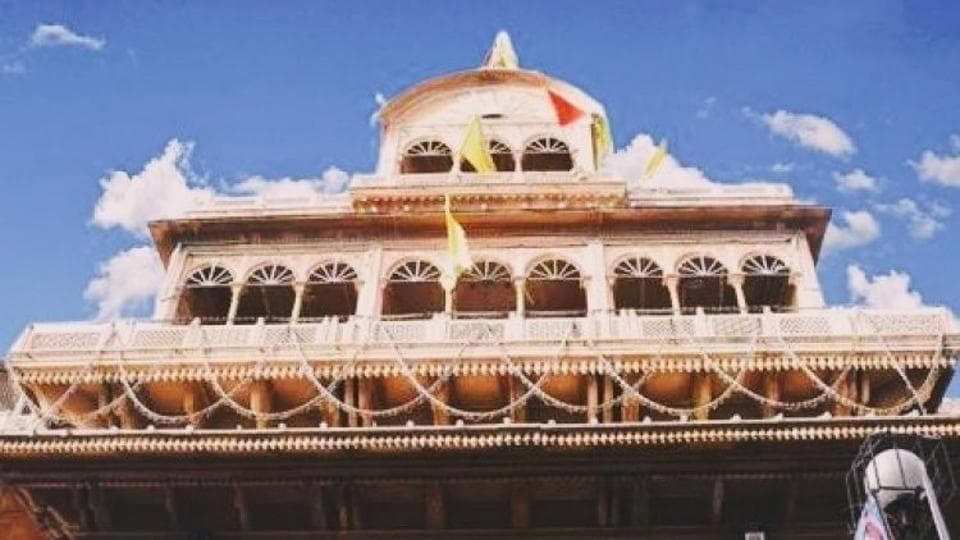
The report by the high powered temple committee (HPTC) headed by former high court judge, justice (retd) Ashok Kumar said that members of the Goswami sect – the traditional shebayats (priests) and their agents stand with bags in front of the gullacks (treasury pots) instructing devotees to put all donations into the bags.
The opening of the gullacks is covered with flowers, plates, etc., and the QR codes for online donations have been either destroyed or covered to keep them hidden from devotees coming to make donations.
A bench headed by Chief Justice of India (CJI) Surya Kant said, “We direct that every penny must come into the donation boxes and online temple treasuries, and any impediment by shebayats or bhandaris shall be viewed very seriously.”
Senior advocate Shyam Divan, appearing for the Goswami sect along with advocate Tanvi Dubey, said they will respond to the report as it was filed late Monday. “We have serious issues with regard to the findings in this report, to which we will file our response.”
The bench made it clear, “Let there be no doubt, if a single penny is misused, we will direct the police to register a case.”
Another lawyer representing another Goswami sect pointed out that what the shebayats are collecting is their due for maintaining their expenses. The bench disapproved of such a conduct and said, “The donation must first be dedicated to the deity, and from that you will get your share. You cannot appropriate it from devotees going to the temple and stop them from donating into the temple treasury as if you have a lien over the fund.”
Senior advocate Maninder Singh, who appeared for the HPTC, said that the committee was finding it hard to implement the temple’s redevelopment plan.
A total of 22,850 square meters of land will be required for this purpose, for which nearby lands have been identified. However, the acquisition process is very slow; as of today, 28 sale deeds spanning 2,696.98 square metres, have been executed in favor of the temple. The total land required to be purchased involves 188 plots measuring approximately 19,182 square metres.
Singh said, “The Goswamis are instigating the owners of the surrounding properties not to sell their land in favour of the temple. Their family members have also refused the sale of land in the development area owned by them, and there is open defiance to the proposal for constructing multi-storeyed facilities providing for a medical facility, washrooms, waiting lounge, food court, and other facilities for pilgrims.”
The bench told Singh, “We will permit you to go ahead with the acquisition. If there is any impediment, we will direct the state to acquire the land.”
The court noted that members of the Goswami sect were made part of the HPTC to ensure the smooth functioning of the temple. “However, if they are creating impediments, we may have to remove them,” the bench added.
Besides the retired judge, the HPTC has the Mathura district magistrate/collector as member-secretary, two district judicial officers, senior superintendent of police (Mathura), municipal commissioner (Mathura); and vice chairman, Mathura Vrindavan Development Authority among other members.
Singh said that with so many members, the Goswami sect cannot question the expenses utilised by the committee for the temple’s development.
Divan said that the high-powered committee has been arbitrarily spending from the temple fund and is not sharing details about the committee meetings. Opposing this, the committee said, “How can they complain of funds being misused? They are not even allowing the money to be converted as temple donation. There are photographs of their bhandaris collecting money in bags. Those devotees who oppose are restricted from viewing or accessing the deity,” Singh said.
The committee said that if these donations are allowed to fall into the temple kitty, it is likely to increase the temple’s monthly earnings by several lakhs of rupees.
The HPTC was constituted by the court on August 8, 2025, in a bunch of petitions filed by the Bankey Bihari temple management committee and other stakeholders, challenging a May 26, 2025 ordinance issued by the state allowing it to use temple funds for a development corridor project in a 5-kilometre space around the temple.
The state’s ordinance titled “Uttar Pradesh Shri Bankey Bihari Ji Temple Trust Ordinance, 2025” earned the ire of the Goswami community, as they cited a 1939 judicial decree in a suit giving them rights to run the temple’s affairs. They said that the ordinance allowed state control of a private temple in total ignorance of the law giving them the right to administer and preserve their religious rights.
On the other hand, the state claimed that for several years, the civil judge was monitoring the temple’s affairs. It refused to recognise the right of the temple committee, claiming that the temple is located on public land.
The state told the top court that on November 8, 2023, the Allahabad high court approved the state’s scheme proposing the creation of a Trust and development of the temple area as a corridor, with the purchase of 5 acres of land around the temple to facilitate darshan and puja by the devotees.
Since the HC order did not permit the state to use temple funds for purchasing land, the government approached the top court, which on May 15 last year placed temple funds at the stae’s disposal.


