E-Paper



Supreme Court seeks answers from Delhi, three states on vehicle pollution control measures
The order follows a decline in stubble burning but a sharp rise in pollution linked to vehicles, which CAQM identifies as NCR’s largest pollution source.

 Prefer HTon Google


With vehicular emissions emerging as a growing contributor to Delhi-NCR’s deteriorating air quality even as incidents of stubble burning have declined, the Supreme Court has called for “urgent and immediate intervention”, directing Delhi and three neighbouring states to explain how they regulate the entry and movement of vehicles, enforce emission standards and keep overage and polluting vehicles off the roads.
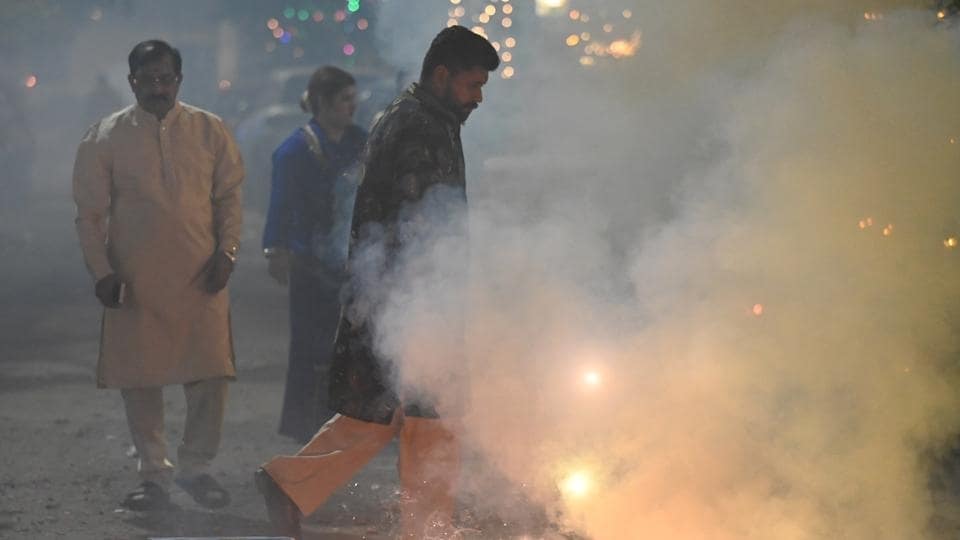
In an order released on Sunday, a bench comprising Chief Justice of India Surya Kant and justices Joymalya Bagchi and V Mohana asked the Municipal Corporation of Delhi (MCD), the Delhi government, Delhi Police’s traffic department, and the governments of Haryana, Rajasthan and Uttar Pradesh to file detailed responses on the regulatory framework governing commercial and non-commercial vehicles operating within the national capital and the wider National Capital Region (NCR).
The court specifically directed the authorities to disclose the mechanisms in place to identify and regulate vehicles that do not conform to prescribed emission standards, including enforcement of Pollution Under Control (PUC) certification requirements, and the steps taken to prevent the entry and operation of overage, end-of-life and otherwise non-compliant vehicles.
It also sought figures on the number of vehicles inspected, challaned, denied entry or otherwise proceeded against for violations, besides details of coordination between Delhi and neighbouring states to regulate inter-state vehicular movement. The authorities have also been asked to spell out further short-term and long-term measures to curb vehicular emissions, along with a time-bound roadmap for strengthening enforcement.
Also Read | Up in smoke: Delhi flouts firecracker curbs as residents flag violations despite cops on ground
To be sure, in a report submitted to the court earlier this year, the Commission for Air Quality Management (CAQM) had identified vehicular emissions as the single-largest source of air pollution in NCR, accounting for 23% of pollution in winter and 19% in summer.
The latest intervention follows an assessment of compliance with the Graded Response Action Plan (Grap), placed before the court by amicus curiae and senior advocate Aparajita Singh, along with additional solicitor general Aishwarya Bhati. The assessment showed a substantial decline in incidents of stubble burning across Delhi, Haryana, Uttar Pradesh and Rajasthan between October 21 and November 3. However, the same data also highlighted a “sharp increase in issues attributable to vehicular emissions”, shifting the focus to what the bench described as an equally pressing source of pollution.
“While this development is certainly laudable, the same data also brings to the fore a converse and equally pressing concern, namely, the sharp increase in issues attributable to vehicular emissions,” the bench said.
It noted that NCR, given its geographical and economic interconnectedness, bear the cumulative burden of vehicular traffic originating not just within their own boundaries but also from neighbouring states. The substantial volume of commercial and non-commercial vehicles entering and moving within the region adds to the existing emission load, it said.
“There can be little doubt that the issue warrants urgent and immediate intervention,” the bench said.
Also Read | Supreme Court takes note of HT report on sale of firecrackers in Delhi, asks govt to act
The order also signals more focused judicial scrutiny of different sources of pollution, with the Supreme Court scheduling separate hearings in four companion suo motu proceedings dealing with vehicular emissions, green cover, pollution from construction activities and industries, and solid waste management, including crop-residue burning and firecrackers.
The vehicular emissions matter will be heard on November 23, followed by the case concerning solid waste management, crop-residue burning and firecrackers on November 25. Pollution from construction activities, power plants and other industries will be taken up on November 26, while conservation and enhancement of green cover will be examined on November 30. The present proceeding will continue as the lead matter and be listed on each of these dates.
The court also gave the states two weeks to place on record their submissions on the steps already taken, their response to suggestions made by the CAQM and the amici curiae, and any independent measures they propose to undertake. The amici had pointed out that compliance with the court’s earlier orders of January 21 and February 23 had yet to be properly reported.
The renewed focus on vehicular emissions comes against the backdrop of another polluted Diwali night in the capital, with gaps in the air-quality monitoring network making consistent comparisons with previous years difficult. More than half of Delhi’s air-quality monitoring stations stopped reporting data around midnight on Diwali night, even as those that continued functioning recorded severe pollution levels.
An HT analysis of the PM2.5 sub-index found that at 9pm, when 57 stations were still reporting, 61% had readings of 400 or above. From the hour beginning 10pm on Diwali until 6am the next morning, around 80% of the functioning stations reported readings in the “severe” range.
Also Read | Lawyers can work from home, we can’t: Supreme Court judge on post-Diwali air in Delhi
The analysis also found that Delhi’s air was worse than on any Diwali since 2021 for much of November 8, until the hour beginning at 7am, and remained the second-most polluted until the hour beginning at 7pm. However, even this improvement in ranking was likely attributable to favourable weather rather than a reduction in firecracker use. Meteorological data showed that this was among the warmer Diwalis since 2021 and that late-night winds helped disperse pollutants.
The order follows the court’s November 6 hearing, when it questioned whether conventional measures adopted by authorities, including traffic restrictions and water sprinklers, had yielded adequate results and called for more effective interventions. It had also identified vehicular pollution and congestion as major concerns, pointing to bumper-to-bumper traffic in Delhi as well as neighbouring cities such as Noida and Gurugram.