
 E-Paper



Supreme Court quashes Bihar govt's remission for ex-MP Anand Mohan in IAS officer lynching case
A bench of justices Dipankar Datta and Sheel Nagu directed the former lawmaker, who was released in 2023, to surrender within a month.


The Supreme Court on Thursday set aside the Bihar government’s decision granting remission to former MP Anand Mohan, who was serving a life term in the 1994 murder case of then Gopalganj district magistrate G Krishnaiah.
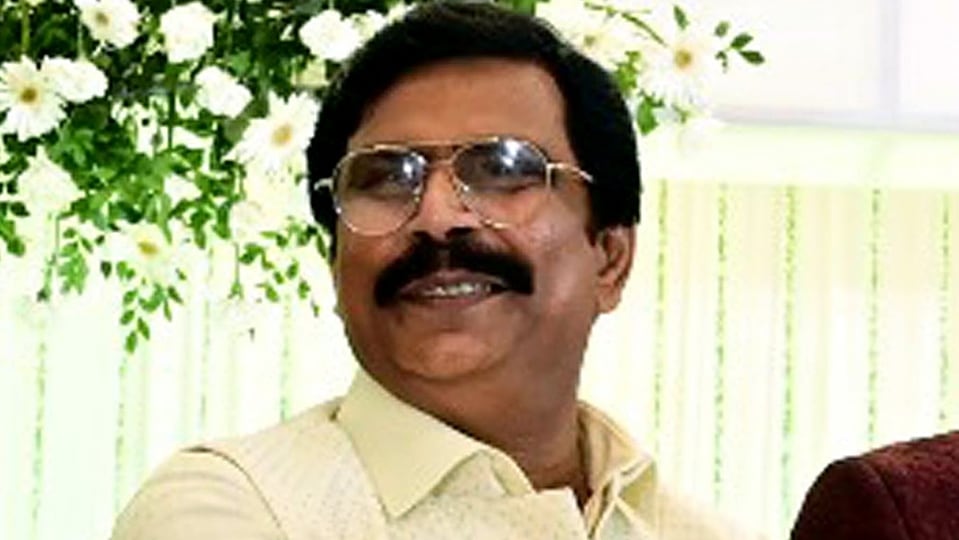
Holding that the grant of remission was “indefensible” and “manifestly arbitrary”, a bench of justices Dipankar Datta and Sheel Nagu directed Mohan, who was released in 2023, to surrender within a month and undergo the punishment.
It also pulled up the state government for amending the remission policy in the Bihar Prison Manual by deleting the words that disentitled life convicts punished for murder of a public servant, paving the way for Mohan’s release on April 24, 2023.
Deep Dive

“In such circumstances the grant of remission is indefensible and manifestly arbitrary. The remission is quashed and the April 10, 2023 notification is declared unconstitutional, inoperative and is set aside,” it said. “The respondent (Mohan) shall surrender before the prison authorities within one month,” it added.
The court passed the order on a petition filed by Krishnaiah’s widow, Telugu Umadevi Krishnaiah, after examining the state government records on the process of amending the law that facilitated Mohan’s release.
As per the 2002 Bihar Prison Manual rules governing remission, a convict punished for murder of a public servant is not eligible for premature release. The petition alleged the state passed a crucial amendment on April 10, 2023, removing this “ineligibility” in an alleged bid to facilitate Mohan’s release on April 24, 2023.
The bench, however, struck down the amendment, saying it was a “sudden and selective departure” from the earlier policy that forbade life convicts in murder of public servants from grant of remission. The court said the state failed to establish any “rational or legitimate” purpose for carrying out the amendment, thus, making it “unconstitutional” and violative of right to equality under Article 14 of the Constitution.
The bench kept it open for the state to consider Mohan’s remission in the light of the former’s observations but made it clear that the exercise shall not be initiated till the former lawmaker surrendered. While doing so, the court directed that the petitioner shall be afforded an opportunity to submit a representation to the state.
The duty of the court is to be an “active seeker” of truth and to uphold it, the bench said, adding that judicial review of an executive decision is not an empty formality but a measure against arbitrary state action. It said courts cannot be a silent spectator between right and wrong as it has a duty to uphold the right against the wrong.
IAS officer Krishnaiah was the Gopalganj district magistrate when he was killed in December 1994. Mohan was sentenced to death by a trial court in 2007. His sentence was commuted to life by the Patna high court in 2008, a decision which was upheld by the Supreme Court in July 2012.
While hearing the case earlier, the top court had passed critical comments against the state’s action, observing “every dice was loaded in his favour” to procure release for a brazen act that was a “rarest of rare” crime. “You do not bring about an amendment to facilitate any individual. Fourteen days after the amendment, he was released. There is something called rule of law in this country,” it told the state.
The petition was argued by senior advocate Siddharth Luthra and advocate Tanya Shree, who explained how the state indulged in “selective disclosure” while placing the case for Mohan’s premature release before the State Remission Board. No details of his criminal antecedents and parole history were produced at the time of consideration and even his age was shown to be 74, while the affidavit filed by him in the top court in 2023 declared his age to be 67.
The widow of the deceased public servant produced a list of 32 criminal cases against Mohan and two cases registered for offences committed inside jail to show his conduct.
Mohan’s lawyer and senior advocate Dinesh Dwivedi said his client was eligible for remission on completion of 14 years of incarceration as per the rules. He also cited Mohan's lineage as the grandson of a freedom fighter.
The petitioner blamed the state for facilitating the former lawmaker’s release as the April 10, saying the 2023 notification issued was "ex-facie illegal" and contrary to judgments of the Supreme Court clearly laying down that the remission policy prevailing at the time of conviction will govern the remission granted to life convicts. Under the 2002 policy, life convicts were to be considered for premature release only on completion of 20 years imprisonment.
Since Mohan was initially awarded death sentence in this case and the punishment was later commuted to life term by the Patna high court, the petitioner said under Rule 481(i)(c) of Bihar Prison Manual 2012, a convict whose death sentence has been converted to life is ineligible for premature release.
The plea also referred to a Supreme Court judgment in Laxman Naskar case (2000), highlighting the need to consider past criminal antecedents, social status and the potentiality of the accused to commit crime in the future as some of the guiding principles for a convict’s early release. Yet, the column on “pending cases” in the checklist for Mohan mentioned “no cases”, it said.
The State Remission Board was also pulled up by the top court for adopting the submissions made by the state. The court remarked that the board is meant to be a neutral authority and had a duty to find out if the convict seeking remission had other pending cases against him.
The state government has defended its action before the court, claiming the convict had undergone 22 years of sentence, was in his 70s and considerable time had elapsed since the order of his release.


