E-Paper



Supreme Court ends distinction between detention and arrest, says 24-hour clock starts when liberty is curtailed
The ruling came in a case involving four men detained during an NDPS search in Tripura, whose detention without judicial oversight for about 18 hours.

 Prefer HTon Google


The Supreme Court on Thursday ruled that law enforcement agencies cannot circumvent constitutional safeguards against prolonged custody by keeping a person in detention without formally showing an arrest, holding that the mandatory 24-hour period for producing an individual before a magistrate begins from the moment his liberty is curtailed, irrespective of when the arrest is officially recorded.
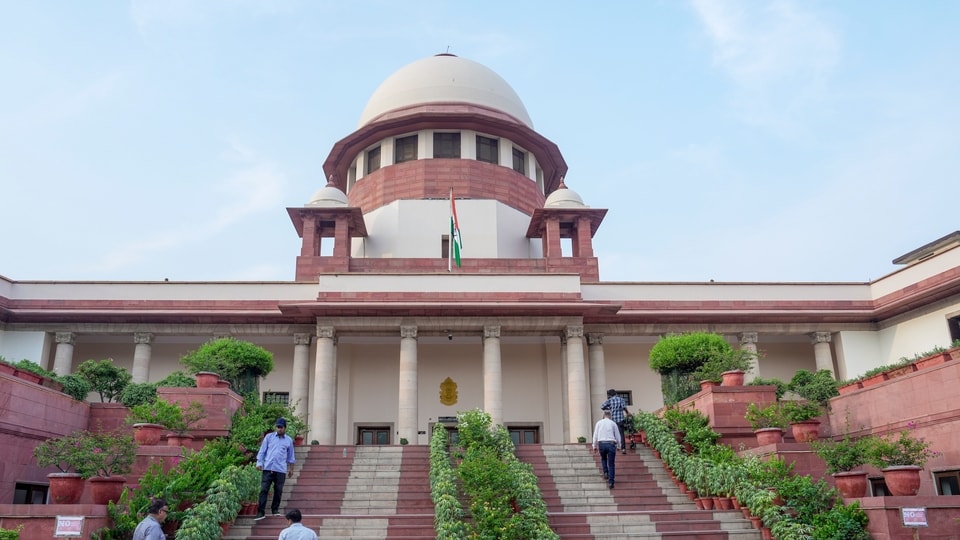
Rejecting attempts by some high courts to carve out a distinction between detention and arrest, the court held that there could be no “artificial buffer period” during which a person’s liberty could be taken away without triggering the safeguards under Article 22(2) of the Constitution. It made clear that the 24-hour deadline is sacrosanct and that even a person detained for search and seizure must be produced before a magistrate within that period.
Court rejects distinction between detention and formal arrest
The endeavour of multiple high courts, including Orissa, Kerala and Madras, to create a distinction between detention and arrest is “highly problematic” and “wholly unwarranted”, a bench of justices Ujjal Bhuyan and Atul S Chandurkar said. “There is no such thing called temporary disruption of liberty,” underlined the court, rejecting the proposition that a brief period of detention during investigation or search and seizure could be treated differently from an arrest. “There cannot be an artificial distinction between arrest and detention for creating a buffer period,” it added.
The ruling, authored by justice Bhuyan, settles an important question concerning the reach of Article 22(2), which mandates that every person arrested and detained in custody must be produced before the nearest magistrate within 24 hours, excluding the time necessary for the journey from the place of arrest to the court. By holding that, the constitutional clock starts ticking from the moment a person’s liberty is curtailed, the court has taken away the discretion of investigating agencies to determine when the period of judicial oversight should begin merely by choosing when to formally record an arrest.
“The expression is conjunctive and not disjunctive. Had it been disjunctive, two separate meanings could have been assigned to the two words. But the expression being joint and conjunctive, the two words appearing therein would mean one and the same thing,” the bench said, referring to the words “arrested and detained in custody” in Article 22(2). “This is because the Constitution does not recognise any detention dehors arrest. Thus, the prescription of 24 hours’ time period would commence the moment a person is detained by the arresting authority suspecting him to have committed an offence, when his liberty is effectively curtailed,” it held.
SC says constitutional protections override procedures under special laws
The court also rejected the argument that the statutory procedures governing search, seizure and investigation under special laws could justify excluding the period preceding formal arrest from the constitutional deadline. “A statute, special or otherwise, cannot be a guide to interpret the Constitution; rather, it should be the other way around,” said the bench, adding that a fundamental right must be interpreted in a manner that upholds and furthers its constitutional objective.
The judgment specifically disapproved of the rulings of the Orissa High Court in Aryaman Pattnayak (2025), the Madras High Court in Kannan (2025) and the Kerala High Court in Arun K Thomas (2026), which had permitted the period preceding formal arrest to be excluded while calculating the 24-hour deadline. It held that these decisions did not lay down the correct position of law under Article 22(2).
The court was critical of the reasoning that a person’s liberty could be temporarily disrupted during a search and seizure operation without attracting the constitutional protection against detention without judicial oversight. “The further view of the Orissa High Court that a detention is not arrest if it is for brief questioning but if it goes beyond a short investigatory hold, then it becomes an arrest is constitutionally unsustainable, delving into a realm of uncertainty,” said the judgment.
SC cites earlier ruling against informal custody and prolonged interrogation
The bench also drew strength from a 1980 Supreme Court judgment in Niranjan Singh Vs Prabhakar Rajaram Kharote, in which a bench headed by justice VR Krishna Iyer had cautioned against attempts to describe a person as being in informal custody or detained for interrogation without being formally arrested. Justice Krishna Iyer had termed such explanations “equivocatory quibblings and hide-and-seek niceties” and “unfair evasions of the straightforwardness of the law”.
The present bench said that the constitutional safeguard was important in the context of custodial violence, which often takes place when individuals are held by investigating agencies without being formally shown as arrested.
Referring to the Supreme Court’s earlier judgments in the Bhagalpur blinding cases (1981) and DK Basu Vs State of West Bengal (1991), the bench said experience had shown that the worst violations of human rights often take place during investigation, when police resort to torture to extract information or confessions, sometimes by deliberately not recording an arrest or describing deprivation of liberty as prolonged interrogation. The court also recalled its earlier directions for compulsory installation of CCTV cameras in police stations and offices of central investigating agencies, including CBI, NIA, ED and NCB, where such agencies interrogate and hold accused persons.
BNSS also bars detention beyond a reasonable period without warrant
The judgment clarified that the 24-hour deadline is not the only restriction on the investigating agency. Referring to Section 58 of BNSS, which carries forward the mandate of Section 57 of the erstwhile Code of Criminal Procedure, the bench said detention without a warrant must also not extend beyond what is reasonable in the circumstances of a case, even within the 24-hour period.
“This additional but salutary limitation should be borne in mind not only by the detaining authorities but also by the magistrates considering remand,” it said, emphasising that remand could never be a mechanical exercise.
The judgment arose from appeals filed by four persons arrested in a case under the NDPS Act, involving the seizure of 11.03 kg of yaba tablets in Tripura. The four were detained on September 29, 2025, at 2 pm during search and seizure operations but were formally shown as arrested only at 11 am the following day. The bench held that they ought to have been produced before a magistrate within 24 hours of their detention at 2 pm on September 29. Their continued detention without judicial oversight for about 18 hours violated Article 22(2), warranting their immediate release.