
 E-Paper



A tale of two Kashmirs: As J&K rises with integration, PoK sinks deeper into crisis
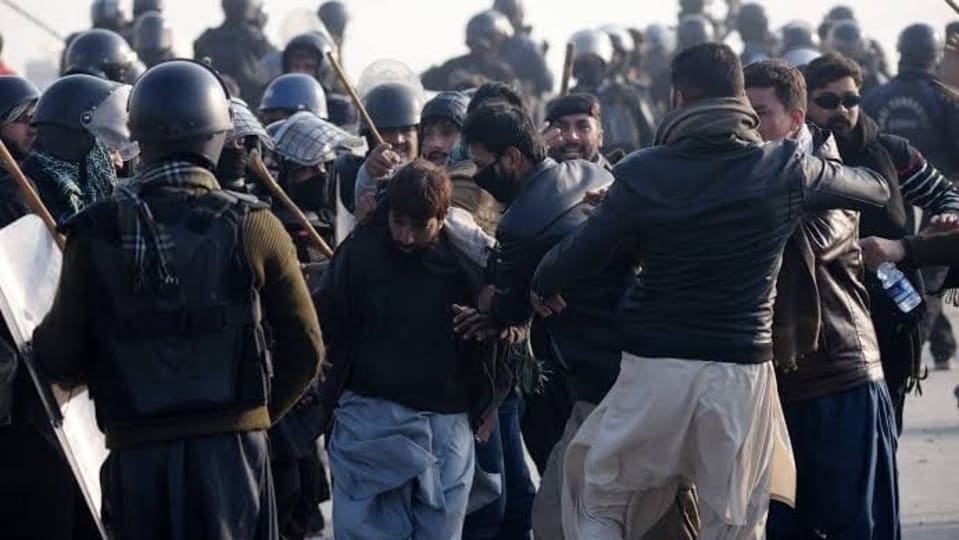
As many as 70 people have lost their lives in police firing on protestors in Occupied Kashmir in July 2026.


For decades, the international discourse surrounding Jammu and Kashmir (J&K) was trapped in a repetitive, predictable cycle of rhetorical posturing and diplomatic theatre. Every year, the arrival of August 5 brings this juxtaposition into stark relief. While the Modi government marks the anniversary of Article 370’s abrogation as a historic milestone of deep federal integration and economic revitalization, Islamabad observes "Youm-e-Istehsal" (Day of Exploitation), attempting to project a narrative of subjugation for domestic and international consumption. However, in the realist tradition of international relations, grand strategic narratives are ultimately tested not in the debating chambers of the United Nations, but on the unforgiving ground of political economy and state capacity.
An empirical analysis of the territories across the Line of Control (LoC) reveals an undeniable structural divergence. While J&K is undergoing an economic renaissance driven by massive state investment and mega-infrastructure, Pakistan-occupied Jammu and Kashmir (PoJK) remains trapped in a cycle of extractive mercantilism, chronic stagnation, systemic neglect and state sponsored violence. To understand the depth of sharp contrast between J and K and Occupied Kashmir, one must first examine the fundamental architecture of connectivity. In geopolitics, infrastructure is the physical manifestation of political intent; it dictates whether a region is treated as a core economic asset or a peripheral buffer state. In J&K, the Modi government has clearly chosen the former, treating the region as a crucible for rapid modernization. The integration of J&K into the national railway grid is a watershed moment. Engineering marvels like the Chenab Bridge, the highest railway bridge in the world, are not merely structural triumphs; they are geopolitical instruments that collapse the distance between Srinagar, Jammu, and the vast markets of the Indian subcontinent. This national railway integration is complemented by modern airport hubs and a rapidly expanding network of high-speed, all-weather highways, transforming J&K from a geographically isolated conflict zone into an integrated logistics and economic hub.
Also Read: Rare handshake after Army repatriates Pakistani national who crossed LoC
POK remains in crisis
In striking contrast, the territories under Pakistani occupation remain locked in a state of deliberate, engineered isolation. Occupied Kashmir suffers from a total absence of railway connectivity, relying entirely on narrow, dilapidated, and geographically vulnerable road networks. While the region hosts the Karakoram Highway, this artery primarily serves the strategic transit and logistical needs of Beijing and Islamabad under the China-Pakistan Economic Corridor (CPEC), offering negligible economic spill over to local Kashmiri communities. The lack of modern transit infrastructure in Occupied Kashmir is not a bureaucratic oversight; it is the natural outcome of a security-centric approach that views the region strictly as a militarized buffer zone rather than an economic priority.
The economic data reflects the natural consequences of these divergent strategic approaches. The structural reforms initiated in J&K post-2019 have unlocked immense fiscal potential, stripping away the red tape that previously deterred national and international capital. J&K’s Gross State Domestic Product (GSDP) is projected to reach approximately $30 billion (Rs. 2.65 lakh crores) in 2024-25, growing at a robust 7.06% in real terms. Private investment is surging, bolstered by a transparent industrial policy, the rollout of high-speed 5G networks, and a flourishing start-up ecosystem. Furthermore, tourism, a historical backbone of the regional economy, has shattered historical ceilings. With an unprecedented 2.36 crore visitors recorded recently, the resulting economic multiplier effect has birthed a vibrant urban culture and a burgeoning night time economy in cities like Srinagar. This return to normalcy is perhaps the most potent counter-narrative to those who predicted perpetual unrest in the name of freedom.
Across the LoC, the economic reality is notably grim. Occupied Kashmir’s economy stagnates at an estimated $6 billion, roughly a fifth of J&K’s output, burdened by Pakistan’s broader macroeconomic crises. Rather than fostering private enterprise, the political economy of PoK is defined by exploitative resource extraction and heavy debt. The region serves primarily as a hydro-resource base for Pakistan’s national grid. Mega-dams like Mangla and the Neelum-Jhelum projects generate massive amounts of electricity for the industrial heartlands of Punjab. Yet, paradoxically, the local population of PoK faces crippling energy crises, enduring daily load-shedding of up to 12-14 hours and exorbitant electricity tariffs.
This exploitative resource drain, where the wealth generated bypasses the local populace, has triggered widespread structural crises. Over the past year, PoK has been rocked by massive civic protests. Citizens have taken to the streets not for grand ideological causes, but to protest over the price of wheat flour and the unfairness of power bills. In the month of July itself, some 70 persons were killed and 300 plus injured in protests clashes with the police and rangers in places such as Rawalkot, Poonch, Mirpur, Kotli, Sudhnoti, Muzaffarabad, Bagh, Bhimber, Dadyal and Amb. The figure of dead may climb up to 90 plus killed but there is no confirmation due to internet blackout since July 5, 2026. What Pakistan had sought to achieve in Jammu and Kashmir, it faced in Occupied Kashmir with a huge public unrest due to Islamabad’s apathy.
Also Read: Polls in Pakistan-occupied Kashmir a complete farce, cannot hide reality: India
Finally, the divergence is equally stark in the realm of disaster preparedness. The modernization of J&K includes advanced disaster management frameworks, early warning systems, and climate-resilient infrastructure. In PoK, fatal emergency neglect remains the norm. Lacking independent fiscal autonomy, local administrators in PoK are ill-equipped to manage the frequent landslides, floods, and infrastructural collapses that plague the mountainous terrain, leaving communities vulnerable to the elements and governmental apathy.
Ultimately, the differing trajectories of J&K and PoK underscore a brutal geopolitical reality: ideological solidarity cannot substitute for economic integration and state capacity. By dismantling the legal anomalies that kept J&K isolated, India has unleashed the region's economic potential, binding it deeply to the growth engine of the world’s fifth-largest economy. Islamabad’s approach, conversely, has reduced PoK to a stagnant, resource-yielding appendage. As the Modi government continues to consolidate its gains through capital expenditure, the contrasting realities across the LoC will only widen, rendering Pakistan’s territorial claims increasingly hollow on the global stage.


