E-Paper



US has deported over 4,800 Indians since 2025 as Trump admin steps up crackdown
The US administration stepped up deportation of illegal migrants from across the world as part of a crackdown that began after President Trump took office


The US has deported more than 4,800 Indian nationals since 2025, including 1,273 people who were sent back between January and July this year, the external affairs ministry said on Friday.
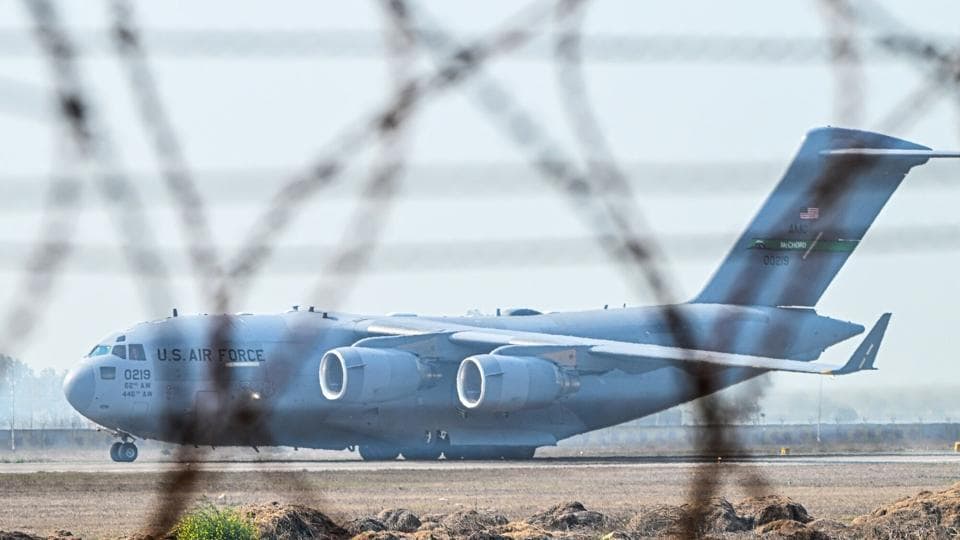
The US administration has stepped up the deportation of illegal migrants from across the world as part of a crackdown that began soon after President Donald Trump took office last year. The number of Indians deported from the US last year was the highest over the past 16 years for which figures were provided by the government in Parliament in 2025.
How many Indians were deported from the US?
“The total number of Indians deported from the US to India in 2026, from January 1 till date, is 1,273. In 2025, a total of 3,567 Indian nationals were deported from the US,” external affairs ministry spokesperson Randhir Jaiswal told a regular media briefing.
Also read | US plans $100k fee for foreign graduates seeking jobs, 360,000 Indian students likely to be hit: Report
Responding to a question on the number of Indians sent back by the US, Jaiswal said India is working with several foreign governments on deportation issues. “As and when such issues are referred to us, we conduct due diligence on our side to confirm the nationality of the person being referred for deportation. Once we are fully satisfied that the person concerned is of Indian nationality, only then we facilitate their return to India,” he said.
External affairs minister S Jaishankar told Parliament last December that the government has engaged US authorities to ensure that Indian nationals being deported are not ill-treated and that women and children on deportation flights are not restrained with handcuffs and chains.
The maltreatment of 73-year-old Harjit Kaur during her deportation last year and the shackling of women and children on a deportation flight last February had triggered a controversy, and India formally protested over these incidents.
The number of Indians deported from the US last year was the highest since 2009, when 734 Indians were sent back by Washington, according to figures provided by the external affairs ministry in Parliament.
Jaiswal responded to a separate question on a new bill cleared by the US Senate that would give Trump the authority to impose tariffs of up to 100% on goods from major purchasers of Russian oil and gas, such as China and India, by saying that India is closely monitoring the situation.
“On energy security, our position has been clarified and very well articulated on several occasions. It is something which is predicated on our national priorities and on securing the energy needs of our 1.4 billion people through diversified sources, which includes the US,” Jaiswal said.
“We remain engaged with relevant stakeholders in the US at various levels on this particular matter.”
The bill, which includes a sweeping package of sanctions, was advanced by the US Senate this week by a vote of 86 to 12, and it will now proceed to the House of Representatives for deliberation. The bill could trigger massive tariffs for the five largest purchasers of Russian energy, and also impose sanctions on Russian officials, oligarchs, financial institutions and the “shadow fleet” used to transport Russian oil.
India ramped up the purchase of Russian crude after the West clamped sanctions on the country over its invasion of Ukraine in 2022. Russia continues to be among the top two suppliers of energy for India, which has been pressured by the Trump administration to cut back on purchases.