
 E-Paper



What the October 10 protest says about the Opposition
The Congress senses an opportunity here. In the changed scenario, it can bargain hard with the regional satraps. This is the reason Gandhi is working so hard

 Prefer HTon Google


On October 10, the national capital — indeed, the National Capital Region — felt quite strange. A total of 245 trains scheduled to reach Delhi were cancelled. The city’s lifeline, the metro, saw more than 40 of its stations shut. Bus routes were changed. Many schools conducted online classes and some exams were cancelled. On the roads, there was unprecedented barricading.
As a result, members of the Cockroach Janata Party (CJP) failed to make it to Jantar Mantar for their planned protest demanding chief election commissioner (CEC) Gyanesh Kumar’s resignation. The outfit’s workers couldn’t reach Delhi, and its leader, Abhijit Dipke, and many prominent associates were detained. The Delhi Police detained more than 7,000 people connected to the CJP. Thus stalled, the CJP has declared to carry on with its protests. There are some pertinent questions: Did Dharmendra Pradhan’s resignation restore the sanctity of examinations in perpetuity? Will CEC Kumar’s resignation solve all problems? If Kumar resigns, will the CJP protestors commit to not launching any other movement? Are these young people planning to form a political party and contest elections? Or do they want to play the role of a pressure group?
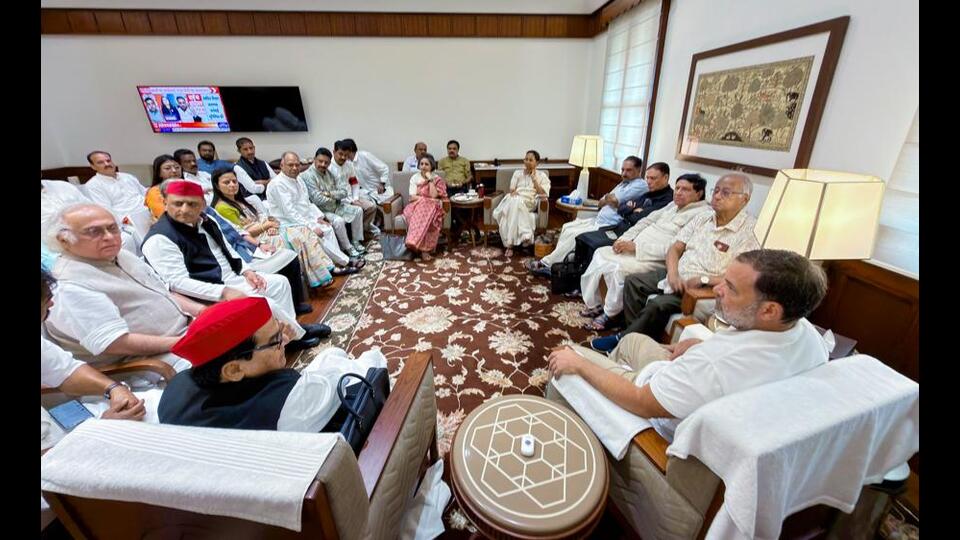
Last Tuesday, Leader of Opposition Rahul Gandhi led more than 200 MPs from Parliament’s Makar Dwar to the Election Commission building. Police and paramilitary forces stopped them near Akashvani Bhawan. But the Congress MPs held a sit-in at the spot for nine hours. Gandhi and his associates said they intended to meet the election commissioners. The Election Commission said it had received no request for a meeting. The police rounded up everyone and dropped them at a faraway place. The next day, they detained Priyanka Gandhi and other Congress leaders heading for Jantar Mantar. On Friday, the Opposition leaders met the president. Shortly after Gandhi briefed the media about the meeting, Rashtrapati Bhavan sources denied everything that the Congress leader had claimed.
It’s not a coincidence that Gandhi has surprised people many times during the last four months. Some of his protests have been at the seats of power and governance while others were held in crowded areas, close to the masses. Politics needs presence in both. Gandhi has realised the power of visibility. Videos of his struggle with the police went viral.
In the coming months, five states, including Uttar Pradesh, will hold assembly elections. Samajwadi Party supremo Akhilesh Yadav and Gandhi joining hands can be seen from this perspective. The Congress has no presence in Uttar Pradesh and lost the chance to form the government in a couple of states due to its own weaknesses. In Punjab, the Aam Aadmi Party not only wrested power, but has also established itself as a strong incumbent. That’s the reason why the Congress is in no mood to leave things to chance. In the last 13 years, the party has understood that it must not miss any opportunity. During the July CJP protests, Gandhi staged a sit-in in front of the Prime Minister’s residence as he didn’t want another competitor to emerge. Before CJP’s October 10 protest, he tried hard to present himself as the lead face of the resistance.
The AAP maintained a strategic distance from the high-voltage drama. In the coming Punjab elections, the AAP is in direct confrontation with the Congress. In Gujarat, the AAP wants to capitalise on the 12.92% votes it secured in the last assembly elections. This is why the party is trying to avoid being seen as a Congress ally. The irony here is that AAP chief Arvind Kejriwal has learnt from the Congress’s mistakes. We should look at the compulsions of the other members of the INDIA bloc. They don’t want the Congress to expand in their states beyond a point. But they need its support to ward off existential threats: Former West Bengal chief minister and Trinamool Congress (TMC) chief Mamata Banerjee is a glaring example. Twenty of the TMC’s Lok Sabha and six Rajya Sabha MPs have switched sides. Banerjee has lost the right to the party name. Tejashwi Yadav suffers the same predicament. In the 2020 Bihar assembly elections, his party won 75 seats; at present, it has just 25.
The Congress senses an opportunity here. In the changed scenario, it can bargain hard with the regional satraps. This is the reason Gandhi is working so hard. His sights are set on the 2029 elections. But before locking horns with a towering figure like Narendra Modi, his party will have to perform well in assembly elections. More so in those states where the Congress has neither organisation nor leadership. I am reminded of Hazrat Nizamuddin Aulia’s famous quip: Hanooz dilli door ast (Delhi is still far off).
Shashi Shekhar is editor-in-chief, Hindustan. The views expressed are personal


