
 E-Paper



Employee develops muscle disorder after manager forces her to do 200 squats over unfinished work
The woman alleged that the company was intentionally trying to force her out by imposing unrealistic targets.

 Prefer HTon Google


A manager in China allegedly forced a young employee to perform 200 squats as punishment for failing to complete her daily work targets, leaving her with a serious muscle condition that required medical treatment.
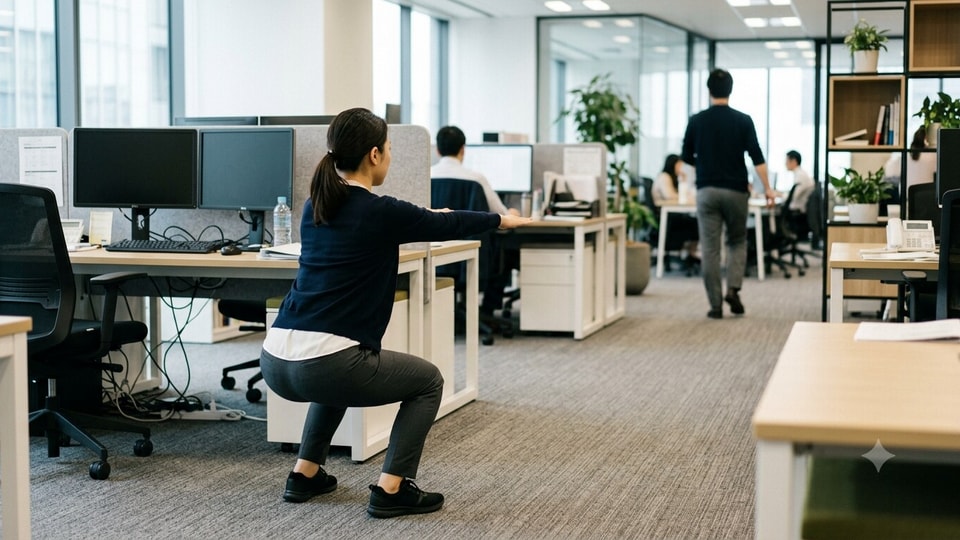
According to a report by the South China Morning Post, the woman, identified by her surname Yang, had recently moved to Hangzhou in Zhejiang province and started working as a financial consultant at a loan assistance company in June. Her role primarily involved tele-sales.
Yang's manager, surnamed Zhang, required employees to make 200 calls, invite one client and secure one client expressing an intention to collaborate every day.
On July 28, Yang failed to meet her targets. She was reportedly given a choice between performing 100 squats or paying 50 yuan (around ₹700) for each unfinished task. Having completed neither, Yang said that she chose to do 200 squats because she "had no money".
Yang recorded herself completing the squats in batches at different locations inside the office building as proof for her supervisor. However, after finishing the final few squats, she struggled to stand and staggered while walking. She later experienced severe pain in her legs.
Despite the pain, Yang did not immediately seek medical attention due to financial concerns. Five days later, she went to the hospital after her urine turned dark.
Doctors diagnosed her with rhabdomyolysis, a potentially life-threatening condition in which damaged muscle tissue breaks down rapidly and releases substances into the bloodstream that can damage the kidneys.
According to SCMP, Yang's creatine kinase level exceeded 16,000 U/L, while levels above 1,000 U/L can indicate rhabdomyolysis. Fortunately, she did not develop kidney failure and was advised to rest and avoid strenuous exercise.
(Also Read: Little girl from Arunachal Pradesh responds after being called ‘Chinese’: ‘Humko Indian bolo’)
Woman seeks compensation
Yang said she spent 1,400 yuan (around ₹19,000) on treatment. Her condition also left her unable to work or complete the punishment imposed by her manager. She eventually resigned from the company on July 30.
Yang alleged that the company was intentionally trying to force her out by imposing unrealistic targets. She later demanded reimbursement for her medical and transport expenses, along with 15,000 yuan (around ₹2.12 lakh) in compensation for personal injury and living expenses during her recovery.
Zhang rejected her demands and reportedly told her to take legal action. He later admitted to a local conflict-resolution TV programme that he had violated labour laws, while maintaining that the incident was not the company's responsibility.
Yang subsequently registered a complaint with the local labour inspection unit, which assured her that the matter would be investigated.
The incident has sparked criticism online, with one user saying Zhang "should be detained for 15 days", while another urged Yang to recognise that "no job is more important than her health".


