
 E-Paper



How the Houthis have become the most fearsome of Iran’s allies
Yemen and the Red Sea are both threatened


 Prefer HTon Google


FOR FOUR YEARS an uncomfortable truce has prevailed in Yemen, putting its long civil war on hold. But now open conflict is breaking out once again. The Houthis, Iran-backed armed rebels, have accused Yemen’s internationally recognised government and Saudi Arabia, its most important ally, of planning a big offensive. On July 30th their leader, Abdul-Malik al-Houthi, said his forces would “respond to their full-scale escalation with one of our own”. Throughout August they have launched drone and missile attacks against government positions, killing dozens of soldiers and civilians. The Yemeni army has struck back hard.
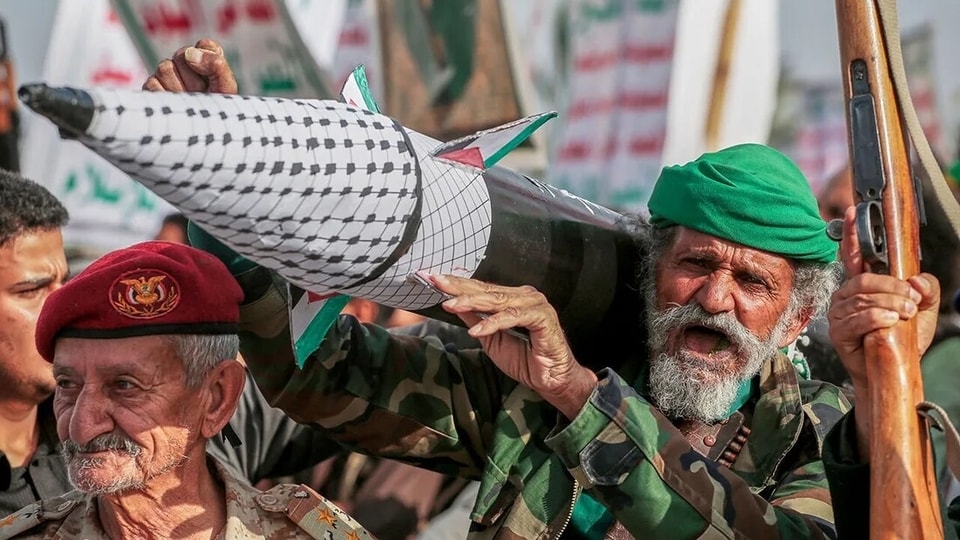
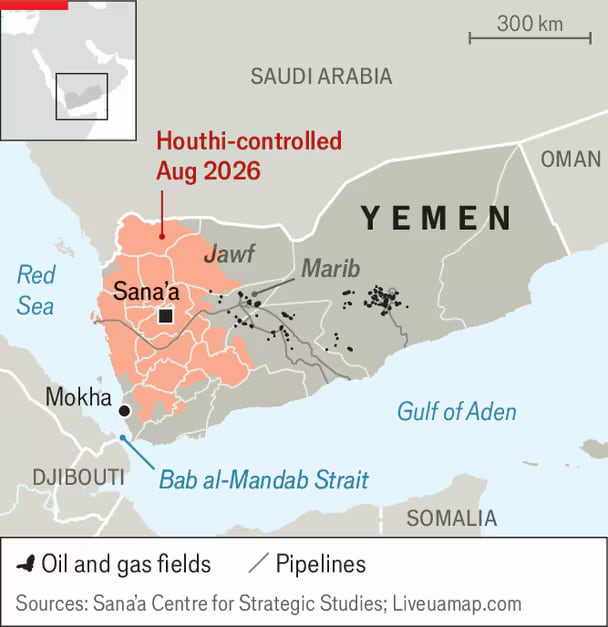
The Houthis think they have much to gain from restarting the war. Since mid-July the militia has been firing at Saudi-linked ships in the Red Sea, as well as ports, airports and refineries. Hardly any Saudi tankers have sailed through the Bab al Mandab strait, at the sea’s southern tip, this month, according to Kpler, a data provider. The Houthis’ attacks have two aims. First, to blackmail the kingdom into paying Yemeni civil servants and lifting restrictions on flights and shipping. Second, to seize the initiative. If the Saudis and their allies were planning an offensive, the Houthis have beaten them to it.
They may also have bigger goals. The Houthis have controlled Yemen’s north-west, including the capital, Sana’a, and much of the west coast, since 2014. Some 70% of Yemenis live under their rule. But the rebels have long wanted more. On August 15th Houthi missiles hit the port of Mokha, near Bab al-Mandab, causing damage worth some $16m and forcing it to close. The attacks seem designed to weaken the National Resistance Forces, an elite group of government-backed fighters that use Mokha as a base. Forcing them from the city would give the Houthis more control of shipping through the strait.
The Houthis also want control of the country’s oilfields. In early 2022 they nearly captured oil wells in Marib, east of Sana’a, but were repelled by the Giant Brigades, a government-aligned militia trained by the United Arab Emirates (UAE). Later that year they bombed oil terminals on the coast to prevent their foes exporting the fuel. But this July the government said it would resume shipments. Since then the Houthis have struck Marib heavily. Their fighters, who have mobilised in the region, could make another push for its resources. Even if they do not capture the wells, they may hope to force the government to share its revenues.
In response, the government has also been talking up a fight. The truce four years ago was supposed to lead to a peace deal, but instead the Houthis have consolidated their power and strengthened their partnership with Iran. Giving them a bloody nose could help the government—whose leaders are mostly in the Saudi capital, Riyadh—regain credibility in Yemen. On August 20th Abdullah al-Alimi, the government’s vice-president, said that recapturing Sana’a was “a settled matter”. Officials have invoked the collapse of Bashar al-Assad’s Iran-backed regime in Syria in 2024 as a precedent for what could happen to the Houthis.
Such talk may mostly be intended to boost morale. But the anti-Houthi forces, who spent much of the winter fighting among themselves, are at least showing a more united front. The government has disbanded the Southern Transitional Council, a secessionist outfit backed by the UAE, bringing some of its troops under the army’s control. Earlier this year tribal unrest flared in the Houthi-controlled region of Jawf, kindling hopes that the rebels’ authority is weakening. Government troops have become more adept at deploying drones, whose use has long been one of the Houthis main advantages.
Still, they face a formidable foe. Limited strikes by Saudi and government soldiers have failed to deter the rebels. The Houthis have endured bigger and more targeted campaigns in the past. Last summer Israeli strikes killed most of the group’s civilian government, including its prime minister, but it quickly recovered. Nor would killing Mr Houthi, their leader, necessarily change much. He came to power after his brother, Husayn, died in battle in 2004.
Defeating the Houthis would be hard. Among Iran’s allies, the rebels are known for their audacity. When they swept into Sana’a in 2014, they did so in defiance of their Iranian sponsors, who urged restraint. Now their confidence comes from a position of strength. When America targeted them in 2025, the group shot down seven American Reaper drones and nearly hit several fighter jets. Last month they claimed to have downed a Turkish-made Bayraktar drone operated by the Saudis. They are also adaptable. The Houthis have access to fibre-optic drones that cannot be jammed, which would help them target government troops on the front line.
Resilient supply networks help them keep up their stocks. Whereas the group used to import finished weapons from Iran, it now builds much of its arsenal from small components smuggled through Oman and the UAE or hidden in dhows sailing from the Horn of Africa. Some Houthi drones can be built almost entirely without Iranian parts. This smuggling system has insulated the rebels from attacks, such as America’s, which were supposed to degrade their stockpiles. “They have been able to reconstitute capabilities that were damaged or destroyed much more quickly than people anticipated,” says Peter Salisbury of Columbia University in New York.
Geography is another advantage. The highlands that the rebels control are easy to defend, especially given their heavy use of landmines. When the Houthis took over they also seized a system of caves and bunkers previously held by the army. Satellite evidence suggests these are being expanded. Government forces recently seized tunnelling equipment destined for Houthi ports.
All this should worry the government. Saudi or American support could bolster government soldiers on the ground. Donald Trump, America’s president, has threatened the Houthis with a “major military punishment”. But the costs would be high. Mr Houthi speaks fondly of Yemen’s reputation as a “graveyard of invaders”. He may yet prove correct.


