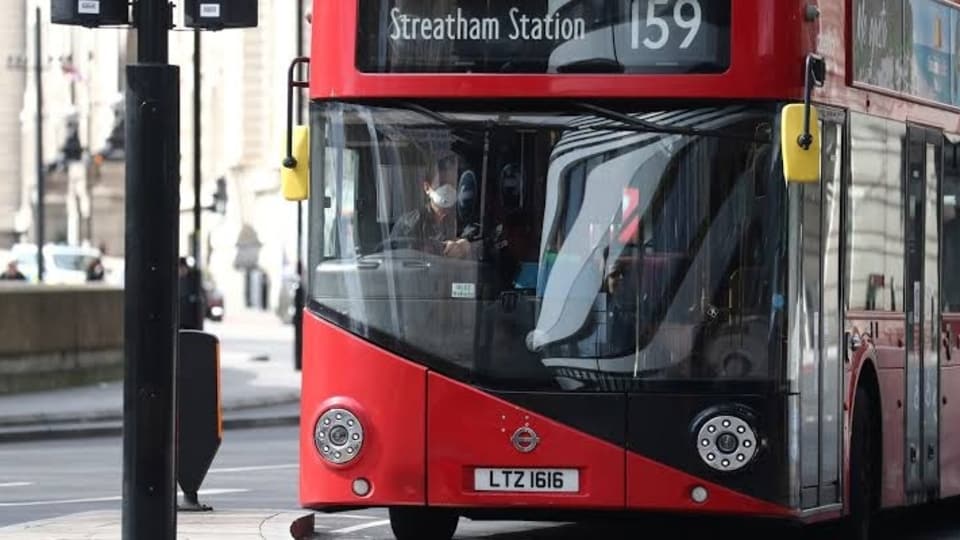
Many Londoners have faced a daily dilemma this summer: picking their least-unbearable mode of public transport. They could dive into the Tube and feel the temperature rising, or stay on the surface and brace themselves for a journey in a greenhouse on wheels. (Some are lucky enough to use one of the handful of Undergound lines, or the Overground, which have air conditioning.) At least for commuters the misery soon ends. But try driving while sitting in a 40°C cabin with a full day’s shift ahead. After weeks of record-breaking heat, bus drivers have had enough. From August 14th more than 1,500 of them in north London and Essex are striking over their roasting working conditions.
British workers have few protections against extreme heat (Reuters)
Heat is classed as a hazard under British law. Yet whereas indoor work below 16°C (13°C for physically hard tasks) is off limits, there is no ceiling for heat. Some are lucky enough to have jobs in air-conditioned workplaces, but many do not have that luxury. While several governments on the continent are updating their labour legislation to take account of scorching temperatures, Britain’s lawmakers remain in denial.
Britain now averages three times as many days breaching 30°C than it did 60 years ago. This summer is likely to be the warmest since records began in 1884. The country is on a sweltering trajectory. Some researchers predict that by 2050 London’s climate will resemble Barcelona’s today.
Work injuries climb when temperatures go above 30°C. People working most of the day outside are more prone to illness from sun exposure, like skin cancer or heatstroke. Productivity also takes a hit. Studies suggest that for every degree above 20°C in “wet bulb globe temperature” (a measure of heat stress on the human body that factors in humidity, wind speed and solar radiation as well as air temperature), productivity decreases by 2-3%.
On the continent, some countries are adjusting to sweatier realities. Since 2023 Spain has banned some outdoor work during days with severe-heat warnings, and in 2024 it introduced paid climate leave during extreme weather. In the summer most Italian regional governments ban agricultural, construction and quarrying work between midday and 4pm; in some regions, this stop-work order extends to delivery riders. France has tightened employer obligations to prevent heat-related risks, such as by adjusting schedules to avoid heat exposure.
Might this summer’s heatwaves spur Britain to follow suit? British unions including UNISON, the largest, which represents workers in public services, are pushing to replace the 1992 regulation (under which employers have a legal duty to assess heat risk and put controls in place) with the compulsory breaks and protections spreading in southern Europe. Hannah Spencer, a Green MP, has presented a private member’s bill to establish an independent body that can recommend maximum workplace temperatures. “The last few months should have been a huge wake-up call for the government,” she says. So far her bill has gathered little parliamentary support. But it is becoming harder to ignore the issues raised by the heat—and the striking bus drivers.
Get the latest World News, breaking headlines and global updates from the US, UK, Pakistan, Bangladesh, Russia and other countries. Follow major international events on Hindustan Times.
Home/World News/London Bus Drivers Protest Against Sweltering Working Conditions

 E-Paper