
 E-Paper



Pakistan seeks $10 billion US exchange facility to shore up reserves: Report
Pakistan has sought a $10 billion exchange stabilisation facility from the United States to bolster its foreign exchange reserves and ease pressure on economy

 Prefer HTon Google


Pakistan has reportedly asked the United States for a $10 billion exchange stabilisation facility to shore up its foreign exchange reserves and support its struggling economy.
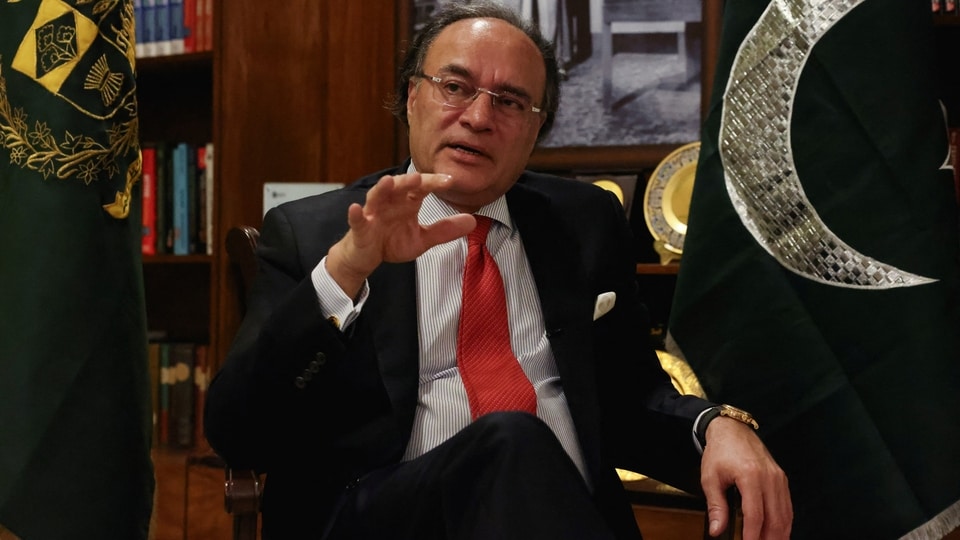
The request, made to US Treasury Secretary Scott Bessent, seeks a Bilateral Exchange Stabilization Support Facility with a maturity of up to five years, Reuters reported, citing a source. If approved, the arrangement could help strengthen Islamabad's reserves, ease pressure on the Pakistani rupee and reduce the country's dependence on multilateral financing.
The development comes as Pakistan looks to strengthen ties with the US, following its diplomatic role in facilitating talks related to the Iran conflict, raising hopes in Islamabad that closer engagement could contribute to economic support.
The facility could give a lifeline for the cash-strapped South Asian economy.
Also read: US Iran war: Washington spent $37.5 billion so far in attacks on Iran, Pete Hegseth reveals
Pakistan seeks five-year US support facility
Islamabad has requested a $10 billion facility from the US Treasury that would act as a financial backstop for the country's economy, according to Reuters.
The proposed facility would bolster Pakistan's foreign exchange reserves while supporting fiscal and monetary reforms being implemented under the country's ongoing International Monetary Fund (IMF) programme.
The US Treasury declined to comment on the reported request. Pakistan's finance ministry also did not immediately respond for comment outside Asia business hours.
Pakistani finance minister Muhammad Aurangzeb met US treasury secretary Scott Bessent in Washington on Tuesday. While the ministry's statement did not mention the reported request, it said Aurangzeb discussed the country's economic vulnerabilities arising from regional geopolitical developments.
"Senator Aurangzeb sought greater US support for Pakistan’s road to market, underpinned by improved access to international capital markets, higher foreign exchange reserves, and enhanced sovereign credit ratings," the ministry said.
Both sides reaffirmed their commitment to expanding bilateral economic cooperation, encouraging greater US investment and advancing strategic projects.
Also read: Pakistan PM Sharif warns of risk to economy amid renewed West Asia tensions
Facility could ease pressure on reserves
Exchange stabilisation facilities are uncommon financial arrangements through which the US Treasury provides dollar support, swaps or guarantees to help countries stabilise their currencies and foreign exchange reserves.
If approved, the proposed facility would reduce Pakistan's reliance on IMF disbursements and emergency financial support from friendly countries while offering greater stability to its currency.
Pakistan remains under a $7 billion IMF programme that has required politically difficult measures, including tax increases, spending restraint and structural reforms.
The country narrowly avoided a default in 2023 after securing a $3 billion IMF standby arrangement before later obtaining a $7 billion Extended Fund Facility and a separate $1.3 billion climate resilience loan.
Also read: IMF clears $1.32 billion in fresh debt for Pakistan amid economic woes
Economy remains dependent on external financing
Despite recent improvements, Pakistan's economy continues to rely heavily on official financing, debt rollovers and financial support from countries such as China and Saudi Arabia.
That dependence became evident earlier this year when Pakistan repaid about $3.5 billion to the United Arab Emirates, equivalent to nearly one-fifth of its reserves. Saudi Arabia extended fresh support worth $3 billion.
Pakistan's central bank has projected that foreign exchange reserves could recover to around $20 billion by the end of 2026.
Ratings agency Fitch said in April that Pakistan's continued adherence to the IMF programme had strengthened the country's funding capacity and improved its foreign exchange buffers. However, it warned that higher energy prices and possible supply disruptions could still significantly weaken reserves.
Also read: Can Pakistan's peacekeeping role in Iran war give it an economic dividend?
Islamabad looks to deepen ties with Washington
Pakistan has also sought to broaden economic engagement with the United States beyond traditional financial cooperation.
Recent initiatives include a stablecoin agreement for cross-border payments with an affiliate of World Liberty Financial, the cryptocurrency business linked to US President Donald Trump's family. Islamabad has also pursued plans involving the redevelopment of the Roosevelt Hotel in New York and sought greater US investment in the Reko Diq mining project, where the US Export-Import Bank has announced $1.25 billion in financing.
However, neither US nor Pakistan responded to the report. If approved, the proposed exchange stabilization facility would not only provide Pakistan with additional financial flexibility but also signal stronger economic cooperation between Islamabad and Washington at a time when the South Asian nation continues to navigate fiscal challenges.
(with inputs from agencies)


