
 E-Paper



Pakistan ‘welcomes’ Hague Court's order on Indus Water Treaty after India rejects ruling
Earlier in the day, India rejected the ruling and said that it had never recognised the existence of the court in The Hague.

 Prefer HTon Google


Pakistan on Monday said it "welcomes" the Hague Arbitration Court's order on Indus Water Treaty after India rejected the ruling on Monday.
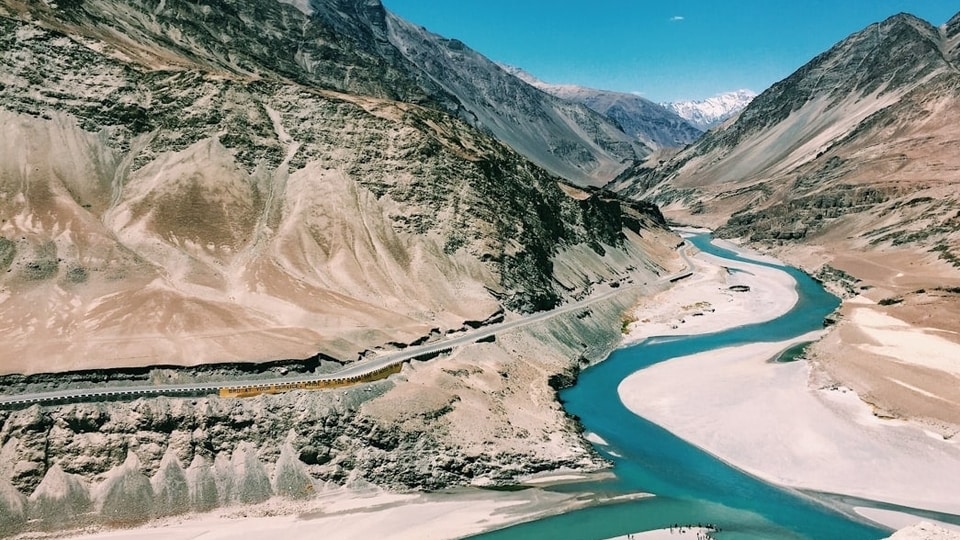
Pakistan said that it will “consider details of the order” and “how it may held find a pathway back to engagement” under the treaty.
Earlier today, India rejected the Permanent Court of Arbitration’s (PCA) order setting aside its decision to suspend the Indus Waters Treaty with Pakistan.
India said that it had never recognised the existence of the court in The Hague and called it “illegally constituted”.
“India’s decision to hold the Indus Waters Treaty in abeyance remains in force,” said the external affairs ministry in a statement, rejecting the Court of Arbitration’s ruling.
The Permanent Court of Arbitration in the Hague on Monday asked India to limit the work on Ratle hydroelectric project in Jammu and Kashmir and not build certain structures. However, the Indian government rejected the order.
India put the Indus Waters Treaty, which is a water-sharing agreement with Pakistan, in abeyance after the horrific terror attack in Pahalgam in April last year, in which, 26 people were killed. The attack was carried out by a proxy for Pakistan-based Lashkar-e-Taiba (LeT).
Following the attack, India took several punitive measures against Pakistan.
Pakistan had approached the court in the Hague earlier this year in March regarding the treaty. It has also warned that any denial of its share of waters from cross-border rivers would be considered an act of war.
India's full statement against The Hague court's order
In a statement titled ‘Matters pertaining to the illegally-constituted so-called Court of Arbitration’, the ministry of external affairs said -
"1. Today, the illegally constituted so-called Court of Arbitration (CoA) has issued what it termed as an award concerning Interim Measures and Status of the Indus Waters Treaty.
2. This so called Court was constituted by the World Bank in patent breach of the terms of the Treaty and India categorically rejects its so-called award, just as it has firmly rejected all prior pronouncements by this illegally constituted body.
3. India has never recognised the existence in law of this illegally-constituted and so-called Court of Arbitration, and has consistently maintained that the very establishment of this alleged arbitral body constitutes a grave violation of the Indus Waters Treaty. Accordingly, India has never appeared before this body and has refused to take any cognisance of its earlier pronouncements.
4. This so-called Court of Arbitration has no jurisdiction whatsoever to pronounce on India’s sovereign decisions. Its pronouncements, now or in the future, will have no effect on India’s actions in connection with the projects being undertaken by India.
5. India’s decision to hold the Indus Waters Treaty in abeyance remains in force."


