
 E-Paper



Trump backs India-Middle East Corridor to counter Iran's grip on oil routes
The corridor seeks to boost connectivity, trade, and sustainability across South Asia, the Middle East, and Europe.

 Prefer HTon Google


US President Donald Trump has voiced support for the India-Middle East Economic Corridor (IMEC), calling it a way to steer Middle Eastern oil away from chokepoints under Iran's control.
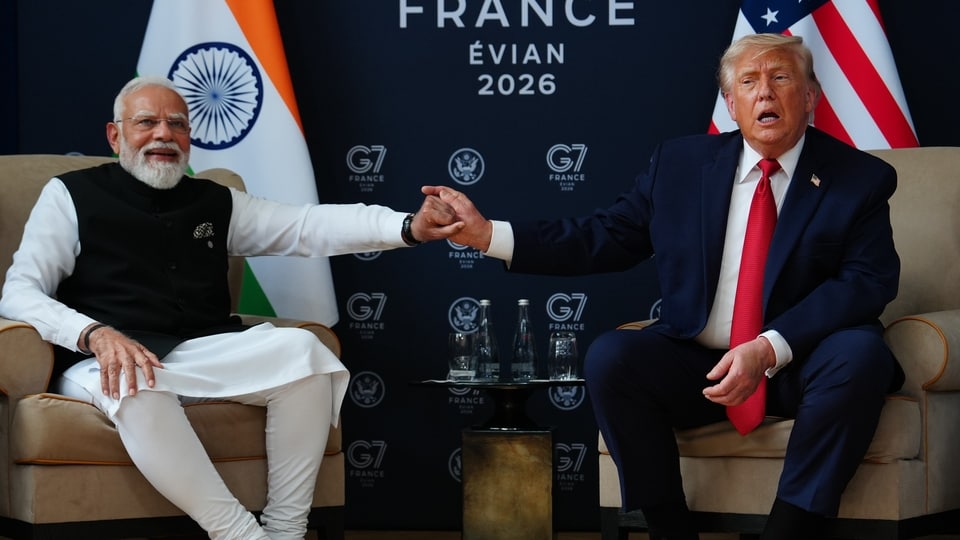
The India–Middle East–Europe Economic Corridor (IMEC) is a multinational multi-modal connectivity and infrastructure initiative that was officially unveiled on September 9, 2023, during the G20 Summit in New Delhi. It is aimed at boosting connectivity, trade, and sustainability across South Asia, the Middle East, and Europe.
“Iran’s terrorist attacks on commercial shipping in neighbouring countries have shown the need to shift Middle East energy infrastructure away from the Iranian checkpoints. That is why my administration strongly supports the India-Middle East Economic Corridor and other places, to get oil out, whether it is pipeline or anything else. Together we are on the verge of overcoming challenges that have plagued this region for a decade,” he said.
Also Read | Middle-East Corridor is new Indian spice route to rival the Chinese silk road
The US President made these remarks while addressing a multilateral meeting with the Gulf Cooperation Council on Tuesday on the margins of the high-level UN General Assembly session in New York.
His remarks came at a time when Iran has periodically threatened to shut or disrupt operations in the Strait of Hormuz – the narrow waterway between Iran and Oman — amid tensions with the West.
The Middle East corridor will consist of two corridors. The East Corridor will link the Indian port of Mundra on the west coast to Fujairah port and then using the railroad via Saudi Arabia and Jordan transport goods through standardized containers to the Israeli port of Haifa. The west corridor will be from Haifa, from where the Indian goods will reach various ports like Marseille in France and other ports in Italy and Greece.
Opinion | In climate of conflicts, a corridor of necessity
Trump said he could annihilate Iran if there is no deal to end the war, but also suggested an agreement could come soon amid a diplomatic push at the United Nations. "I have a big decision to make," Trump said in a speech at the UN General Assembly.
"Will a deal be made with Iran that lets them rebuild and create a far greater country than it ever was before?... Or do I annihilate the Islamic Republic and do it quickly, never giving them a chance to kill and destroy people and countries again?"
Iran's Armed Forces later dismissed Trump's comments at UN as "propaganda", saying their response is "full readiness to inflict more severe, crushing, and unpredictable blows on the aggressors."
Also Read | The Middle-East trade-tech corridor will bring India and Europe close via Arabia
Trump also met the leaders of Middle Eastern countries who are keen to restore shipping through the Strait of Hormuz, the conduit for a fifth of global oil and gas shipments before the war, but are wary of giving their longstanding rival Iran too much power.
Many also host huge US military bases that have come under repeated Iranian attack throughout the war.
"We think that the situation with Iran could end right after the (November 3) midterm elections, maybe before. I don't know. You never know," Trump said as he met the leaders.
Oil markets did find some relief on Tuesday after sources told Reuters that Saudi Arabia had restarted operations at its East-West Pipeline and could resume exports from the Red Sea port of Yanbu within hours, albeit at reduced volumes.
The pipeline, Saudi Arabia's main export route bypassing wartime disruption in the Strait of Hormuz, had been shut after attacks this month that Riyadh blamed on Iranian-backed groups in Iraq.


