
 E-Paper



 Trending News
When Do China’s Look-Alike SUVs Become Illegal Copycats?
Jaguar Land Rover is testing whether European carmakers can use intellectual-property laws to protect their home turf from Chinese rivals.


A new front has opened in the battle for Europe’s car market: cracking down on look-alikes.
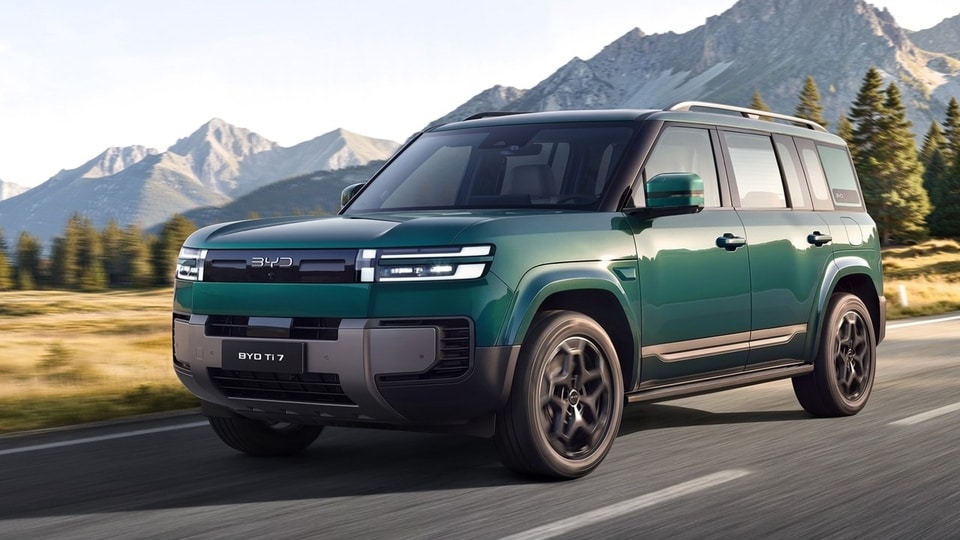
Britain’s Jaguar Land Rover is at the forefront of the fight, testing whether European carmakers can use intellectual-property laws to protect their home turf against a barrage of competition from China.
A Dutch court in The Hague injected some momentum into the quest in recent days by banning BYD, China’s largest carmaker, from selling its popular Ti 7 sport-utility vehicle in the European Union. The move came after JLR accused the Chinese model of being a “shameless copy” of its Land Rover Defender.
“Our vehicles are getting built on decades of heritage, engineering, excellence,” JLR Chief Executive PB Balaji told reporters this month. “We do not accept the infringement of our intellectual property.”
JLR’s long-held fears about similar designs have mounted this year. At an investor day in June, an executive said he’d probably seen 100 “copycats” of the Defender in China. Another executive said he had witnessed at least 10 Chinese versions of JLR’s Range Rover.
The vast halls of the Beijing Auto Show in April were filled with the kind of beefy, high-riding vehicles that JLR pioneered in Europe. BYD’s Ti 7, which like the Defender features blacked-out pillars to create the effect of a floating roof, has been one of this year’s bestsellers in China, where consumers are embracing outdoor lifestyles.
As with other European carmakers, JLR’s lucrative business in China has come under severe pressure this year, as domestic brands gobble up share in a shrinking market. In September it said it would cut around one-tenth of its global workforce; this month it trimmed its annual profit guidance.
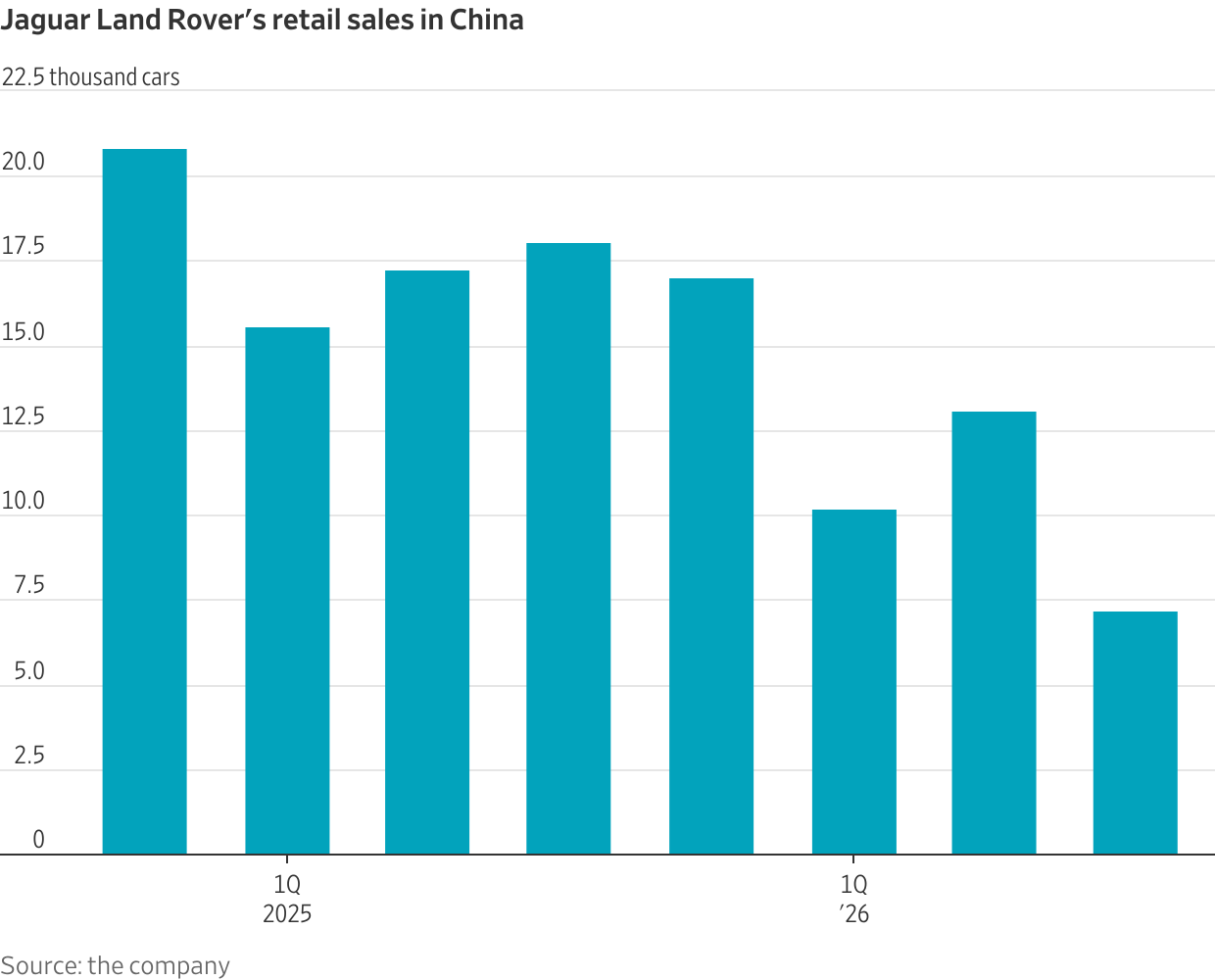
The saturated Chinese market has also pushed China’s carmakers deeper into Europe for growth. Six automakers from the country accounted for a combined 14.8% share of the European market in October, up from 9% in the same month last year.
The rapid growth in Chinese imports has set off alarm bells across Europe, prompting an unusual show of unity from the region’s capitals. Beijing last month agreed to cap shipments of hybrids to the EU.
Chinese brands “may have overplayed their hand,” said Citi analyst Harald Hendrikse. “The political pushback is finally happening, and not a moment too soon.”
Friday’s injunction against the Ti 7 cited infringement of JLR’s so-called design rights, which cover novel aspects of the Defender’s appearance. It is only preliminary and will be tested by a fuller case supported by more detailed arguments. Even so, Dutch lawyers see it as an important step.
“An EU-wide injunction that prohibits the sales of a car is quite something,” said Jan Jacobi, who specializes in intellectual property at MAAK Advocaten, where he is a partner.
BYD said the Ti 7 was the result of its own design work and “infringes none of JLR’s rights.” The company said it would appeal the decision.
But the verdict didn’t cover the U.K., where JLR sells more cars than in the EU. BYD plans to start U.K. deliveries of the Ti 7 in January, with prices starting at £47,995, or around $63,000. The equivalent seven-seat Defender starts at around £64,315.
British consumers are among the most open to Chinese brands. A model made by China’s Chery, nicknamed the “Temu Range Rover” because of its similarities to the JLR brand, was the U.K.’s bestselling car in September and October. JLR hasn’t taken legal action against Chery, with which it has a joint venture in China.
The next step in the legal battle comes on Wednesday, when a hearing is scheduled in a different Dutch court for a separate suit against the Ti 7 on grounds of copyright infringement.
Copyright—which generally lasts 70 years, much longer than design rights—is valuable but elusive. Lawyers have debated its boundaries for decades, with the Netherlands traditionally more open to protecting industrial designs than the U.S., U.K. or Germany.
“Copyright is all about human creativity,” said Dirk Visser, a veteran intellectual-property litigator and professor at Leiden University.
The latest flashpoint is Birkenstock sandals: In September a Dutch court banned European discount supermarket Lidl from selling a version of the shoes for copyright infringement, after a German court had dismissed the brand’s complaint.
JLR has a mixed record of convincing judges that its boxy designs warrant any kind of legal protection. In 2019 it won an injunction in a Beijing court against a Chinese imitator, the Landwind X7, on the basis that consumers might be confused. But the court also ruled that the design didn’t meet the creative bar necessary to establish copyright.
Nor could the company persuade the U.K. Intellectual Property Office that its Defender design was distinctive enough to be granted intellectual-property protection. The 2019 ruling paved the way for British chemicals company Ineos to sell its Grenadier model, which was openly inspired by the much-loved Land Rover.
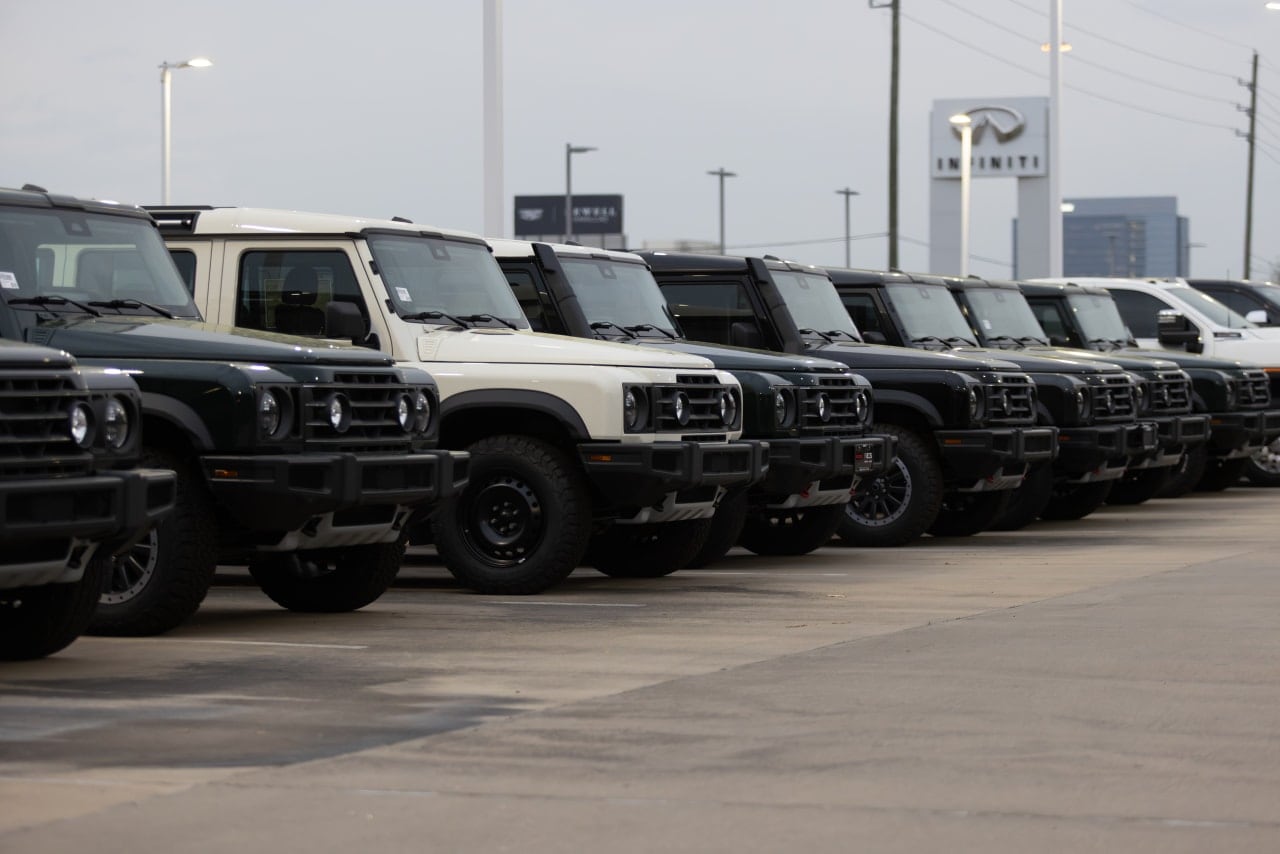
As with clothes, car designers often follow fashion even as they strive for originality. Vehicle designers say they also have to work within dimensions that are typically predetermined by commercial considerations.
The tendency of cars to look similar shouldn’t be confused with copying, said Brian Gu, vice chairman of XPeng, a Chinese EV maker. In February the brand plans to start U.K. deliveries of a luxury SUV priced close to JLR’s Range Rover.
“You have to see the details rather than just point to something that looks sporty and say it must be a copy of a Porsche, or if it looks bulky it must be a copy of a JLR model,” he said in an interview.
With little automotive history of their own to draw on, Chinese carmakers are particularly susceptible to chasing trends, according to Ian Callum, who led the design department at JLR and its predecessor company for almost two decades before setting up his own consulting firm.
“Their sense of creativity is probably less mature than some of the European or American brands,” he said. “There is blatant copying going on.”
Even if JLR succeeds in banning the Ti 7 for good, the British automaker will need to compete with other models that resemble its classic designs—including from BYD.
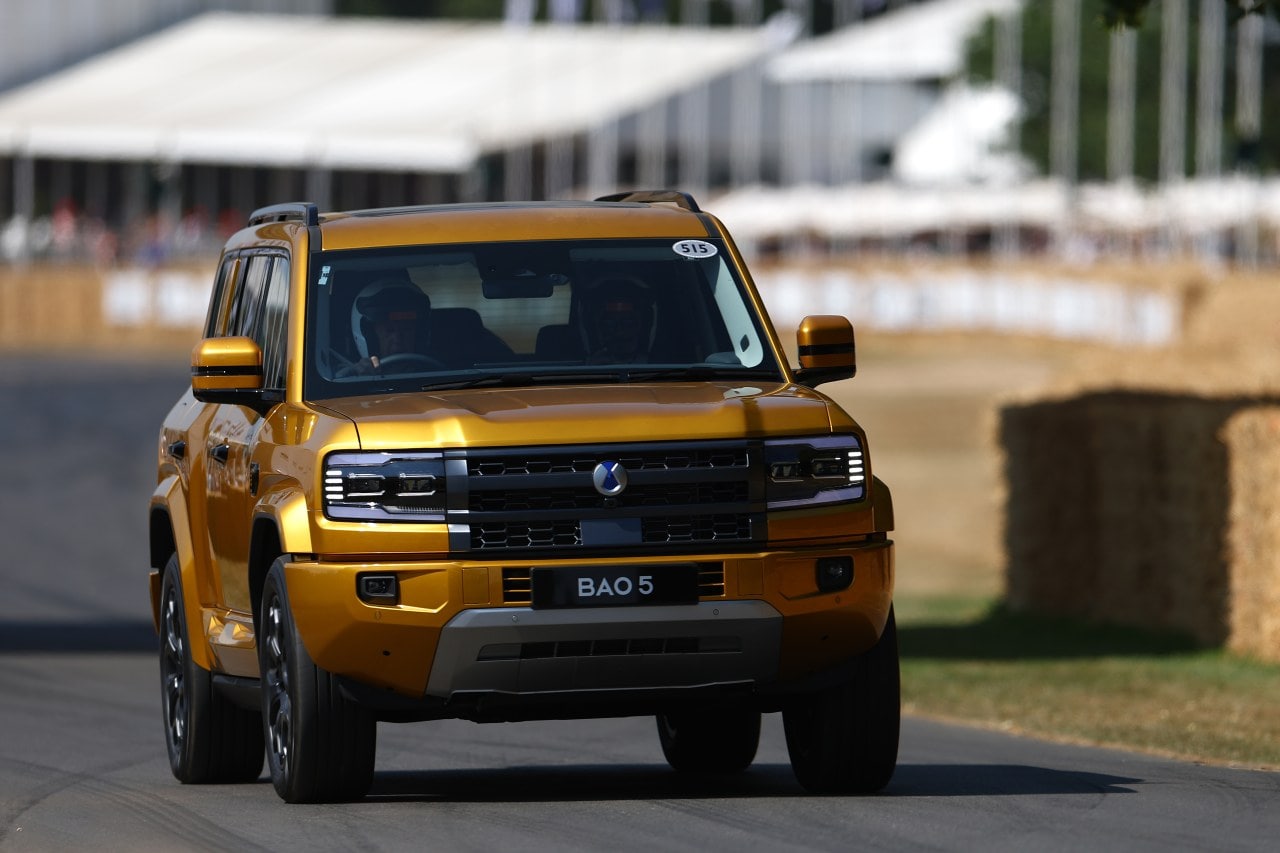
At this year’s Goodwood Festival of Speed, an event that mixes car launches with English country-house vibes, BYD showed off the $91,000 Denza Bao 5, an SUV that also drew comparisons with the Defender. Deliveries start early next year.
Write to Stephen Wilmot at stephen.wilmot@wsj.com


