E-Paper



Tech Tonic - Jeff Bezos and why Liverpool Football Club cannot be Amazon-ised
Tech billionaires would do well to understand that Anfield is not legacy software waiting for an algorithmic update, and its supporters aren’t monetizable users.


February 6, 2016. Liverpool are 2-0 up against Sunderland at Anfield, seemingly cruising, when in the 77th minute, there was a flurry of activity in the stands. Still too far from the final whistle, for a traditional beat-the-rush. Thousands of supporters rose from their seats, not in celebration but in protest, and filed quietly toward the exits. The trigger was a new pricing structure that would have put the club’s top match-day ticket at £77. The number was the point—77th minute for a £77 seat, marking symbolism in protest.
Liverpool went on to concede two late goals and drew 2-2. Within days, the club scrapped the increase. That was a reminder to everyone looking, that the fans do believe with real conviction that this club belongs to them as much as to whoever holds the deeds.
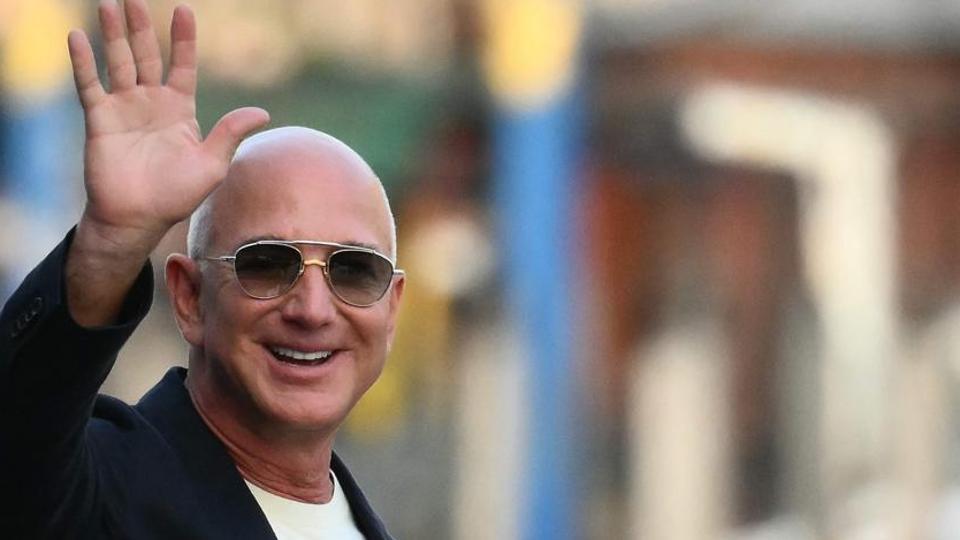
That belief may well be tested again, and everyone expects it would be. On August 14, Liverpool’s owner, Fenway Sports Group, confirmed the sale of 30% of the club to a consortium that includes former co-owner of Queens Park Rangers Amit Bhatia who is also son-in-law of Indian steel magnate Lakshmi Mittal, alongside Amazon founder Jeff Bezos, and Facebook co-founder Eduardo Saverin. The consortium is calling itself 1892 Holdings—a name likely chosen to sound less like a private-equity vehicle and more like a nod to the year the club was founded.
Also Read: Tech Tonic: Mark Zuckerberg, an AI manifesto, and curating a tech guru aura
I am not privy to any concrete information of whether Bhatia, Bezos or Saverin have been long-standing Liverpool Football Club fans. However, there is no public illustration that any or all of the troika were or are. This may therefore prove to be a profound philosophical collision.
Move fast and break Anfield?
Move fast and break things, the mantra that Mark Zuckerberg used to talk about during Facebook’s meteoric rise. It is, unsaid in many ways, the gospel by which Silicon Valley operates. A relentless, self-optimising worldview that demands the entire spectrum of life, from taxi rides to human relationships, be streamlined, scaled, and disrupted.
With the ‘tech bro’ influence on 1892 Holdings, will a similar philosophy be applied to the Liverpool Football Club?
This difference is perhaps stark-er at Liverpool, than it may be for some other clubs. The worst Silicon Valley’s Bezos and Saverin could do is look at Anfield not as something that tightly holds Bill Shankly’s ideals, but as a legacy software that needs an update, with a round of optimisation.
A good start would be to not think of a Liverpool supporter as a ‘user’. Or as a data point, metric for engagement or ripe for monetisation. Those are tech things. Not human things, or something for football clubs with souls. There are a handful of those remaining in world football, as an influx of money has changed the landscape over the past two decades.
Liverpool. Arsenal. Manchester United. FC Bayern Munich. AC Milan and Inter Milan. Barcelona. Boca Juniors. River Plate. Real Madrid. These clubs, and a handful more, operate differently. They aren’t modern pieces, optimised and algorithm-ised in the way perhaps Manchester City, Chelsea or PSG are.
In January 2025, Errol Musk told a British radio station that his son Elon had expressed an interest in buying the club — nothing formal, no bid, just a passing comment about “generational ties” to the city through a grandmother born in Mossley Hill. FSG denied any approach had been made. It didn’t matter. There has been persistent interest in Liverpool, particularly from US businessmen. Likely not because they love the club or the city, but they see this as a source of revenue in its prime.
What Liverpool supporters are mostly worried about isn’t merely the club’s balance sheet or transfer activity. FSG are wealthy. The Gulf-backed ownership groups that transformed Manchester City and Newcastle are wealthy on a different order of magnitude entirely. The club had made best of what its got. What is potentially unsettling is that Bezos is culturally a Silicon Valley product. The typical Silicon Valley worldview is close to a photographic negative of everything Liverpool has spent sixty years being what it is.
Counter to the saviour complex
Tech bro isn’t a made up word. Its defines an operating philosophy, forged in Silicon Valley and implemented where the money is. It is something like this—any system, however old or sentimental to the people running it, is really just an inefficiency waiting to be optimised. Scale beats sentiment. Disruption is a virtue, even if unwanted. That the credit is a founder’s. Not many do optimisation, disruption and cost analysis better than Amazon.
Then there’s the portfolio instinct. Bezos already owns a massive e-commerce platform, a newspaper, a space company, and the K5 Sports venture capital investment fund—Bezos is the primary backer, and has stakes in other sporting ventures. I am not being critical of diversification as a financial strategy. But an asset, and a football club, have different relationships.
Supporters follow one club for life. Sometimes that decision is illogical, made at the age of 10 and defended till the day the human is no more. Tech billionaires build portfolios with little emotion, which these days tend to include football clubs.
I am absolutely not holding any of the 1892 Holdings to any charge of guilt concerning Liverpool Football Club. At least not yet. Bhatia has talked of respect and admiration for FSG, which one hopes is a signal of synchronicity. Bezos isn’t on the board, for now.
Bezos has also, quite notably, walked away from previous dabbles with sports ownership (the Seattle Seahawks and the Washington Commanders), which does seem to indicate a thoughtful caution and not the typical reckless-billionaire caricature that may be easier to put together. He may, for all we know, have absolutely no intention of alienating the fans, the ones who walk through the turnstiles, the one’s who have endured the dark days and ones who still believe the club is their own.
That’s more in hope, than anticipation.
Vishal Mathur is the Technology Editor at HT. Tech Tonic is a column that looks at the impact of personal technology on the way we live, and vice versa. The views expressed are personal.