
 E-Paper



Bamboo poles and boomboxes: The kanwar yatra's ancient roots, faith and modern-day frictions
Kanwar yatra 2026 began on Thursday. Pilgrims collect holy water, Gangajal, from the Ganga or other sacred rivers and carry it to Shiva temples across states.


Millions of saffron-clad devotees set out on foot across northern and central India today as the Kanwar Yatra begins, marking the start of one of the world’s largest annual religious pilgrimages.
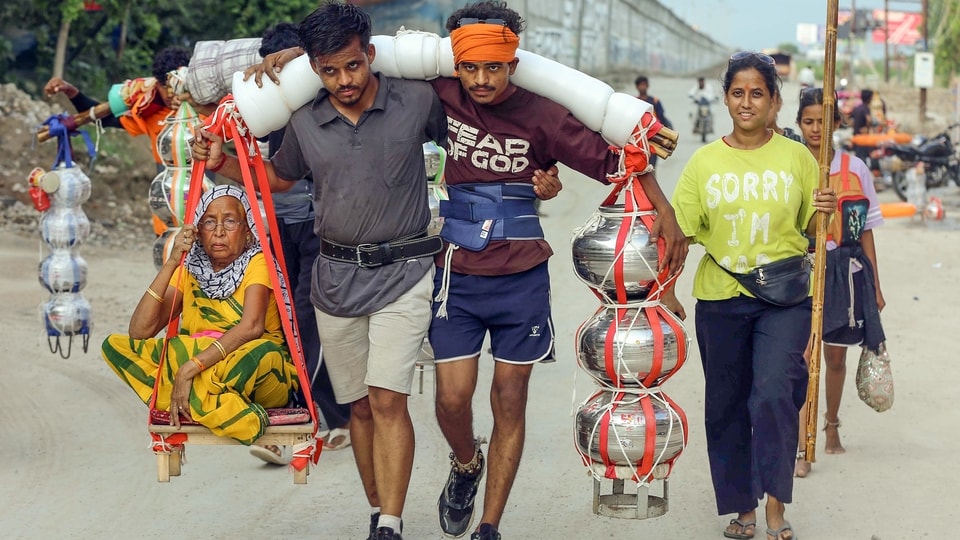
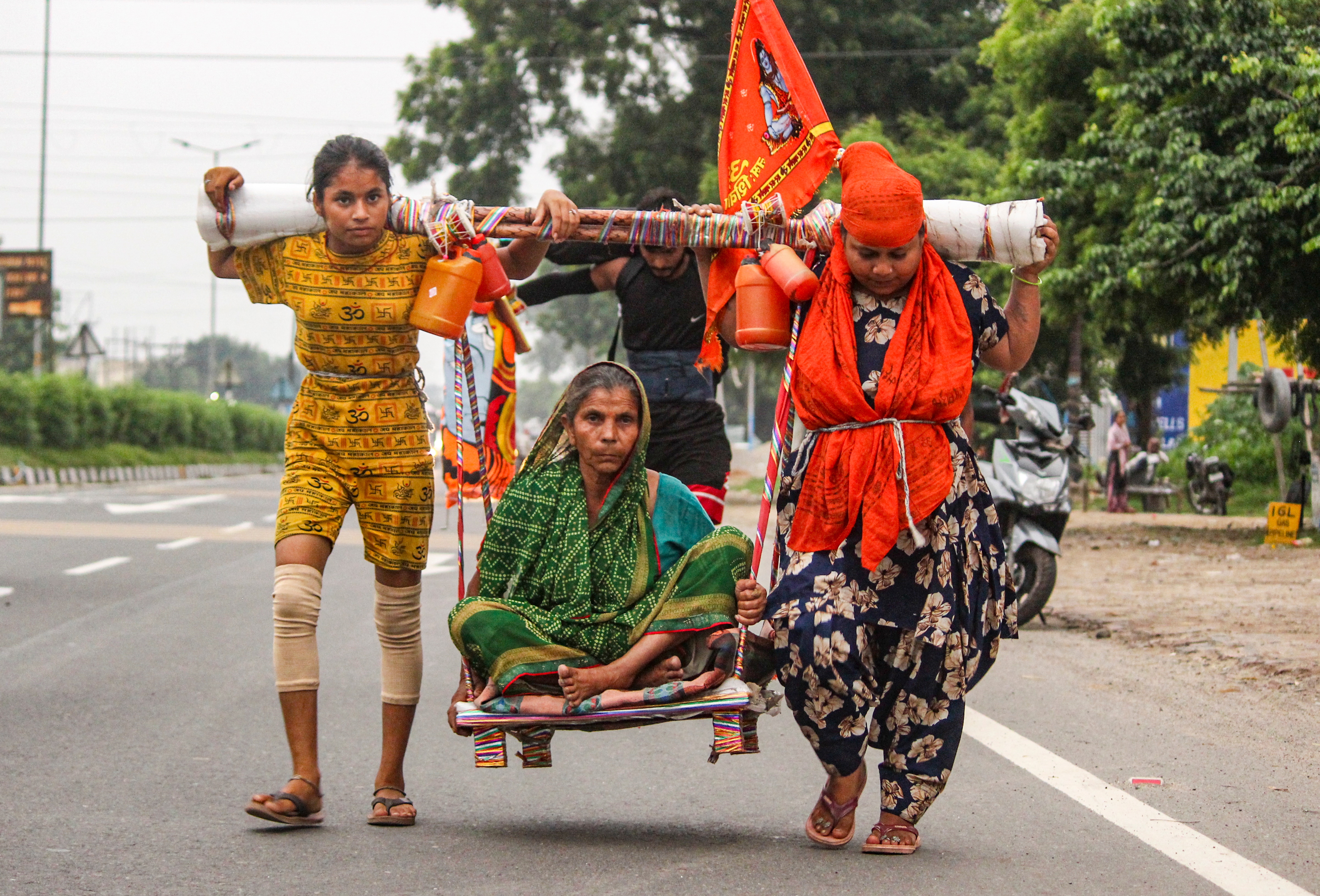
Through the Hindu month of Shravan, pilgrims known as kanwariyas carry decorated bamboo poles across their shoulders, with containers of holy water — Gangajal — suspended from either end. Shravan is considered especially auspicious in the Hindu calendar partly because it coincides with the monsoon, a season widely associated with renewal and growth — a symbolism shared by several other harvest and monsoon-linked festivals observed across India that are timed to agricultural cycles.
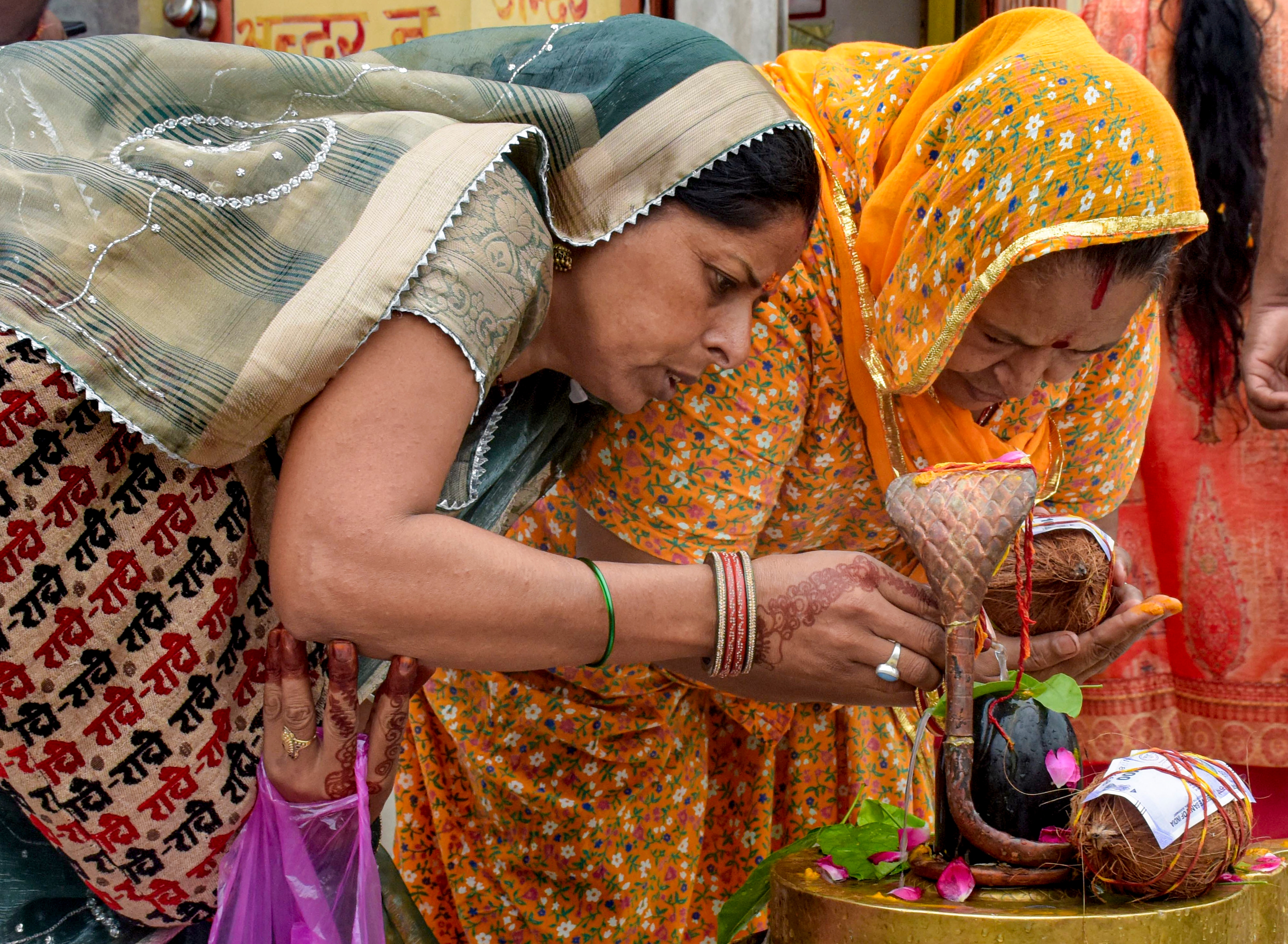
Devotees collect the water from the Ganga and other sacred rivers and carry it to Shiva temples, where they pour it over the Shiva Lingam in a ritual called jalabhishek.
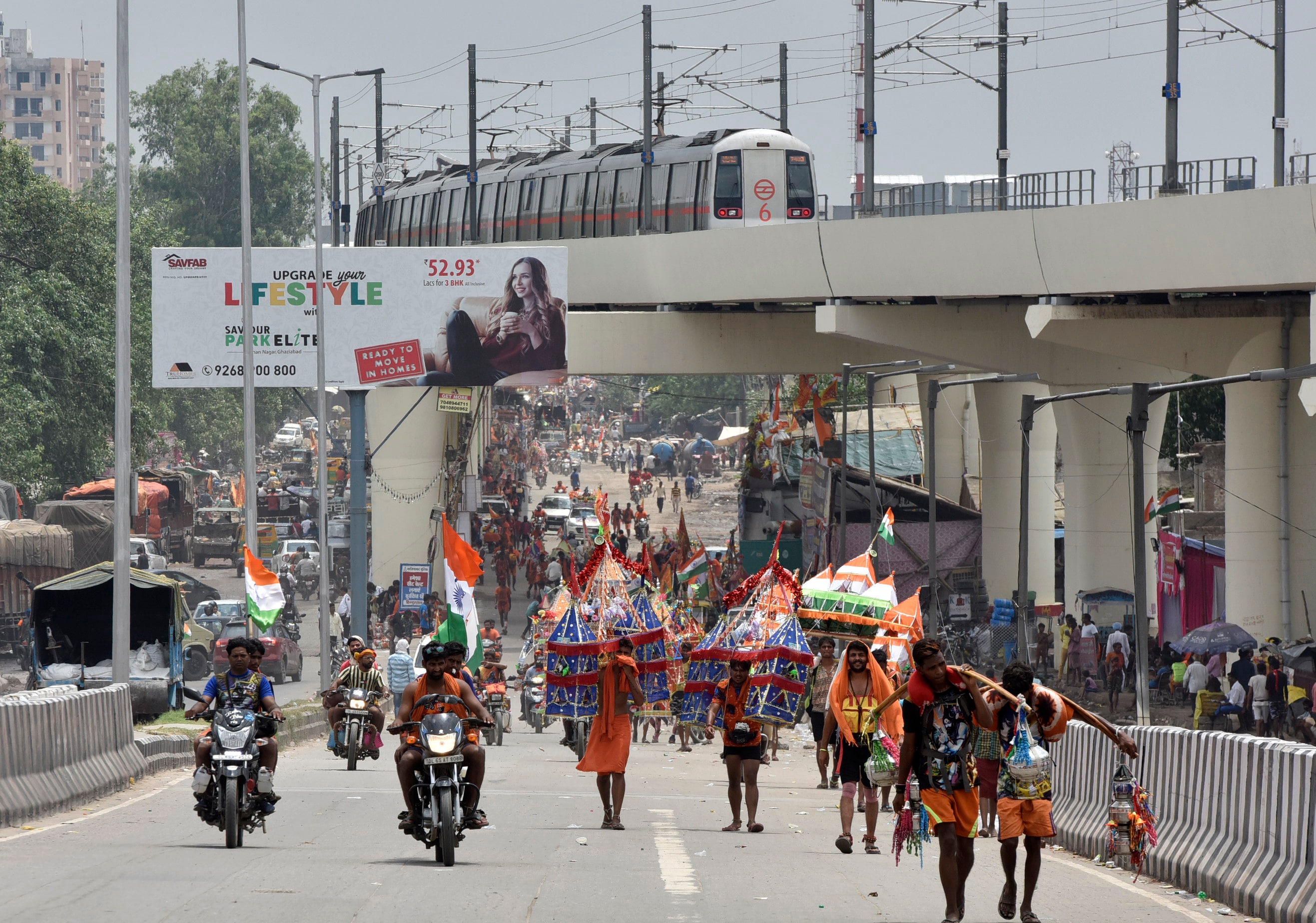
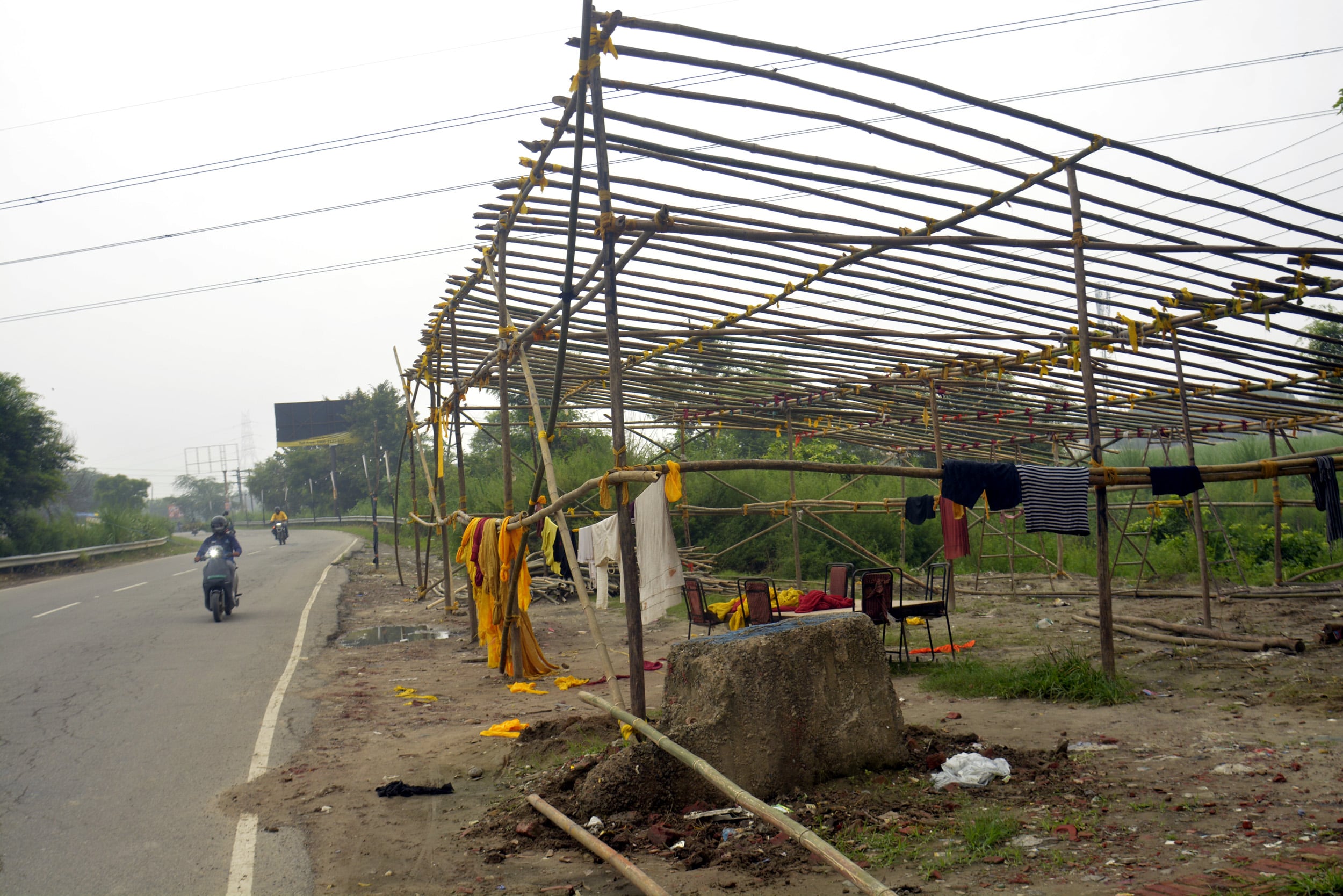
Beyond its religious scale, the kanwar yatra has become a massive logistical undertaking, requiring elaborate traffic diversions, security deployments, temporary camps, medical facilities and sanitation arrangements — and, in recent years, a subject of debate over its effect on local commerce and other communities along its routes.
What is the kanwar yatra?
In Bihar, Jharkhand, Uttar Pradesh and Odisha, the pilgrimage is popularly called the Bol Bam Yatra. Devotees travel on foot to collect Gangajal from sacred sites, chiefly Gaumukh, Gangotri and Haridwar in Uttarakhand, and Sultanganj in Bihar’s Bhagalpur district. Sultanganj holds particular significance as one of the few points where the Ganga flows northward — known as Uttarvahini Ganga.
Why is it called a 'kanwar'?
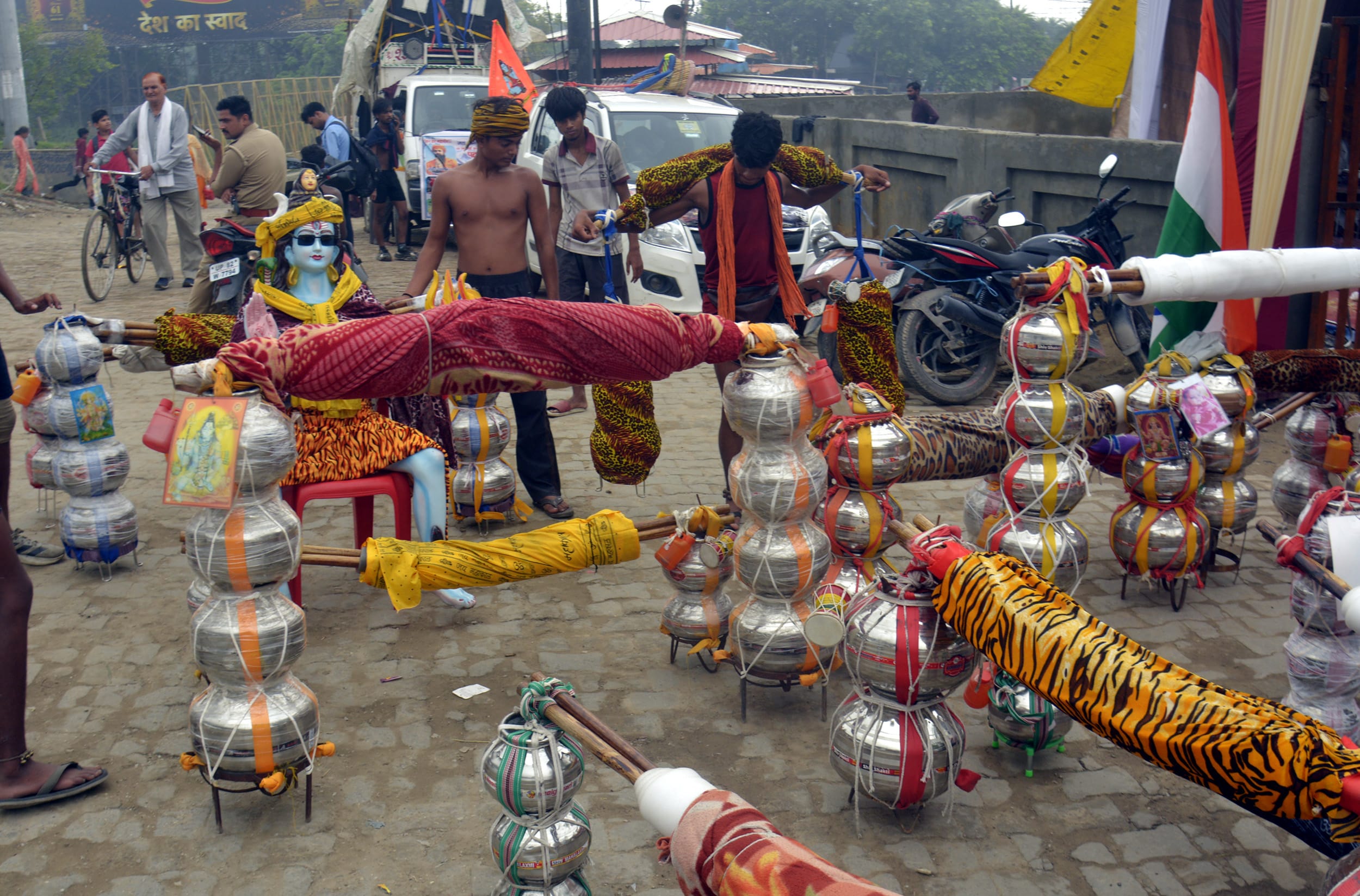
The word kanwar — also spelled kanvad or kawad — refers to the bamboo pole balanced across the shoulders, with equal loads hanging from either end. It began as a practical method of carrying water over long distances, but modern kanwars are often decorated with flowers, flags, images of Shiva, lights and religious slogans, though many pilgrims still use plain bamboo structures in keeping with older custom.
A seventh- or eighth-century sculpture at Kalinjar Fort in UP’s Banda district depicts a figure carrying a kanwar, which suggests the practice has ancient roots. Hindu tradition assigns the kanwar deeper symbolism: the two water pots are said to represent Brahma and Vishnu, and the bamboo pole itself Shiva, together signifying the Trimurti. Bamboo is considered sacred to Shiva in certain Shaivite traditions.
The mythological origin
The pilgrimage is most commonly linked to the legend of Samudra Manthan, or the churning of the ocean, recounted in the Bhagavata Purana and the Shiva Purana. The story goes – as the devas and asuras churned the cosmic ocean in search of amrit, the nectar of immortality, a lethal poison called halahal emerged, threatening to destroy swarga, prithvi and patal.
Shiva alone was believed capable of containing it. He drank the poison and held it in his throat, preventing it from spreading further — an act that turned his throat blue and earned him the name ‘Neelkanth’. The gods are then said to have poured Ganga water over him to cool the burning it caused. This act is regarded as the spiritual origin of the kanwar yatra.
Also read: Delhi-Dehradun Expressway barred for kanwariya vehicles
The pilgrimage, and its rules
Scholars cited by Professor Devi Prasad Dubey of the University of Allahabad trace the earliest identifiable kanwar pilgrimage to the 1700s, when devotees carried Gangajal from Sultanganj nearly 105 kilometres to the Baidyanath Dham temple in Deoghar, one of the twelve Jyotirlingas, shrines to Shiva.
The most popular collection points are Haridwar, Gaumukh, Gangotri, Rishikesh, Sultanganj, Prayagraj, Varanasi and Ayodhya. From there, devotees carry the water to Shiva temples across Uttar Pradesh, Uttarakhand, Haryana, Delhi, Rajasthan, Madhya Pradesh, Bihar, Jharkhand and neighbouring states.
Devotees observe strict disciplines through the journey: maintaining hygiene, keeping the Gangajal pure and never resting the kanwar or water containers on the ground, following a sattvic vegetarian diet without onion or garlic, abstaining from alcohol, tobacco and other intoxicants, walking barefoot, wearing simple saffron clothing, avoiding leather items, and controlling speech and behaviour. Pilgrims greet each other with chants of “Bol Bam”, “Har Har Mahadev” or “Bhole”. These practices vary by region, sect and individual, and some traditions hold that breaking specific rules requires restarting the pilgrimage.
Also read: 3,500 police personnel to guard Kanwar Yatra in Ghaziabad
How the yatra has changed
Over the past few decades, the pilgrimage has shifted from quiet, small-group walking with simple bamboo kanwars to processions featuring decorated vehicles, music systems, elaborate lighting and organised convoys.
Sociologist Dr Vikash Singh of Montclair State University wrote that the kanwar grew “from an indistinct, scattered event till the early 1980s” into India's largest annual religious event, drawing more than 12 million participants in 2011.
Singh notes that scholars typically frame this growth within “religious nationalism” — a thesis he calls important and one that “corresponds with political reality in India”. But he cautioned against using that framing to write off individual participants: millions of them, he points out, are young adults or adolescents from poor or lower-middle-class backgrounds walking hundreds of miles “with evident pain, suffering, and anxiety”, often bound by vows to loved ones. Reducing them to “fanatic ‘nationalists’ or ‘fundamentalists’” would be, in his words, “an inconsiderate epistemological gambit”.
Millions travelling simultaneously, largely on foot, makes the kanwar yatra an annual crowd-management exercise.
States typically respond with highway diversions, temporary road closures, restrictions on heavy vehicles, dedicated kanwar lanes, additional police deployment, CCTV surveillance, emergency medical centres and temporary control rooms.
This year, authorities in Delhi-NCR, Uttar Pradesh and Uttarakhand have announced extensive diversions and heavy-vehicle restrictions, with several routes expected to see more than a crore pilgrims over the course of the yatra. Thousands of police and emergency personnel are deployed annually to manage the pilgrimage.
The yatra’s growing scale has also drawn scrutiny. In an ethnographic study of Meerut, political sociologist Avishek Jha argued that the pilgrimage has increasingly reshaped the city’s roads, markets and neighbourhoods through state support, describing “increasing state-led patronage” of the festival since 2017 — from traffic management to officials showering pilgrims with flower petals.
Jha’s research, published in 2024 in Studies in Indian Politics, also documented the pilgrimage’s effect on Meerut’s minority communities as authorities have previously ordered meat shops and eateries along the route to shut during the yatra.
Some of the shuttered businesses are owned by minorities, Jha notes, forcing owners and daily-wage workers to close temporarily or switch to selling vegetarian food.
Noise pollution has emerged as a separate flashpoint, particularly in Delhi-NCR.
During last year’s yatra, HT reported that boombox-mounted trucks accompanying kanwariyas routinely breached the Central Pollution Control Board’s permissible limit of 55dB(A) in residential areas during the day and 45dB(A) at night. The Delhi Pollution Control Committee (DPCC) monitors in Shahdara — on the pilgrimage route — recorded 16-hour averages as high as 87.5dB(A) and night-time levels of around 85dB(A), nearly double the permitted ceiling.
Resident welfare associations described sleepless nights and vibrating windows, while police officials said enforcement was patchy because they feared confrontations could trigger law and order problems. Transport officials also noted that modified vehicles and loudspeakers used in the processions often lacked the permissions required under the Motor Vehicles Act. Authorities had at the time said they would station pickets to stop boombox trucks after 10pm, though residents and RWAs said these interventions were largely symbolic.


