
 E-Paper



Besides the CJP: Neha and the AISA activists who fasted, made reels too, and danced in joy eventually
Neha Bora captioned it, “If I can't dance, It won't be my revolution!”, as she posted a video of celebrations after Dharmendra Pradhan's resignation on July 25


They fasted, they gave speeches, they made jokes, and they danced in the end, to songs from ‘Dil Se’, the cult classic that's as much about love as it is about tragedy. Neha Bora and other activists of the All India Students' Association (AISA) had also come to embody the youth protests otherwise led by the Cockroach Janta Party (CJP) over NEET-UG and other paper leaks.
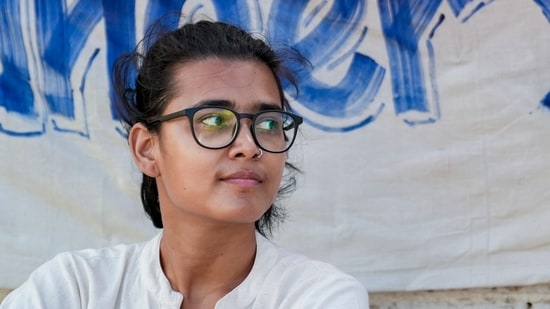
Posting the video of celebrations after education minister Dharmendra Pradhan's resignation on July 25, she captioned it, “If I can't dance, It won't be my revolution!” — a popular paraphrasing of a central idea of revolutionary political activist Emma Goldman (1869-1940).
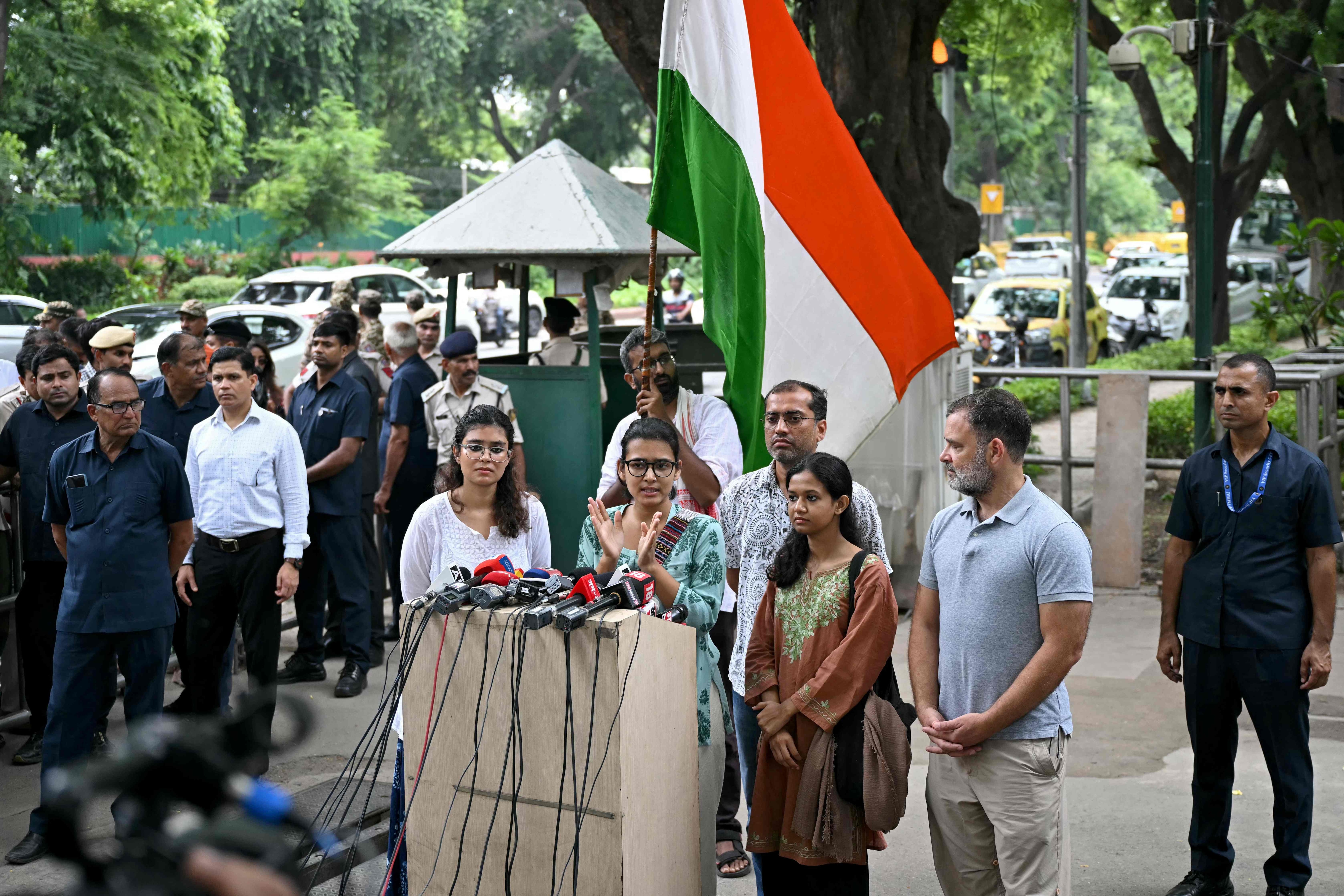
Hours before the resignation concluded the stir for now, Leader of Opposition Rahul Gandhi stood at a press conference flanked by three young women. These included Neha, Danish Ali and Anjali.
Neha Bora: Artiste-activist who deploys dark humour
Neha, the national president of AISA, and Danish were also among at least six students who fasted at the Jantar Mantar protest site, though on a platform separate from the main stage. The CJP wanted the main stage to remain “apolitical” where Sonam Wangchuk led the hunger strike. She and two others — Aameen Amitoj and Manish — ended their fast after 26 days. At the centre of it all was Neha Bora, who prefers going by just her first name.
National president of the AISA affiliated to CPI(ML)-Liberation, Neha is a PhD scholar at Jawaharlal Nehru University's School of Arts and Aesthetics. She is also a theatre artist, and, as it turned out, the fast's sharpest voice.
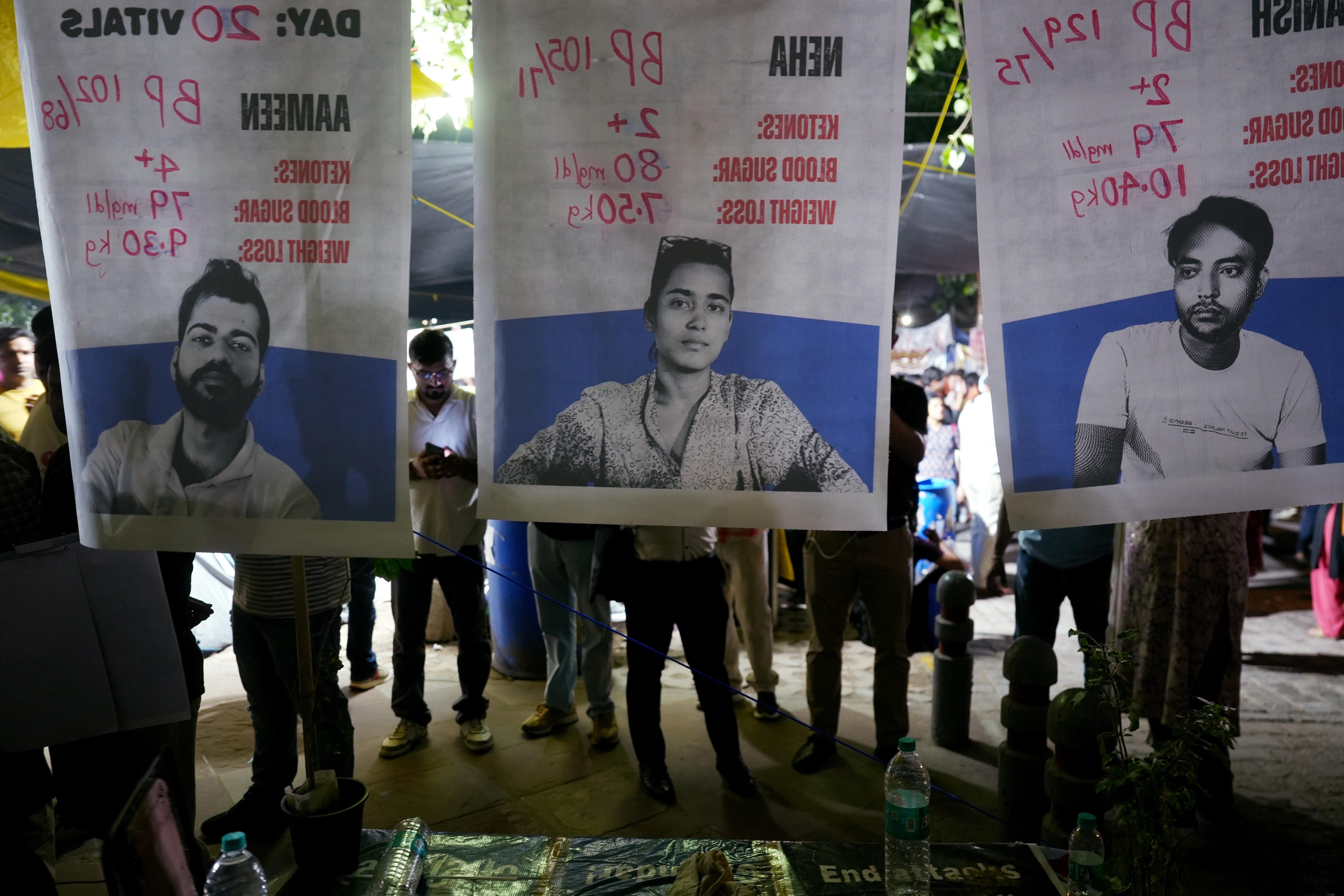
Uttarakhand-raised, with a BA from Delhi University and an MA from Ambedkar University, she carried her fast to 23 days, losing close to 7.5 kg and watching her blood sugar fall to dangerous levels.
Throughout, she kept posting Instagram reels — in true Gen-Z style — deploying dark humour to viral effect, at one point saying, “Let's talk about hunger since that's on my mind today!” She compared her hunger for food with the Narendra Modi government's “hunger for power”.
After the July 20 march called by CJP faced police action, she said from the stage, “Each wound inflicted on peaceful protesters will eventually prove to be the undoing of this arrogant government.”
Pradhan resigned on July 25, but Neha did not see that as an end unto itself.
“Another Pradhan will simply replace this one,” she told Rajya Sabha member and lawyer Kapil Sibal in his YouTube show ‘Dil Se’. “This is not about the resignation of an individual; it's about the government's arrogance — you cannot run a system that repeatedly fails the common people of this country. No cabinet portfolio can be an award for sycophancy towards BJP or RSS leaders,” Neha said. She wants the protest remembered as “the one that started a series of resignations”.
Describing the July 18 morning raid in which cops took away Wangchuk, she gave an almost cinematic account. “Within a matter of seconds, not even minutes — we didn't even understand — white sheets were lifted up, and in two-three seconds they went from one corner of the stage to the other, and they disappeared with Wangchuk,” she said. The AISA stage was saved from police action that day as activists soon realised what was happening.
After the movement's mood changed following the July 20 lathicharge, she said she told the cops even more defiantly, “Ab kya karoge? Sar to phod hi diya hai — now what will you do? You've already split our heads open.”
On July 25 at a press meet, as Rahul Gandhi called her and others “the future that the past can never fight” and walked away, she made him return to the podium. She took the mic and said the discussion had been “fruitful” but the issues must continue to be raised. Rahul nodded along.
Aameen: The young veteran of two key protests
Back at the CJP site, fasting beside her was Aameen Amitoj, a PhD scholar in Urban Studies at Ambedkar University in Delhi. Originally from Punjab and a young veteran of the 2020-21 farmers' agitation, he drew a parallel. These two protests have been the only ones that have made PM Modi accede to demands.
“When police came for Wangchuk on July 18, I remembered that scene from the farmers' protest when Rakesh Tikait cried, and after that when people returned on tractors saying, 'No, we will keep this movement alive,'” he said in ‘Dil Se with Kapil Sibal’. “I felt a bit of that nostalgia, because I was at Tikri (protest site) then... it was a bit of déjà vu — that people have come on their own to defend their democratic movement.”
Asked to describe the State and the current regime, he said, “The more cruel a person is, the more cowardly they are too.”
When he was fasting, his sister Sahaj wrote about him on Instagram. Aameen loves food, she said, and skipping a single meal was enough to sour his mood for the whole household. The fast was thus not a mere endurance test, she added. He had made his body and suffering “the only language the powerful cannot ignore”.
Manish: Quiet strength
The third of the trio, Manish Kumar, AISA's Uttar Pradesh president and a PhD scholar in Political Science at Allahabad University, lost the most weight of the three — over 10 kg from the 85.7 kg start — yet remained the quietest in public appearances, surfacing in Neha and Aameen's own account of July 18 more than in his own words.
It was Manish who shook Neha awake as the raid began, and Aameen who gripped his hand mid-panic, checking that they were both still standing.
These three broke their fast on July 20 following an appeal from a delegation that included Rajya Sabha MP Manoj Jha, activists Yogendra Yadav and Prashant Bhushan, and actors Prakash Raj and Shabana Azmi.
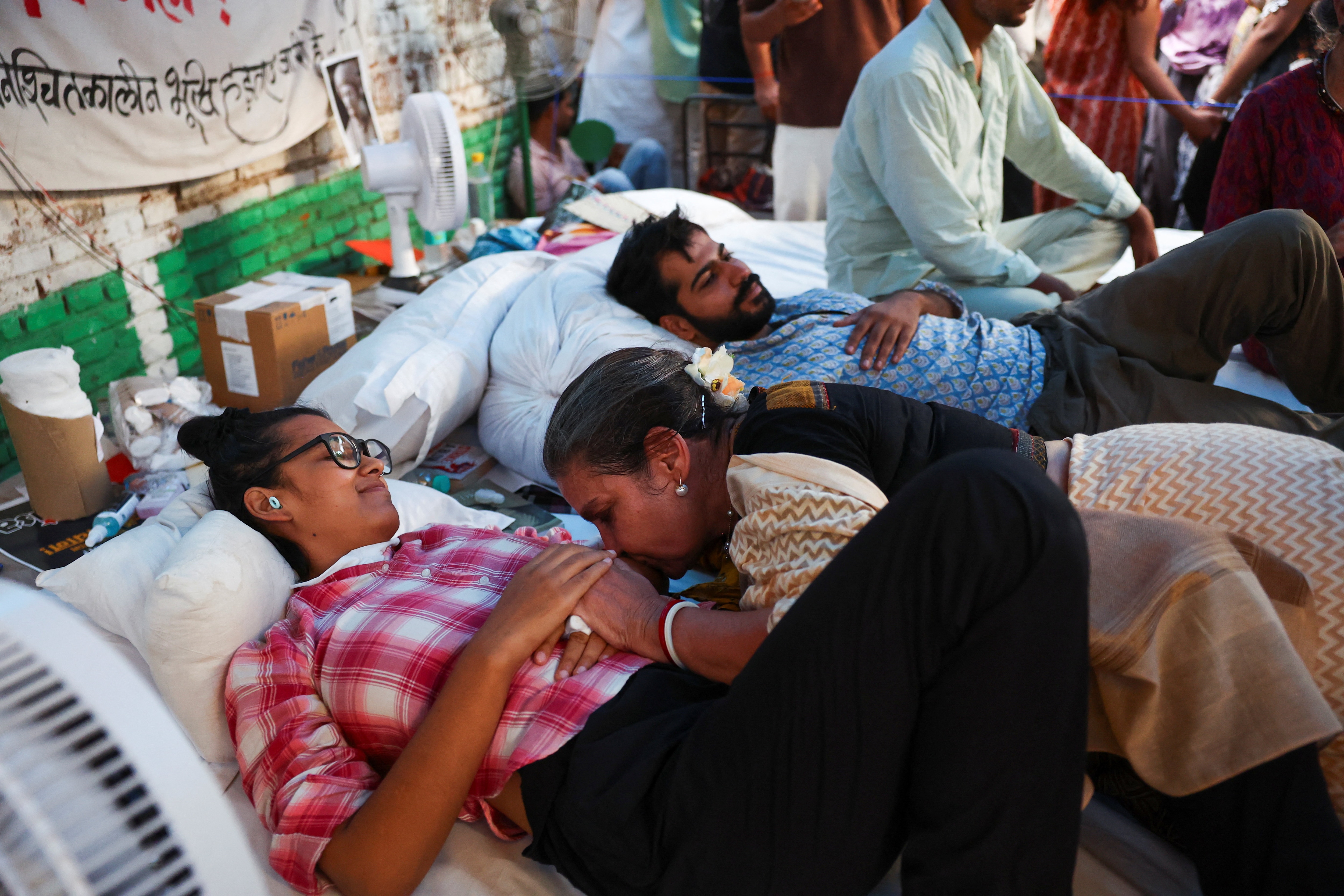
A tender moment was captured when Azmi fed her juice, kissed her on the arm.
Others who fasted included Deepak, vice president of AISA's Delhi University unit. He had to be rushed to hospital in hypovolemic shock and was discharged once his vitals stabilised. Hrishikesh Talukdar, President of JNU's Barak Hostel and a physics researcher, was hospitalised on the fast's 11th day with severe chest pain and numbness in his limbs. And Danish Ali, JNUSU Joint Secretary and a PhD scholar at JNU's Centre for Historical Studies, was hospitalised on day 15 after her blood sugar dropped.
AISA's statement since has made clear that they will continue to press for their long-held demands, including scrapping the National Testing Agency, withdrawing the National Education Policy, and dropping cases against protesters.
“The movement for us started much earlier,” Neha said. The CJP was formed by Abhijeet Dipke after Chief Justice of India Surya Kant made some comments using the word “cockroaches” for some jobless young people. “We must thank the CJI… everything fell into place,” she said.


