
 E-Paper



Delays in infrastructure projects cost more, halt benefits: PM Modi during projects' review
The projects, spanning the railway, road and power sectors, were reviewed with a focus on timelines, inter-agency coordination and removal of pending hurdles.

 Prefer HTon Google


Prime Minister Narendra Modi on Tuesday reviewed six infrastructure projects with a combined sanctioned cost of more than ₹30,000 crore across nine states at the 53rd PRAGATI meeting, directing ministries and state governments to adopt an integrated approach to project execution and urgently resolve land, forest clearance and utility-shifting bottlenecks.
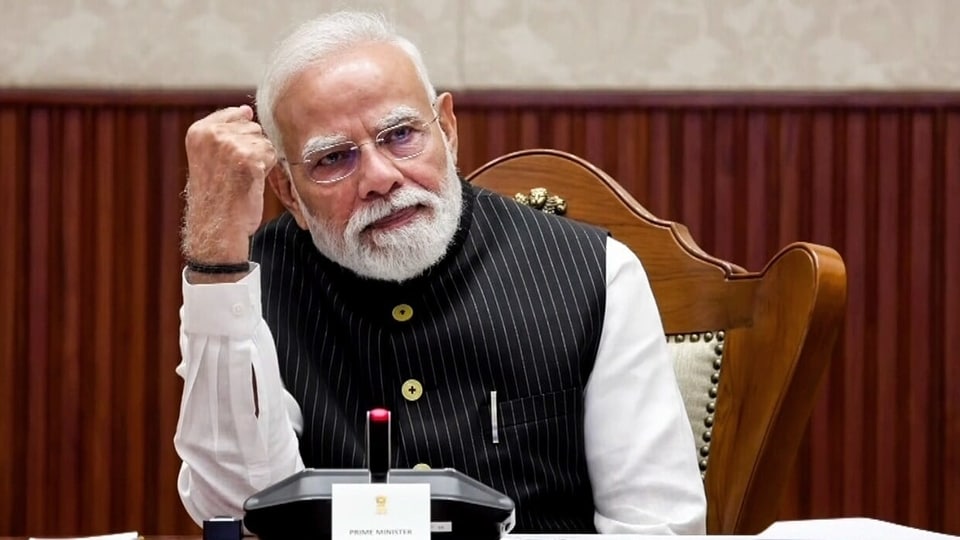
The projects, spanning the railway, road and power sectors, were reviewed with a focus on timelines, inter-agency coordination and removal of pending hurdles. Modi said delays in infrastructure projects not only increase costs but also postpone the benefits intended for citizens, businesses and the economy.
The projects include the ₹12,334-crore multi-tracking of the 374.53-rkm Son Nagar-Andal railway section across Bihar, Jharkhand and West Bengal. The project, which is intended to ease a bottleneck on the Delhi-Howrah route, is 21% physically complete. Its third and fourth lines are expected to facilitate faster freight movement while allowing the existing double line to handle passenger traffic more efficiently. Several forest clearances, land acquisition and utility-shifting issues are pending.
The ₹3,086-crore Luni-Samdari-Bhildi railway doubling project in Rajasthan and Gujarat, which is 30% physically complete, is aimed at improving freight connectivity between Kandla port and northern parts of the country. Land acquisition and transfer issues remain pending in both states.
In Uttar Pradesh, the Prime Minister reviewed the ₹2,139.62-crore Behsuma-Bijnor section of NH-119. The 39.56-km highway, whose revised cost stands at ₹2,376.90 crore, includes a 2.79-km major bridge over the Ganga and is intended to provide seamless connectivity between Meerut and Pauri. The project is 51% physically complete and is now likely to be completed by December 2026, against the original May 2026 deadline.
The Dalkhola-Islampur-Ghoshpukur-Salsalabari section of NH-31D in West Bengal was also reviewed. The corridor is expected to strengthen connectivity with the Northeast and has strategic significance because of its location near the Siliguri corridor.
The ₹5,452.72-crore Gurugram Metro project, connecting Millennium City Centre to Cyber City with a spur to Dwarka Expressway, has 27 stations over 29.05 km. Its likely completion has moved to June 2030 from the scheduled November 2027.
The sixth project is the ₹4,679-crore transmission system in Andhra Pradesh and Karnataka to evacuate 4.5 GW of renewable energy from the Ananthapur region.
Modi stressed that infrastructure projects must be viewed as integrated wholes rather than separate packages. He also called for common utility corridors wherever feasible and said speed must go hand-in-hand with quality.
Reviewing AgriStack, Modi called for greater use of artificial intelligence and agricultural data. As of July 31, 10.28 crore Farmer IDs had been created across 20 states and 93% of village maps had been georeferenced. The system is already being used for crop-loss assistance, crop loans and MSP procurement, while ₹10,000 crore has been earmarked for priority AgriStack-enabled use cases in 2026-27.
On cyber fraud and “digital arrest”, Modi stressed sustained awareness campaigns, cyber-safety education and regular training of personnel, particularly to protect senior citizens, youth and other vulnerable groups.


