
 E-Paper



Meghalaya assembly passes unanimous resolution against uranium mining
Sangma said the resolution reflected the long-standing concerns of people living in areas such as Domiasiat, Wahkijn and Lostoin

 Prefer HTon Google


Meghalaya assembly on Wednesday, passed a unanimous resolution to prohibit uranium mining and also any proposal to set up a uranium ore-processing facility anywhere in the state.
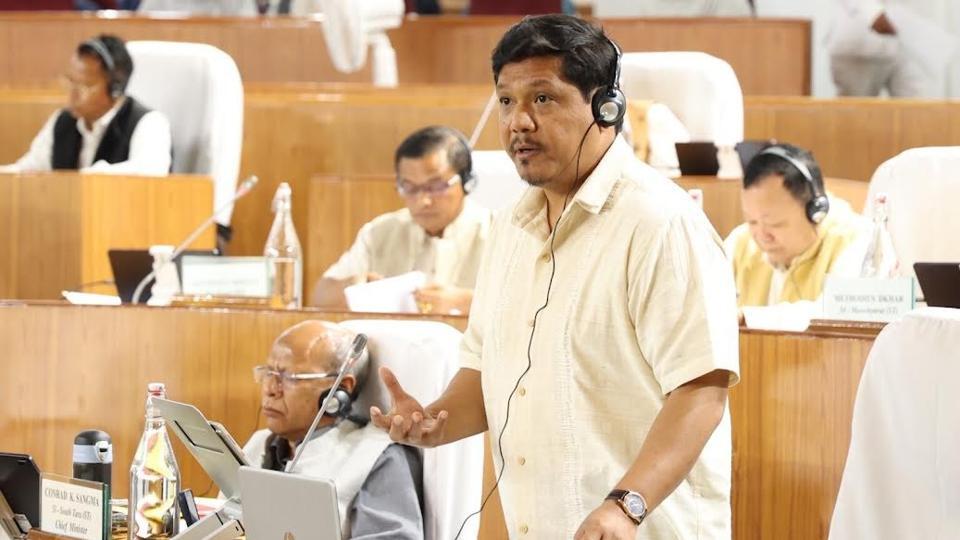
The resolution, moved by chief minister Conrad K Sangma and supported by all 60 MLAs, records the collective position of Meghalaya’s political leadership and gives fresh legislative weight to a resistance that has for decades brought together traditional institutions, student organisations, civil society groups and communities in uranium-bearing areas.
Sangma said the resolution reflected the long-standing concerns of people living in areas such as Domiasiat, Wahkijn and Lostoin, where uranium deposits have been identified.
“This is a historic and significant moment for the state,” Sangma said after the resolution was adopted, stressing that the unanimous vote sent an “unequivocal message” that Meghalaya did not want uranium mining or a uranium ore-processing facility.
He said the government would convey the assembly’s decision to the Centre and urged it to respect the sentiments of the state’s tribal communities.
At the heart of Meghalaya’s position is its distinctive system of land ownership. Much of the land in the state is privately, clan or community owned, with customary institutions playing a major role in regulating ownership and use.
Sangma argued that the Sixth Schedule framework and customary landholding system could not be ignored when decisions were made about natural resources.
The government also invoked the Supreme Court’s 2019 judgment in State of Meghalaya vs All Dimasa Students Union, in which the court held that, in Meghalaya’s hills districts, private and community landowners have rights over both the surface and sub-soil, including minerals, subject to the statutory regulatory framework.
The ruling is significant because it recognised that minerals beneath privately or community-owned land in the state vest with the owners rather than automatically with the state. It also held that a mining lease concerning privately owned minerals cannot be granted without the authority of the private or community owner.
Leader of the Opposition, Mukul Sangma welcomed the resolution and said its adoption should now be followed by sustained engagement with the Centre.
He stressed that the issue transcended political governments and should remain a consistent position of the state. He also said that the resolution represented the culmination of decades of public opposition rather than the achievement of any one political dispensation.
He also argued that technological advances and the availability of alternative and renewable energy sources weakened the case for pursuing a project carrying significant environmental and social concerns. Mukul Sangma urged the government to remain vigilant against any changes to central mining laws that could dilute Meghalaya’s customary land rights.
“Uranium today may be a strategic resource for the nation, but Meghalaya also has its own right to say no to certain resources and they must remain untouched, especially when the perceived risk to our environment, communities and future generations is too great,” said Gambegre MLA Mehtab Chandee A Sangma.
Exploration of atomic minerals in the region began decades ago, while the Domiasiat deposit was identified in the 1980s. Drilling and exploratory activity followed, but resistance intensified as local communities and pressure groups raised concerns about environmental and health consequences.
By the 1990s, the issue became a major political and social flashpoint. The Khasi Students’ Union (KSU) emerged as one of the most prominent voices against uranium mining, while local leaders and traditional institutions opposed attempts to advance the project. Exploratory drilling in the Domiasiat area was eventually halted amid protests.
Spelity Lyngdoh Langrin, a Domiasiat-area resident became synonymous with the anti-uranium movement after she refused a lucrative offer linked to mining on her land.
In 2008, the then CM Donkupar Roy told HT that his government would not permit uranium mining unless local people changed their position. At the time, the project already faced opposition from villagers and pressure groups.


