
 E-Paper





Utkarsh Anand is the National Legal Editor at Hindustan Times, where he leads the newspaper's coverage of the Supreme Court, constitutional law, the judiciary and the Union law ministry. He joined Hindustan Times in 2020 after stints at Press Trust of India (PTI), The Indian Express and CNN-News18, and has over two decades of experience reporting on law, governance and public policy. His work has focussed on some of India's most consequential constitutional and legal developments, including the Supreme Court's judgments on Article 370, marriage equality, decriminalisation of homosexuality, the Babri Masjid dispute, electoral reforms and judicial appointments. He specialises in making complex legal proceedings and judgments accessible to readers while examining their wider social and political impact. Beyond daily reportage, Utkarsh has led investigative projects and enterprise reporting that have shaped public debate and prompted institutional responses. His work has received several journalism awards, including the Ramnath Goenka Excellence in Journalism Award. As National Legal Editor, he has also played a key role in expanding Hindustan Times' legal journalism footprint, mentoring reporters and strengthening coverage across platforms. A Chevening South Asia Journalism Programme Fellow, Utkarsh regularly writes analyses on the judiciary and constitutional issues, and his reporting is widely followed by lawyers, judges, policymakers, academics and readers seeking clarity on India's evolving legal landscape.
‘Don’t act like Robin Hood or Bahubali’: SC rebukes Bihar judge for convicting cop
The Supreme Court questioned Bihar sessions judge Anil Kumar’s decision to invoke the procedure for offences committed in the face of the court


The Supreme Court on Monday cautioned a Bihar judicial officer against acting like “Robin Hood” or a “Bahubali”, reminding him that a judge must know the limits of his jurisdiction, as it expressed dismay over the judge convicting a superintendent of police (SP) for failing to comply with his direction to register an FIR.
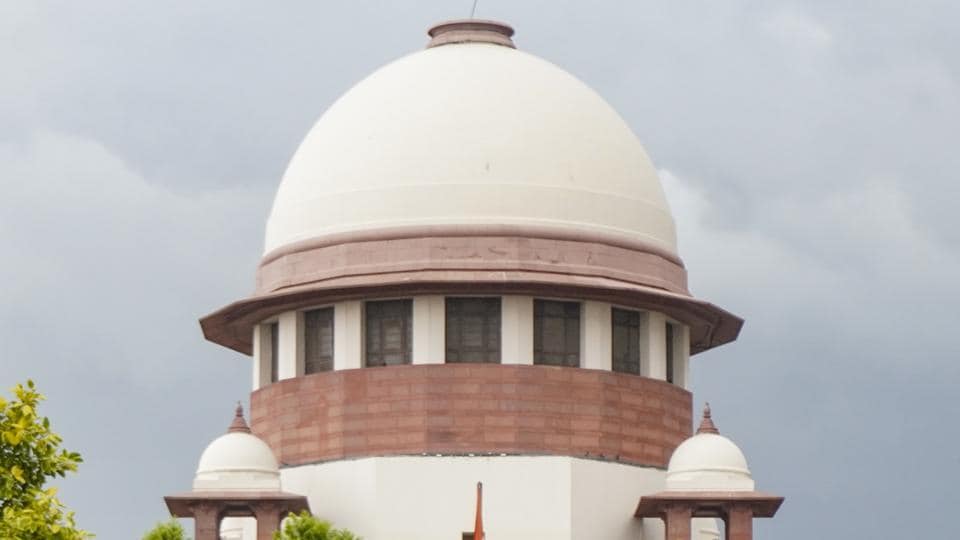
“Enough of adventure. Go to the National Judicial Academy and have training. You don’t have to become Robin Hood…Do you want to become a Bahubali (strongman)?... You must understand your limits and jurisdiction as a judge,” a bench comprising Chief Justice of India (CJI) Surya Kant and justices Joymalya Bagchi and V Mohana said.
The bench questioned sessions judge Anil Kumar’s decision to invoke the procedure for offences committed in the face of the court, pointing out that an official’s failure to comply with a judicial direction to register an FIR could not be treated as contempt committed in the courtroom.
“We are really surprised at your understanding of the law concerning a violation or a crime committed on the face of the court. You first must understand the scope and ambit of Section 384 of the Bharatiya Nagarik Suraksha Sanhita (BNSS) and Section 345 of the Code of Criminal Procedure (CrPC),” it observed.
Explaining the distinction, the court said an offence committed in the face of the court would include an act such as slapping someone, abusing the court or refusing to leave the courtroom despite being directed to do so. However, failure to register an FIR despite a court direction did not fall within that category.
“But if we say that X must register an FIR and X does not register an FIR, it does not amount to a crime committed on the face of the court,” the bench said, describing the judicial officer’s understanding of the law as “appalling”.
The top court was hearing a challenge to proceedings the sessions judge had initiated against the Rohtas SP over repeated delays in complying with his directions. Kumar had summoned the police officer, treated the non-compliance as an offence committed in the face of the court, convicted him and imposed a fine of ₹1 lakh.
The case arose from a September 2025 sessions court order directing the police to register an FIR against the victim and the informant in a criminal matter, which the police complied with nearly 10 months later, in July 2026. Kumar also noted other instances of delayed compliance, including a belated response to a demand for an explanation and failure to submit a status report on a recommendation for disciplinary action against the SP.
Kumar approached the top court against an October 8 order of the Patna High Court, which termed the situation “peculiar” and “unprecedented” and observed that the sessions judge was required to maintain “procedural integrity” since the underlying judgment, including its direction to register an FIR, was already under challenge before it. The high court also sought the complete records of the criminal proceedings initiated against the SP and directed that the matter should not be precipitated pending an early hearing of the appeal, scheduled for November 25.
While acknowledging the judicial officer’s intention to secure compliance with court orders, the Supreme Court made it clear that the desire to do justice could not justify bypassing the procedure prescribed by law.
“We understand your sentiments. We appreciate your effort to reach out and do justice. But as we are governed by certain procedural constraints and discipline, we cannot forget that,” it told Kumar’s counsel.
The bench also questioned Kumar’s objection to an inspecting judge summoning him in an administrative capacity, asking whether he had himself remained within his jurisdiction when he called upon the district magistrate and the SP to appear personally and then treated their non-appearance as an offence warranting conviction and sentence.
“Were you within your domain and jurisdiction to exercise this?” asked the bench, adding that the matter could have been left to the high court if the judicial officer believed the SP’s conduct amounted to criminal contempt.
The bench also referred to the training imparted at the National Judicial Academy, stressing that judicial officers must be conscious of the legal boundaries of their authority and cannot assume powers beyond what the law permits.
Reiterating that judicial officers must remain mindful of the legal boundaries of their authority and undergo refresher training at the National Judicial Academy, the Supreme Court disposed of the matter while requesting the Patna High Court to consider Kumar’s response and any apology he may submit “considerately”.


