E-Paper



India's first hydrogen-powered train flagged off: Key features, route and what makes it special
Powered by a 3,200-horsepower propulsion system, the 10-coach train is among the world's longest and most powerful


India's first hydrogen-powered train, flagged off by Prime Minister Narendra Modi in Haryana's Jind on Friday, has been designed, engineered and integrated using indigenous technology, showcasing the country's growing capabilities in advanced railway engineering.
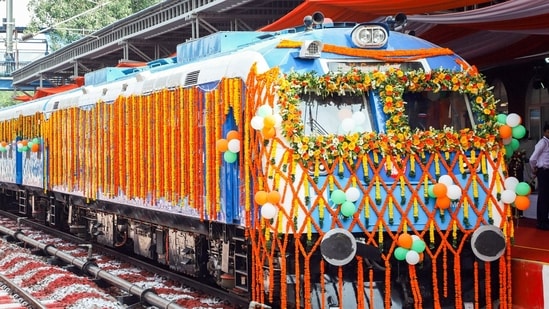
Powered by a 3,200-horsepower propulsion system, the 10-coach train is among the world's longest and most powerful hydrogen-powered passenger trains, marking a significant step towards cleaner rail transport, according to a PTI report.
The broad-gauge train is among the world's longest hydrogen-powered passenger trains and reflects the success of the Make in India and Atmanirbhar Bharat initiatives. Haryana Chief Minister Nayab Singh Saini said Prime Minister Narendra Modi is expected to travel on the train from Jind to Pandu Pindara station, accompanied by around 200 schoolchildren.
Also Read | HT Explainer | India’s first hydrogen train: All you need to know
What are the special features of the hydrogen-backed train?
The train features a 10-coach configuration, making it among the longest hydrogen-powered passenger trains developed so far. Powered by a 3,200-horsepower propulsion system, it is among the world's most powerful hydrogen-powered trainsets in operation.
Addressing a public gathering in Jind after flagging off the train, Modi said hydrogen train technology has emerged globally only in the last seven to eight years and is currently operational in only three or four countries.
"Hydrogen trains have only recently arrived on the global stage. They came into existence just seven or eight years ago. Currently, only three or four countries possess the capability to operate hydrogen trains, and even in those nations, the technology is still in its early stages. However, hearing about the capabilities of India's hydrogen train will fill you and every Indian with pride," the Prime Minister said.
He said the hydrogen train flagged off from Jind is powered by a 3,200-horsepower propulsion system, making it the world's most powerful hydrogen-powered train, and added that it is also India's longest hydrogen-powered train.
"The hydrogen train running from Jind is the most powerful hydrogen train in the world. This train is 3,200 horsepower, and it is not only the most powerful but also the longest hydrogen train in India," Modi said.
Also Read | PM Modi to launch India's first hydrogen train tomorrow: Check full Jind-Sonipat route, stations
Hydrogen fuel cell technology, eliminates emissions and more
The train is styled in a striking sky-blue and white colour scheme and is powered by hydrogen fuel cell technology, which converts hydrogen into electricity to propel the train.
The process produces only water vapour as a by-product, resulting in zero carbon emissions during operation.
Compared to diesel trains, hydrogen-powered trains eliminate tailpipe emissions, reduce dependence on fossil fuels and fuel imports, and operate with significantly lower noise levels.
Unlike conventional electric trains, they do not require continuous overhead electrification infrastructure, as electricity is generated onboard through hydrogen fuel cells, making them a clean and efficient alternative.
The use of green hydrogen also reduces dependence on electricity generated from fossil fuel-based thermal power plants, supporting India's transition to sustainable transport.
The 89-km journey between Jind and Sonipat will be completed in around two hours, with the train stopping at 12 intermediate stations.