
 E-Paper



'Ties can't be severed, they can be on hold during conflict': Mohan Bhagwat's China-Pakistan example
Citing Pakistan and China as examples, Bhagwat said existing relationships could be put "on hold" during conflicts but should not be ended altogether.


RSS chief Mohan Bhagwat on Thursday said that while India must stand with its government and armed forces during times of conflict, such situations should not permanently sever ties with other nations.
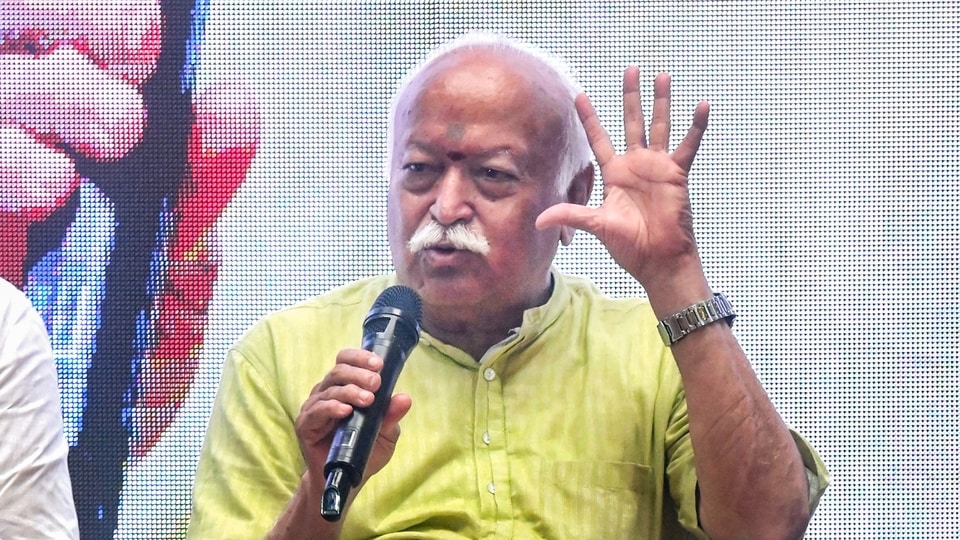
Citing Pakistan and China as examples, Bhagwat said existing relationships could be put "on hold" during conflicts but should not be ended altogether. Speaking at an event in Mumbai, he said, “In the times of conflict, we have to go with whatever our government and military does. But that should not sever the ties which are already there."
Also Read | ‘If GenZ is protesting, they are not anti-national’: Mohan Bhagwat
Referring to the two neighbours, he said, "China, people say that for 2,000 years, Bharat has given us some values, and Pakistan was Bharat not less than 100 years ago. This should not be forgotten."
Bhagwat added that "these ties cannot be severed; they can be put on hold till conflict is there," stressing that India's approach should not be one of "conquering or obliterating others" but of dialogue and harmonious coexistence. "Bharat's solution... requires dialogue," he said. “Humanity is one,” he said.
The RSS chief also said the grievances raised by student protesters recently were genuine and cautioned against branding young demonstrators as "anti-national", asserting that the country's youth deserve dialogue because they represent the next generation.
Also Read | 'We need to look into where the problem lies': Mohan Bhagwat on crackdown on protesters
“I'm saying, if Gen Z is protesting, they're not anti-national. They're our own people. They're our next generation. With this sense of belonging, along with dialogue, I said a sense of belonging is needed. A relationship is needed. That is our relationship. Its recognition is needed,” he said.
Bhagwat also endorsed the concerns voiced by the protesters, saying they reflected genuine issues within the education system. "Whatever has happened, the grievance is genuine. There is a lot that needs to be done in Indian education; since it's not happening, it's being talked about."


