
 E-Paper



Patna-Lucknow IndiGo flight’s nose suffers damage, lightning strike among suspected causes
According to preliminary information, the possibility of the aircraft having encountered lightning amid adverse weather conditions is being examined.

 Prefer HTon Google


An IndiGo aircraft operating from Patna to Lucknow was found to have sustained a damage to its nose section after a suspected hit by an object, which could include hailstones or ice chunks or a lightning strike mid-air at an altitude of nearly 17,000 feet. No official reason for the damage has been stated yet.
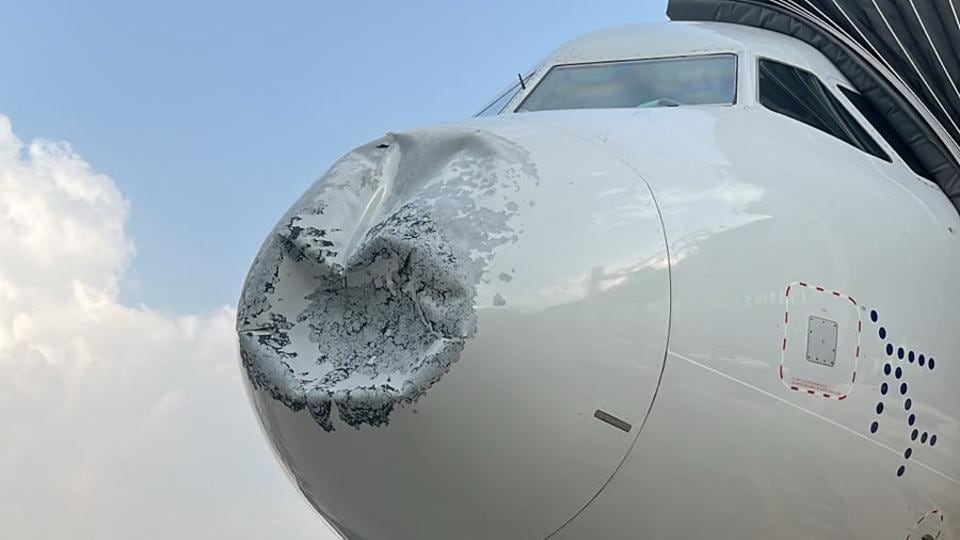
Following the incident, IndiGo flight 6E925 landed at Lucknow airport with 104 passengers and six crew members on board around 4.05pm. All passengers were reported safe. The aircraft has been grounded for a detailed technical inspection.
ALSO READ | Why is IndiGo hiking fuel charges again?
An airport spokesperson said the incident did not involve an emergency landing and the aircraft had completed its landing normally at Lucknow airport.
According to preliminary information, the possibility of the aircraft having encountered lightning amid adverse weather conditions is being examined.
Airport officials said the damage was noticed by the airport team concerned after the aircraft had landed. The IndiGo team was subsequently informed and the aircraft was declared Aircraft on Ground (AOG), meaning it would not be operated until it was cleared following technical checks.
The aircraft is undergoing a technical assessment by the airline’s engineering team. Further details about the extent and cause of the damage are expected after the inspection and investigation are complete.
The nose (front section) of the aircraft was dented. The plane was scheduled to fly to Ahmedabad from Lucknow. The airline notified passengers about the flight cancellation and offered them the option to rebook on another flight or receive a full refund.
Initial reports indicate that the pilot informed Air Traffic Control (ATC) that an incident occurred at an altitude of approximately 17,000 feet during descent. Reports also mention that the aircraft experienced a strong jolt. While some crew members suggested a possible lightning strike, some experts consider this highly unlikely. According to an expert, aircraft exteriors are specifically designed to withstand lightning: if lightning strikes, the electrical current passes safely along the outer skin of the fuselage and discharges into the air through the wings or tail, rather than penetrating inside.
Upon landing, an inspection revealed the dented nose cone.
Aviation experts explained that thunderstorm clouds can contain large, hidden hail or ice chunks. Striking these at high speeds can easily damage the radome (nose cone). Alternatively, the damage could have resulted from a bird strike. Lightning was also a suspected cause. The pilot’s official report has been kept confidential for review by the DGCA.
Frequently Asked Questions


