
 E-Paper





Neha LM Tripathi is a Special Correspondent with the National Political Bureau of Hindustan Times. She covers the aviation and railways ministries, and also writes on travel trends. Her work spans national developments, with a focus on policy, people, and the evolving travel landscape. She has 13 years of experience. Before moving to Delhi, she was based in Mumbai, where she began her journey as a journalist. Outside the newsroom, Neha enjoys trekking and travelling.
SpiceJet’s flight cuts put spotlight on global 80/20 rule for airport slots
According to ministry of civil aviation guidelines, an airport slot is permission from a coordinator to use the full range of airport infrastructure
Updated on: Nov 24, 2026, 13:31:24 IST


Share via
Copy link
Financial turmoil at budget carrier SpiceJet and the resulting disruption to its international schedule have spotlighted a little-noticed global aviation rule: the “use it or lose it” norm governing takeoff and landing slots at congested airports.
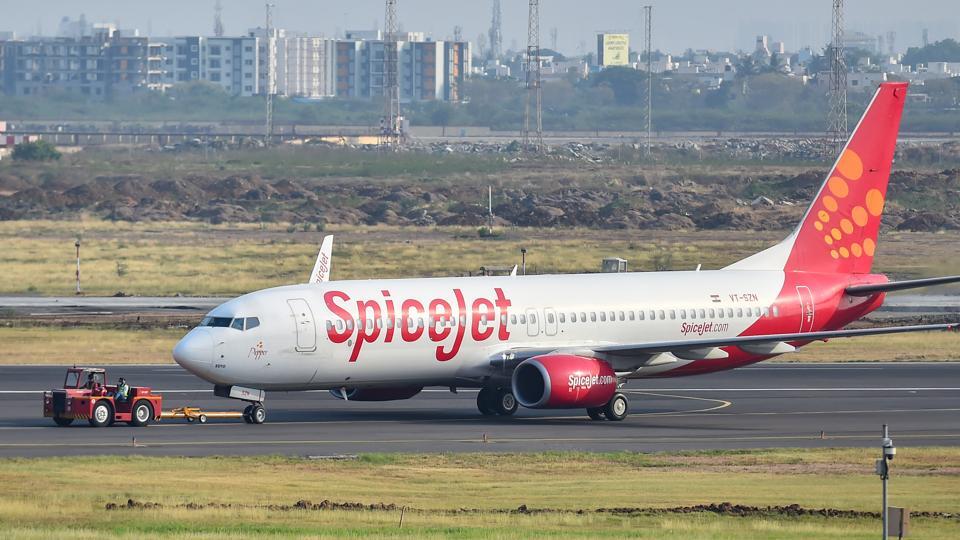
Under international aviation guidelines known as the 80/20 rule, an airline must operate at least 80% of its allocated slots during a scheduling season to retain historical rights to those timings in the same season the following year. Falling short of that threshold risks forfeiting unused slots back to a central pool for reassignment.
For the current winter aviation season, which runs from October 25 to March 27, SpiceJet secured slots at overseas hubs including Dubai and Sharjah in the United Arab Emirates, and Bangkok and Phuket in Thailand. The carrier reportedly holds weekly seat entitlements of about 14,000 in each direction to Dubai, along with rights for at least five weekly flights to Sharjah and seven to Thailand.
What is an airport slot and how’s it allocated
According to Ministry of Civil Aviation guidelines, an airport slot is permission from a coordinator to use the full range of airport infrastructure, such as runways, terminals, gates, and aircraft parking stands, to arrive or depart at a specific date and time at congested Level 3 airports.
Under the Worldwide Airport Slot Guidelines, the industry standard for managing airport capacity and allocating takeoff and landing slots, airports are classified into three levels based on demand and infrastructure capacity: Level 1 airports, or non-coordinated airports, have sufficient capacity to meet demand and do not require formal slot allocation; Level 2 airports, or schedule-facilitated airports, face potential congestion during peak periods and are generally managed through voluntary schedule adjustments by airlines, while Level 3, or coordinated airports, have severe capacity constraints and require an independent coordinator to allocate slots to airlines.
Airlines do not own these slots outright. At Level 3 airports, which include New Delhi, Mumbai, Chennai, and Kolkata in India, alongside major global hubs such as London Heathrow, Amsterdam Schiphol, Frankfurt, Dubai International, Tokyo Haneda, Hong Kong International, and Sydney, coordinators assess available runway and airspace capacity before weighing historical usage, carrier requests, and applications from new entrants.
In India, airport operators appoint coordinators under civil aviation guidelines, in coordination with the Directorate General of Civil Aviation.
One of the most important principles governing allocation is the 80/20 rule, also known as the ‘use it or lose it’ rule. Under this provision, an airline must “operate a series of slots at least 80% of the time during a scheduling season” to retain those slots in the equivalent season the following year. If it fails to meet the threshold, the slots can be returned to the pool for reallocation.
Slots returned to the pool, along with newly available slots, are allocated in accordance with the applicable guidelines. Under the WASG, 50% of the available pool is to be allocated to new entrants, provided there is sufficient demand from them, while the remaining 50% is available to other airlines. Airlines may also exchange or transfer slots, subject to the applicable rules and approval of the coordinator.
The slots are considered so precious that globally, airlines have even been known to fly empty planes, also called ghost flights, during the Covid pandemic to be able to retain their slots. Also, as a temporary arrangement, if an airline cannot profitably fly a slot right now, it may ask another airline to act as a baby-sitter for those slots to meet the utilisation threshold. Slot babysitting is an airline practice where a carrier temporarily leases or uses a valuable takeoff or landing slot at a congested airport, often with minimal or “ghost” flights, so another airline can keep its “grandfather rights” (historic slot priority).
In the winter of 2021-2022, for instance, Greenpeace European Unit estimated that airlines operated about 100,000 ghost flights across Europe so that they do not lose their airport slots. Europe eventually had relaxed the 80% rule to 50% during the pandemic
SpiceJet troubles
SpiceJet’s fleet has shrunk to seven operational planes, according to PlaneSpotters.net as of Nov 24. Its share of India’s domestic market fell to 0.6% in September from 3.9% in January, as monthly domestic passenger volume dropped to roughly 73,000 from nearly 592,000. On Nov 17, DGCA issued a notice to the airline, warning that most of its fleet remained grounded and that the carrier had failed to submit a credible plan to return the planes to service.
For an airline grappling financial and operational difficulties, the consequences of cancelled flights can extend beyond immediate revenue losses. Falling below the required utilisation threshold could mean losing prized arrival and departure timings at congested airports, making it harder to rebuild international schedules in subsequent seasons. However, the loss of a slot does not automatically mean that another airline acquires it; the slot returns to the pool for formal reallocation.
HT has requested a SpiceJet spokesperson to comment. A comment is awaited.
ABOUT THE AUTHOR

Get Latest News, breaking headlines, and top India News, and today real-time updates from across the nation. Stay informed on politics, government policies, crime, Today Weather, and major developments on Hindustan Times


