
 E-Paper



Tanker with Indian crew was hit by US while drifting in Gulf of Oman, had engine off
The Settebello had been moving Iranian oil for at least five years, though the ship was not under any US sanctions.


Fresh details indicate that the oil tanker on which three Indian sailors were killed last month was not sailing when it was hit by a US airstrike in the Gulf of Oman. Instead, the ship was drifting at sea with its engine turned off, awaiting the arrival of another ship to transfer oil, the New York Times (NYT) reported citing interviews with crew members, US military officials, and families of victims.
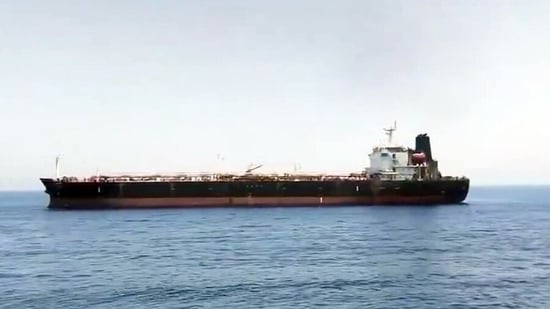
On June 10, the 600-foot tanker Settebello’s engine room was hit by a US airstrike shortly after 7am (local time), resulting in the death of chief engineer Suresh Patnala, mechanic Shivanand Chaurasia, and 23-year-old trainee cadet Aditya Sharma. The former two had just begun their shifts in the engine room while Sharma was having breakfast in an adjacent room when the vessel was hit.
The Settebello had been moving Iranian oil for at least five years, though the ship was not under any US sanctions. The ship left the Chinese port of Lianyungang and headed to the Gulf of Oman in late April. In the first week of June, the ship loaded oil at sea from several ships, NYT reported citing two crew members. For most of the week, the ship had its anchor down.
What US said
The US Central Command (Centcom) said that US intelligence determined that the source of the oil was Iran. It said that in the days leading up to the strike, the ship’s crew dismissed at least 60 verbal warnings conveyed over radio, often responding “belligerently”, and ignored at least eight other displays of force such as flares and fighter jet flyovers.
On June 10, the ship was drifting in the Gulf of Oman with its engine off, carrying 26,000 metric tonnes of bitumen, a thick petroleum product used in road construction. At the time of the US strike, most of the crew was asleep. A cadet was manning the radio on the bridge and the captain was resting in his room.
Centcom said the ship received two final warnings, the last telling the crew it had 15 minutes to evacuate the engine room. But the cadet who was on the bridge for three hours before the attack said he had heard no warnings.


