
 E-Paper



What is Article 371? Ladakh to get autonomous hill councils for all seven districts
Article 371 recognises that different regions may have unique social, cultural, economic and geographical circumstances that require special protections.


The Ladakh administration on Monday announced that each of the Union Territory's seven districts will have its own Autonomous Hill Development Council (AHDC), expanding the existing system of elected local self-governance beyond Leh and Kargil.
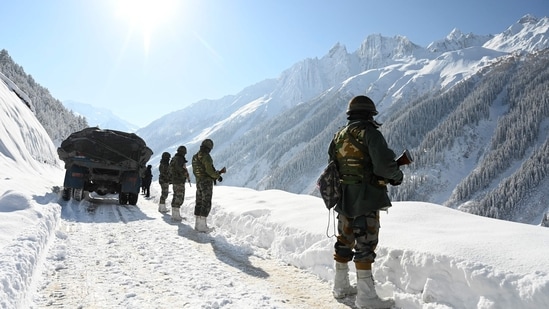
Besides Leh and Kargil, the newly created districts of Sham, Nubra, Changthang, Zanskar and Drass will now also get their own hill councils.
The announcement is being seen as a major development in the Centre's efforts to provide constitutional safeguards to the strategically important Himalayan region.
Powers over land, jobs and development
The proposed AHDC body would have legislative, executive, financial and administrative powers aimed at strengthening local decision-making while safeguarding Ladakh's interests.
The administration said the proposed councils will exercise significant powers at the district level. These will include authority over land ownership and land allotment, district cadre recruitment and promotions, and preparation of development plans. The councils will also oversee sectors such as health, education, tourism and implementation of welfare schemes.
The seven district councils will be linked through an overarching Union Territory-level institution proposed under a customised framework based on Article 371 of the Constitution, news agency PTI reported citing official.
What is Article 371?
Article 371 of the Constitution provides special safeguards and autonomy to certain states and regions to protect local interests, including cultural identity, land rights, employment opportunities and administrative arrangements.
The provision of the Indian costitution recognises that different regions may have unique social, cultural, economic and geographical circumstances that require special constitutional protections.
Part XXI of the Constitution contains these special provisions, with clauses ranging from Articles 371A to 371J.
Over the years, various states have received special constitutional arrangements under different clauses of Article 371, tailored to their particular needs and historical circumstances.
‘Grassroot governance’ is focus
Announcing the decision, Ladakh chief secretary Ashish Kundra described it as a significant step towards strengthening local governance. "This is a major step towards democratic decentralisation and grassroots governance," Kundra said.
He noted that Section 3(1) of the Ladakh Autonomous Hill Development Council (LAHDC) Act already allows for the creation of a council in every district. "Only amendments to the Act, wherever required, and delimitation of constituencies remain," he added.
"Ladakh is going to have a customised model and it would be designed for the betterment of the people," Kundra said.
Demand for constitutional safeguards
The issue of constitutional protection for Ladakh has been at the centre of political and civil society discussions since the region became a Union Territory in 2019.
Environmental activist Sonam Wangchuk has been among the prominent voices demanding safeguards for Ladakh's land, jobs and cultural identity. He spent nearly six months in jail after protests in the region last year seeking, among other demands, the restoration of statehood.
In May, Wangchuk had expressed optimism about the Centre considering constitutional safeguards for Ladakh under Article 371. At the time, representatives of the Leh Apex Body (LAB) and the Kargil Democratic Alliance (KDA) had held discussions with the Union government.
Following those talks, Wangchuk said the two sides had reached an "in-principle understanding" on introducing special constitutional protections for the region.


